







Victorian Rush Seated Armchair
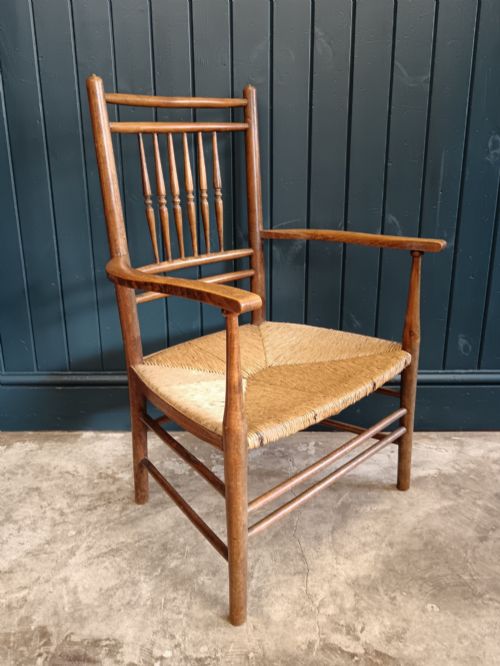
A victorian rush seated armchair brings tactile vernacular texture into a room, offering the honest grain of ash or elm alongside woven rush.
Victorian Rush Seated Armchair
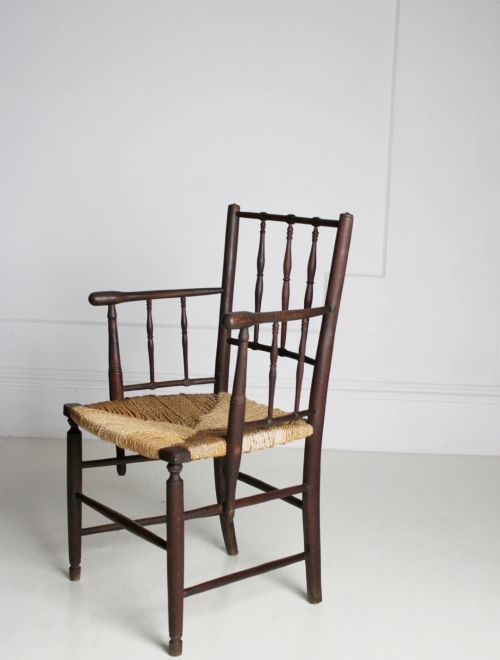
A victorian rush seated armchair represents the intersection of rural utility and the later nineteenth-century interest in simpler vernacular forms. Buyers searching for a victorian rush seated armchair encounter robust country pieces alongside lighter Arts and Crafts interpretations designed by makers such as Philip Webb.
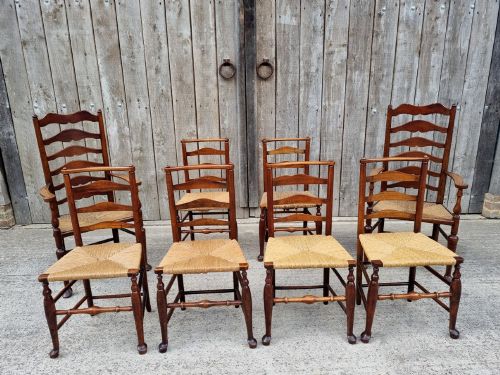
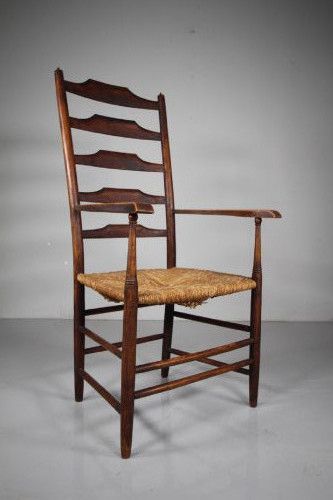
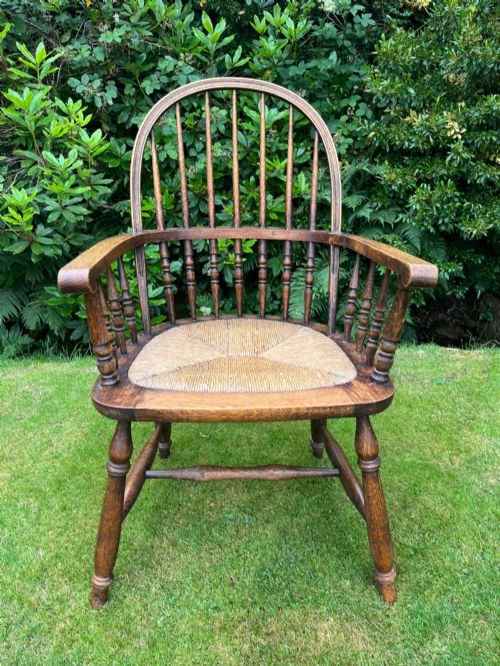
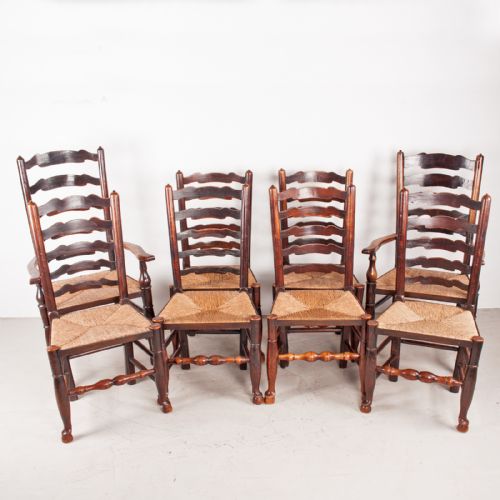
The common form relies on a sturdy timber frame, often ladderback or spindleback, supporting a tightly woven natural rush seating platform. Many examples emerge from English country traditions, spanning farmhouse kitchens, libraries, and firesides across the nineteenth century.
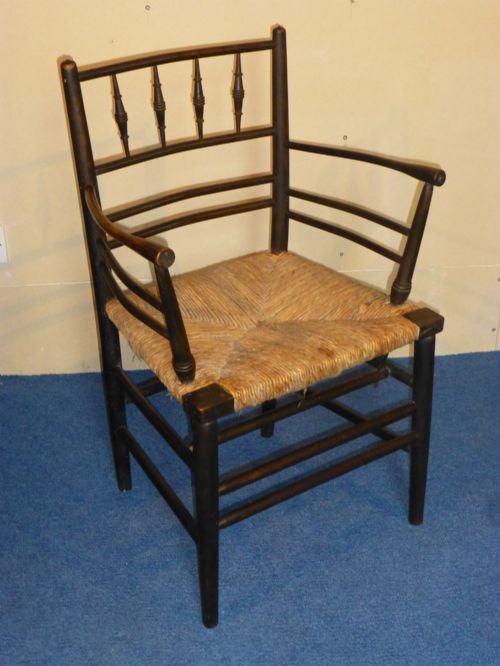
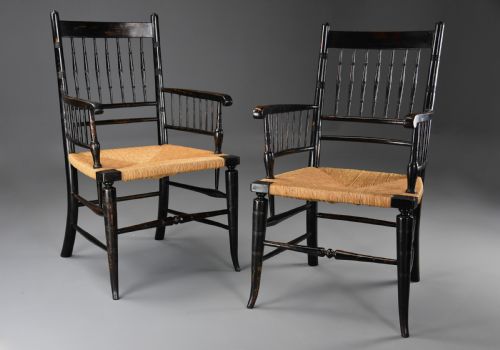
Makers adapted these vernacular formats into distinctive regional styles, ranging from Lancashire armchairs to Sussex chairs in ebonised wood or stained beech. The category also encompasses rocking chairs and sets of dining carvers that share the same characteristic rush seating.
Materials and construction methods
Frames rely upon native hardwoods such as ash, elm, beech, and oak, frequently turned on lathes to create slender spindles and ladder rails. Master craftsmen utilised steam-bending techniques for structural elements like arm bows and curved back rails.
Seating areas consist of natural rush or sea grass twisted by hand and woven tightly around the seat rails to distribute weight evenly. Ebonisation and surface staining transformed standard hardwoods to mimic more costly ebony or to align with the austere palettes of the Arts and Crafts movement.
Victorian Rush Seated Armchair Retail Price Guide 2026
Typical asking prices for victorian rush seated armchair among the pieces listed under this phrase on Sellingantiques today, from the lower quarter to the upper quarter. They describe what is for sale here now, not the wider market.
The selection spans simple country ladderbacks to sophisticated Arts and Crafts Sussex models.
Distinctions in quality and execution
Quality rests upon the integrity of the timber frame and the precision of the turning work, where crisp spindle profiles indicate superior workshop standards. Finer pieces demonstrate careful selection of grained woods like ash or elm that withstand structural stress without excessive bulk.
The tension and evenness of the rush weave dictate longevity, as tightly packed marsh grass resists sagging under daily use. Attribution to notable firms or designers elevates specific chairs beyond standard vernacular production, reflecting deliberate aesthetic vision.
Morris & Co·Philip Webb·Philip Clissett·E W Godwin
The Victorian Rush Seated Armchair Glossary
- Rush seat
- A seating surface formed from dried marsh grasses woven tightly across a wooden frame. This traditional method provides a resilient and breathable base.
- Ladderback
- A chair back featuring multiple horizontal wooden rails resembling a ladder. These graduated slats support the sitter's spine.
- Spindle back
- A chair back constructed from numerous thin, vertical turned wooden rods. This arrangement lightens the visual weight of the frame.
- Ebonised wood
- Timber treated with chemical stains or black finishes to imitate ebony. This treatment gained popularity during the late nineteenth century.
- Vernacular furniture
- Domestic objects made by local tradesmen using regional materials and traditional designs. These pieces prioritize practical function over grand stylistic movements.
Victorian Rush Seated Armchair: Frequently Asked Questions
How do I care for a rush seat?
Keep the woven rush dry and dust it regularly with a soft brush to prevent grit from cutting the fibres. Avoid placing the chair in direct sunlight or damp areas which make the material brittle.
Apply a very light mist of water occasionally if the room air is extremely dry, maintaining flexibility in the natural fibres over decades of use.
Are these chairs comfortable for daily use?
The woven rush conforms subtly to the sitter while providing firm support through the sturdy wooden framework. High backs and supportive arms in country armchairs encourage relaxed posture.
Adding a loose cushion provides extra softness without altering the historic character of the seat.
How do I distinguish an Arts and Crafts chair from a country piece?
Arts and Crafts examples, such as Sussex chairs, often feature deliberate ebonised finishes and refined, slender turning intended for aesthetic interiors. They reflect a philosophical return to handcraft rather than anonymous regional utility.
Country vernacular chairs emphasise robust utility, utilising unpainted ash, elm, or oak shaped for demanding farmhouse environments.
Can broken rush seats be repaired?
Traditional rush seating can be entirely re-woven by skilled craftspeople using matching marsh grass materials. The underlying wooden frame remains untouched during this restorative process.
Professional re-weaving preserves the functional lifespan of the armchair for future generations.