



Victorian Ruby Red Crystal
Victorian ruby red crystal brings deep colour and striking presence to a room, offering rich glass objects made to catch the light.
Victorian Ruby Red Crystal
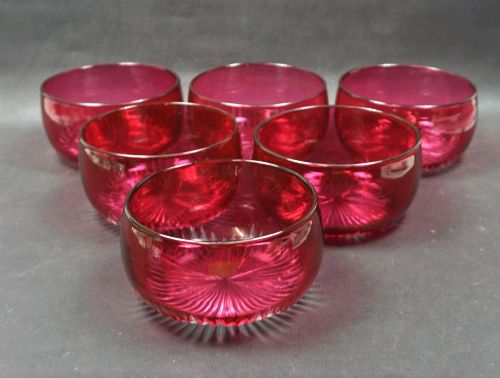
When searching for victorian ruby red crystal, buyers encounter a variety of decorative and functional objects produced during the nineteenth century. The selection ranges from mantel lustres and scent bottles to decanters, wine jugs, and finger bowls.
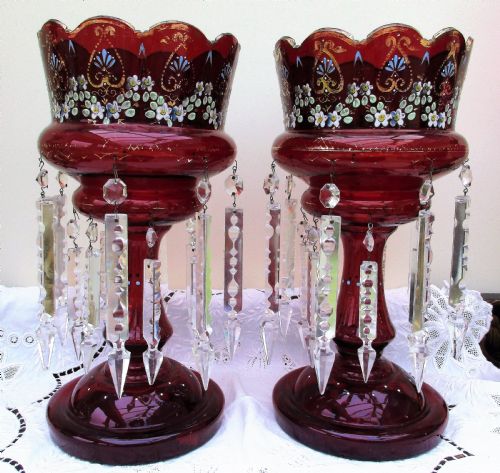
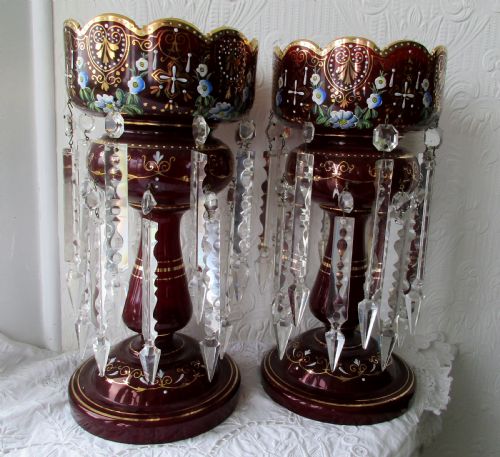
Mantel lustres and pairs of candlesticks appear frequently alongside table glassware such as champagne coupes and tumblers. English and continental workshops created these pieces in styles spanning the eighteen-sixties to the eighteen-nineties.
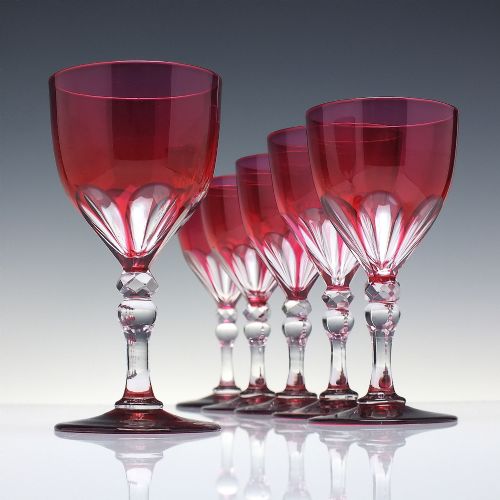
Objects often utilise overlay or flash techniques where a layer of red glass covers a clear crystal base. Engraved motifs featuring fruiting vines and geometric patterns frequently decorate the surfaces of these items.
Materials and construction
Glassmakers created the characteristic colour by adding gold or copper compounds to the molten batch during production. Lead crystal and standard glass formed the foundation for many vessels before artisans applied an outer layer of ruby glass.
Craftsmen then utilised cutting wheels to carve through the red surface layer down to the clear crystal underneath, producing sharp contrast and intricate patterns. Enamel and gold leaf sometimes added further ornamentation to the finished pieces.
Victorian Ruby Red Crystal Retail Price Guide 2026
Typical asking prices for victorian ruby red crystal among the pieces listed under this phrase on Sellingantiques today, from the lower quarter to the upper quarter. They describe what is for sale here now, not the wider market.
Listings span the nineteenth century, featuring periods from eighteen-sixty to eighteen-ninety alongside materials like lead crystal, enamel, and gold leaf.
Assessing quality in the glass
Depth and saturation of colour distinguish superior examples from simpler pieces. The richness of the ruby hue relies on precise chemical composition and temperature control during the melting process.
The crispness of the wheel cutting and the depth of the engraving separate standard production from finer work. Clean lines in overlay cuts and balanced proportions in matched pairs indicate skilled manufacturing.
The Victorian Ruby Red Crystal Glossary
- Overlay glass
- A technique where a layer of coloured glass is fused over a clear body before cutting. This method allows artisans to carve through the outer skin to reveal the transparent crystal underneath.
- Mantel lustre
- A decorative ornamental vase fitted with hanging glass prisms. These pieces stood on mantelpieces to catch and refract candlelight.
- Flash glass
- A thin coating of coloured glass applied to a clear or contrasting base. It achieves a vibrant hue while using less of the expensive colorants.
- Finger bowl
- A small bowl filled with water used for rinsing fingers between courses at formal dinners. Victorian examples often featured cut crystal or overlay designs.
- Claret jug
- A pouring vessel designed for serving red wine at the dining table. They frequently incorporated glass bodies fitted with silver mounts and handles.
Victorian Ruby Red Crystal: Frequently Asked Questions
What are victorian ruby red crystal lustres?
Lustres are decorative mantel ornaments featuring a central vase or column hung with cut glass prisms. They were designed to sit on drawing room fireplaces and scatter candlelight around the interior.
Pairs of these objects served as formal decorative focal points during the nineteenth century. The hanging prisms caught and reflected light from lamps and windows.
How do I care for antique ruby glass?
Wash these items by hand in lukewarm water using mild detergent. Avoid sudden temperature changes to protect the older glass structure.
Dry them carefully with a soft cloth to preserve any surface engraving. Keep them away from direct sunlight for extended periods to maintain the depth of the red colour.
Are these pieces English or continental?
Makers in both England and continental Europe produced ruby glass during the nineteenth century. English workshops frequently turned out cut decanters, jugs, and finger bowls.
Bohemian glassmakers also exported significant quantities of engraved vases, tumblers, and lustres to the British market. Both regional traditions utilised similar overlay and cutting techniques.
How can I tell the age of ruby glass?
Examine the base of the object for wear marks and pontil scars left by the manufacturing process. Nineteenth-century pieces often display characteristic weight and hand-finished details.
Style, engraving motifs, and mount materials help narrow down the production period. Victorian examples typically date between eighteen-sixties and eighteen-nineties.