



Victorian Ruby Five Stone
These pieces for victorian ruby five stone bring together rich red gems and gold bands from the nineteenth century and beyond.
Victorian Ruby Five Stone
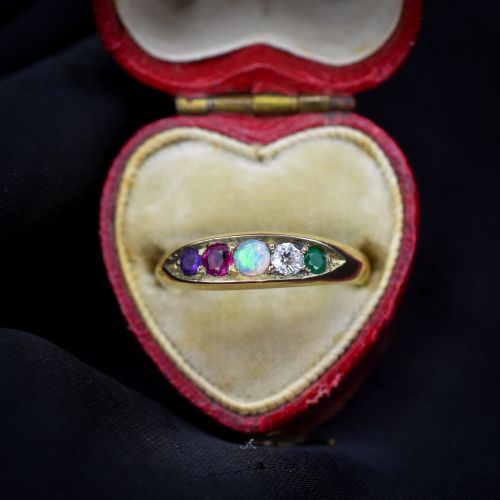
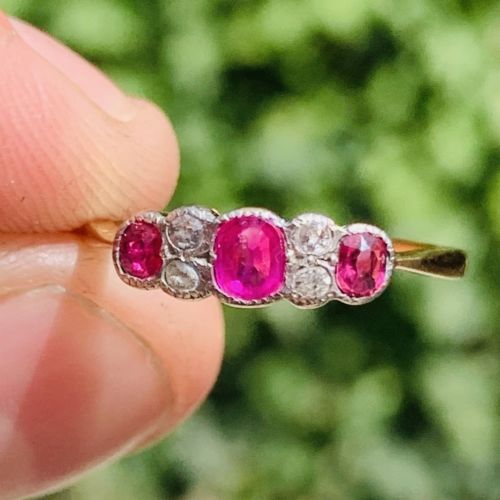
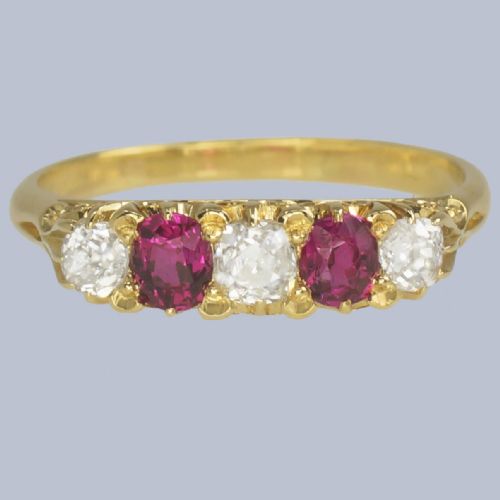
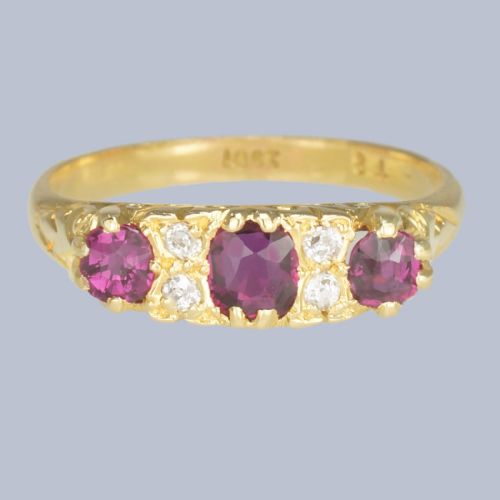
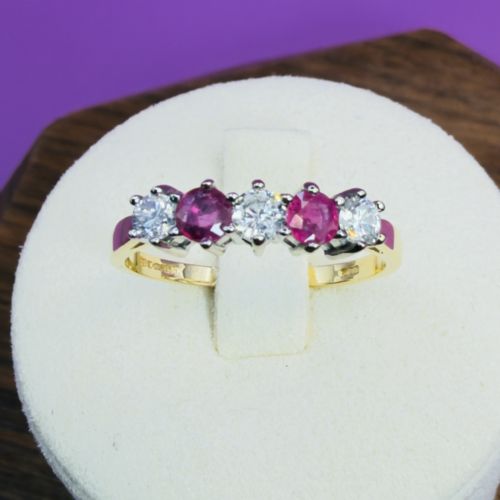
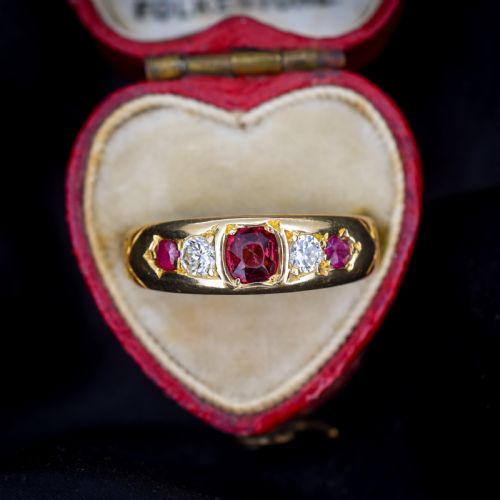
A victorian ruby five stone ring sets a sequence of five red stones across the finger, often interspersed with diamonds in traditional band formats.
Most examples found here date from the Victorian era and the late nineteenth century, spanning periods up to the early twentieth century.
The dominant forms are rings shaped in eighteen carat yellow gold or fifteen carat gold, frequently bearing hallmarks from Chester, Birmingham or London.
How they were made
Goldsmiths worked with eighteen carat yellow gold, fifteen carat gold and platinum to house the gems securely within hand-finished band structures.
Gemstones such as rubies, old cut diamonds, rose cut diamonds and garnets were shaped and set alongside one another in traditional multi-stone arrangements.
Victorian Ruby Five Stone Retail Price Guide 2026
Typical asking prices for victorian ruby five stone among the pieces listed under this phrase on Sellingantiques today, from the lower quarter to the upper quarter. They describe what is for sale here now, not the wider market.
Chester hallmarked gold bands carry regional history straight from nineteenth century workshops into modern collections.
What varies in quality
The visual strength of the piece depends on the depth of colour in the ruby and the clarity of the surrounding old cut diamonds.
Metalwork execution distinguishes standard production from finer pieces, visible in the precision of Chester or London hallmarks and patterned gold bands.
The Victorian Ruby Five Stone Glossary
- Five stone ring
- A ring featuring a linear sequence of five principal gemstones mounted across the top of the band. This layout allows for alternating stone types such as rubies and diamonds.
- Old cut diamond
- A diamond cut by hand in the nineteenth century with a smaller table and larger facets. This cutting style produces a distinct candlelight sparkle compared to modern cuts.
- Hallmark
- An official stamp applied to precious metals indicating the purity of the gold and the assay office of origin. British hallmarks often record towns like Chester, Birmingham or London alongside date letters.
- Carat
- A unit of weight used for measuring gemstones. In the context of gold, it denotes the purity proportion out of twenty-four parts.
Victorian Ruby Five Stone: Frequently Asked Questions
How do I wear a five stone ring daily?
These antique rings suit everyday wear provided they receive sensible care during manual tasks. Removing them for heavy work protects the old gold settings.
Regular checks by a jeweller ensure the ruby and diamond claws remain secure over time.
Are all these rings genuinely Victorian?
The selection includes pieces created during the Victorian period alongside items from adjacent decades like Edwardian years and nineteen sixty.
Assay marks and stylistic details help determine the precise decade of manufacture for each individual band.
What metals are common in these rings?
Yellow gold dominates the construction, appearing primarily in eighteen carat and fifteen carat purity levels.
Platinum also occurs in combination with gold on later nineteenth and early twentieth century examples.
What stones accompany the rubies?
Diamonds are the most frequent companion stones, specifically old cut, old mine cut and rose cut varieties.
Garnets and sapphires also appear alongside rubies within the multi-stone layouts.