






Victorian Ruby Cluster Ring
A victorian ruby cluster ring brings together rich red gems and glittering diamonds in bold nineteenth-century settings.
Victorian Ruby Cluster Ring
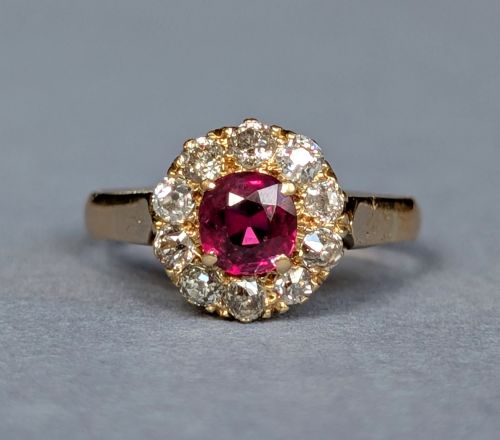
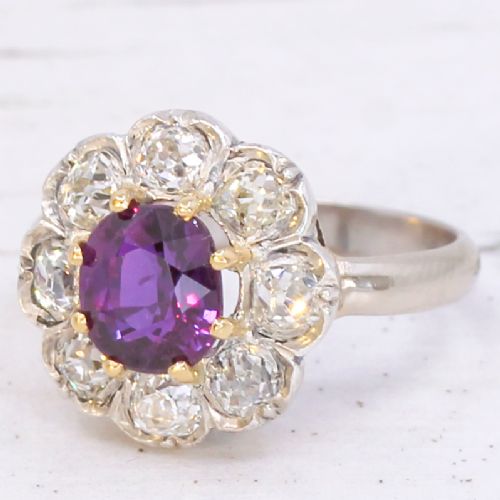
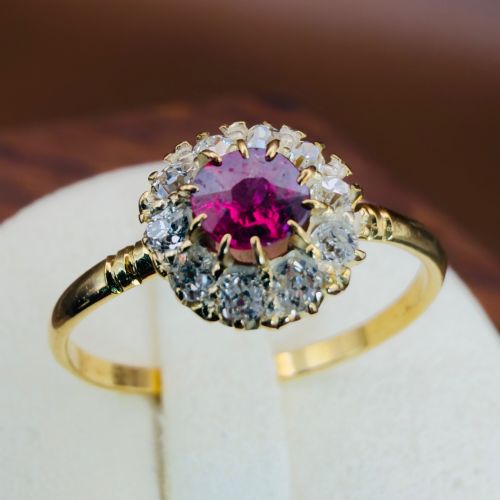
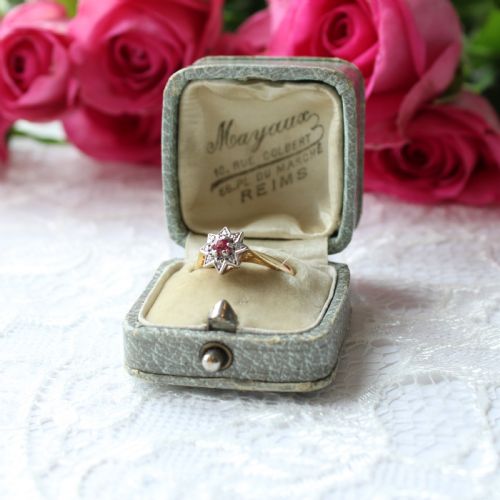
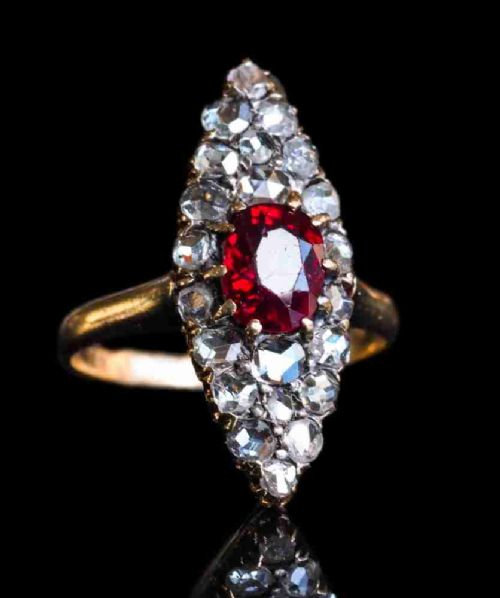
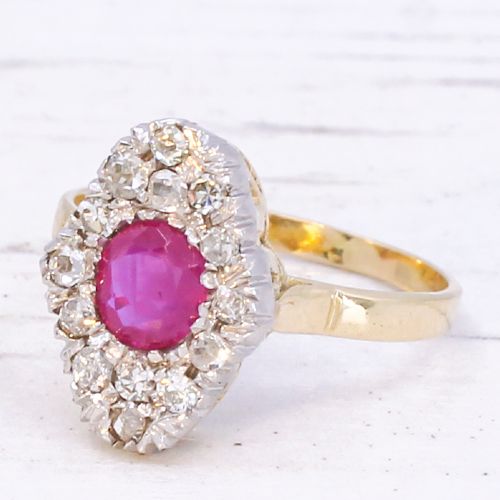
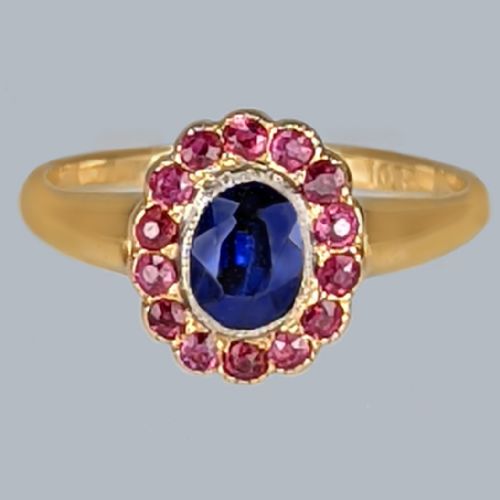
A victorian ruby cluster ring centres on a vivid red corundum surrounded by a border of sparkling diamonds, pearls, or subsidiary stones. Most examples found here date from the nineteenth century into the Edwardian era, taking familiar geometric forms such as navette, daisy, target, and marquise shapes.
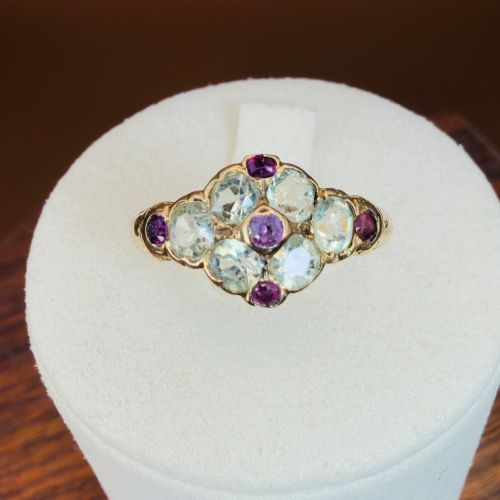
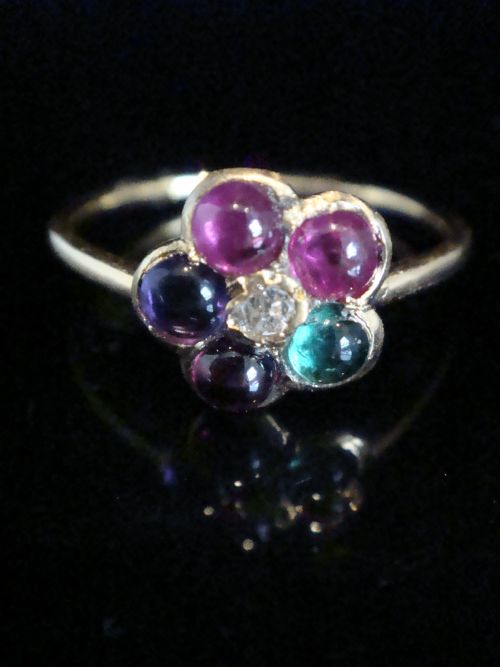
The layout typically places the ruby at the focal point, framed closely by old-cut or rose-cut diamonds to maximise the optical contrast between deep red and bright white light. Variations include multi-stone configurations, acrostic designs spelling out words like dearest, and elongated boat-shaped profiles.
These rings served as sentimental tokens, engagement pieces, and dress rings during the nineteenth century. They appear predominantly in 18ct yellow gold, occasionally utilising 15ct gold or silver-topped settings to mount the stones.
Materials and construction
Goldsmiths of the period relied primarily on 18ct yellow gold, shaping robust shanks and hand-fabricated settings to hold the principal stones securely. Silver was frequently deployed on the face of nineteenth-century pieces to provide a bright white background that enhanced the sparkle of old-cut diamonds.
Gemstones were hand-cut, featuring old mine cuts, rose cuts, and old European cuts with distinctively chunky facets and open culets. Rubies in these clusters range from untreated Burmese and Mogok stones to synthetic varieties introduced around the turn of the twentieth century.
Victorian Ruby Cluster Ring Retail Price Guide 2026
Typical asking prices for victorian ruby cluster ring among the pieces listed under this phrase on Sellingantiques today, from the lower quarter to the upper quarter. They describe what is for sale here now, not the wider market.
Listings feature 18ct yellow gold predominantly, alongside 15ct gold, silver-topped mounts, and platinum accents across Victorian and Edwardian periods.
Distinctions in quality
Quality rests significantly on the origin, saturation, and treatment status of the central ruby, with natural unheated stones commanding the strongest interest. The presence of certified geographical origins like Burma adds notable distinction.
Craftsmanship in the claw, grain, or bezel settings dictates the overall refinement of the piece. Superior examples display closely matched diamond borders, symmetrical cluster outlines, and substantial gold weight in the shank without excessive wear to the original prongs.
The Victorian Ruby Cluster Ring Glossary
- Navette
- A boat-shaped or marquise-shaped cluster setting that tapers to points at either end. This elongated silhouette sits prominently across the finger.
- Old-cut diamond
- A hand-faceted diamond cut before the standardisation of modern brilliants, characterised by a smaller table, higher crown, and open culet. These stones produce a softer, candlelit sparkle.
- Rose-cut diamond
- A historic diamond cut featuring a flat base and a domed crown covered in triangular facets. It resembles an unopened rosebud.
- Acrostic ring
- A piece where the first letter of each gemstone spells out a sentiment, such as diamond, emerald, amethyst, ruby, emerald, sapphire, and topaz spelling dearest.
- Culet
- The small facet at the bottom of a gemstone where the pavilion facets meet. Older cut stones frequently exhibit a visible flat facet at this point.
Victorian Ruby Cluster Ring: Frequently Asked Questions
How do I care for my ring?
Clean these antique rings gently with warm soapy water and a soft brush, avoiding harsh ultrasonic cleaners that can damage pearls or treated stones. Regular professional checks of the claws ensure the ruby and surrounding diamonds remain secure in their original settings.
Remove the ring during heavy manual work or gardening to protect the 18ct gold shank from scratching and to prevent strain on antique prongs.
Are the rubies natural?
Many nineteenth-century rubies are natural, originating from sources like Burma or Mogok, and occasionally come with modern gemmological reports confirming their origin and treatment status. Some pieces from the late period incorporate synthetic rubies, which became commercially available around that time.
Reviewing accompanying laboratory certificates or examining the internal inclusions under magnification helps determine whether a ruby is natural or synthetic.
Can these rings be resized?
Most 18ct gold rings can be carefully resized by a skilled jeweller who understands antique construction methods. The process involves adding or removing a small section of metal from the lower shank.
Care must be taken during heating to protect vulnerable stones like pearls or softer rubies from thermal shock.