




Victorian Round Stool
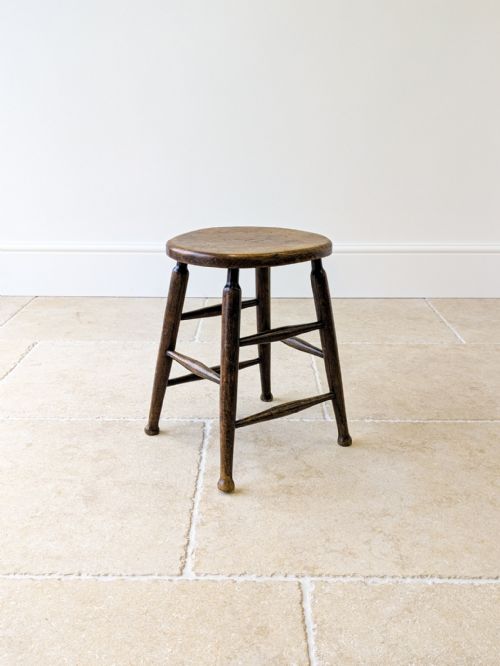
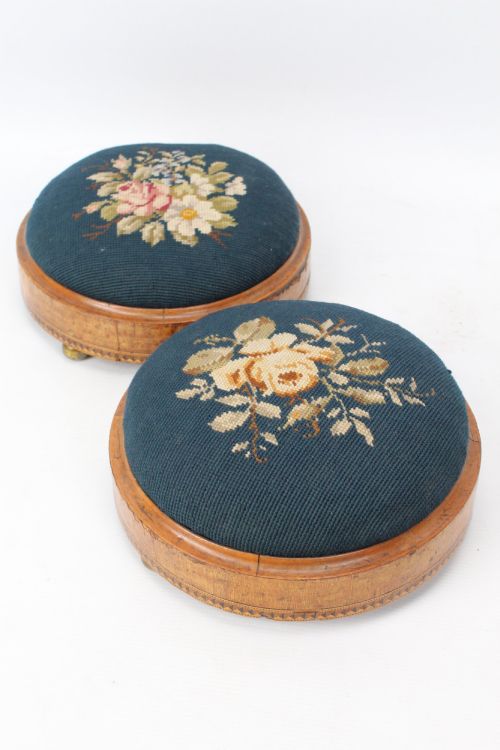
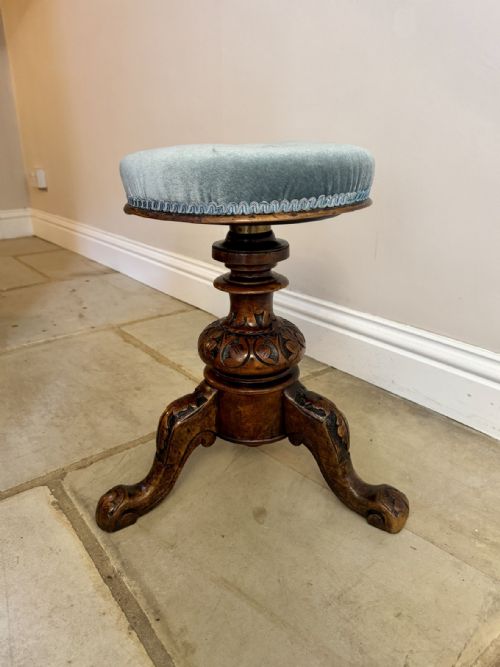
These walnut, mahogany, and rosewood items are a victorian round stool, prized for their compact circular seats and period craftsmanship.
Victorian Round Stool
A victorian round stool brings together compact seating forms from the nineteenth century, ranging from early examples dated around eighteen-fifty to late pieces from eighteen-ninety. Buyers examining this page encounter diverse regional expressions, including English country styles, French nineteenth century pieces, and Anglo-Indian works.
The selections span piano stools with adjustable or rising seats, footstools featuring needlepoint and kilim tapestry, alongside sturdy elm windsor stools and cricket tables. Walnut and mahogany dominate the offerings, frequently accompanied by velvet, wool, and brass fittings.
Early victorian specimens often display intricate tunbridge ware details and carved wooden frames. The variety encompasses small geometric footstools, revolving piano seats, and occasional pieces bearing distinct maker hallmarks.
How they were made
Cabinetmakers utilised dense hardwoods such as walnut, mahogany, rosewood, and pollard oak to construct the structural frames and circular tops. Turned wooden components and carved elements demonstrate traditional nineteenth-century joinery and lathe work.
Upholstered variants rely on durable fabrics including velvet, wool, and woven textiles, often secured over internal stuffing. Tunbridge ware decoration incorporates mosaic woodwork techniques, while mechanical screw mechanisms provide the adjustable height function on piano stools.
Victorian Round Stool Retail Price Guide 2026
Typical asking prices for victorian round stool among the pieces listed under this phrase on Sellingantiques today, from the lower quarter to the upper quarter. They describe what is for sale here now, not the wider market.
Listings feature items spanning the nineteenth century, utilising walnut, mahogany, rosewood, elm, and hardwood across multiple styles.
What varies in quality
The caliber of a piece depends heavily on the selection of timber and the crispness of any hand carving on the walnut or mahogany frame. Pieces retaining their original tunbridge ware mosaics or functioning mechanical rising seat mechanisms command greater attention.
Makers such as gillows or h brooks and co introduce a documented level of workshop pedigree that elevates certain pieces above anonymous workshop output. The integrity of the upholstery ground, whether needlepoint, kilim, or velvet, also shapes the overall standard.
Gillows·H Brooks and Co
The Victorian Round Stool Glossary
- Tunbridge ware
- A form of decorative woodwork originating from kent, creating detailed mosaic patterns from tiny wood squares. It appears on nineteenth-century boxes and footstool borders.
- Windsor stool
- A traditional wooden seat constructed with turned legs and spindles wedged directly into a solid elm or hardwood seat. These pieces reflect sturdy english country craftsmanship.
- Kilim tapestry
- A flatweave textile using traditional geometric patterns, frequently utilised for upholstering the tops of small round footstools. It adds colour and texture to the timber frame.
- Rising seat
- A mechanical piano stool mechanism allowing the circular top to adjust in height via a central wooden or metal screw thread. This innovation provided ergonomic utility for musicians.
Victorian Round Stool: Frequently Asked Questions
What is a victorian round stool used for?
These pieces served practical domestic functions primarily as piano seats, domestic footstools, or small occasional tables.
Their compact circular footprint made them easily movable around nineteenth-century parlours and drawing rooms.
How do I identify early victorian examples?
Early pieces from around eighteen-fifty often incorporate specific decorative techniques like tunbridge ware or intricate hand carving in walnut and mahogany.
Such details help distinguish them from plainer nineteenth-century country items.
Are piano stools height adjustable?
Many piano stools on this page feature rising seat mechanisms driven by a central screw thread.
This allows the circular top to be rotated and raised or lowered to suit the player.
What materials are typical for these stools?
Cabinetmakers relied on hardwoods including walnut, mahogany, rosewood, elm, and pollard oak for the timber structures.
Upholstered versions use velvet, wool, fabric, and needlepoint tapestries.