



Victorian Rolled Arm Sofa
A victorian rolled arm sofa brings deep-buttoned comfort and timeless English character into a room.
Victorian Rolled Arm Sofa
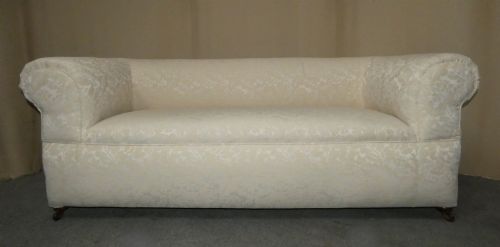
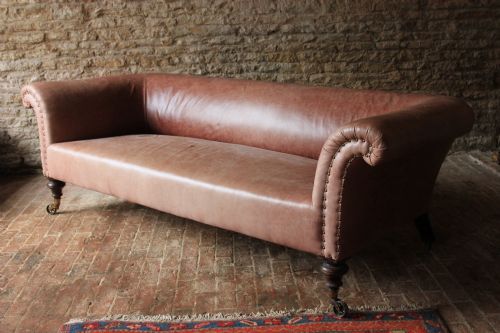
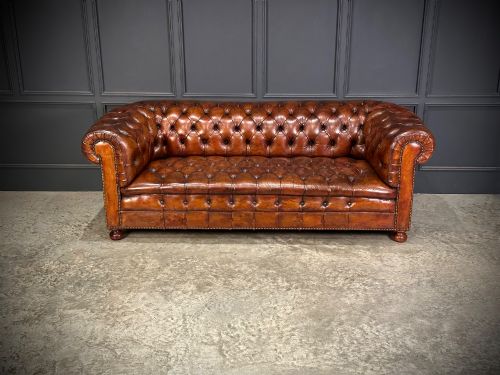
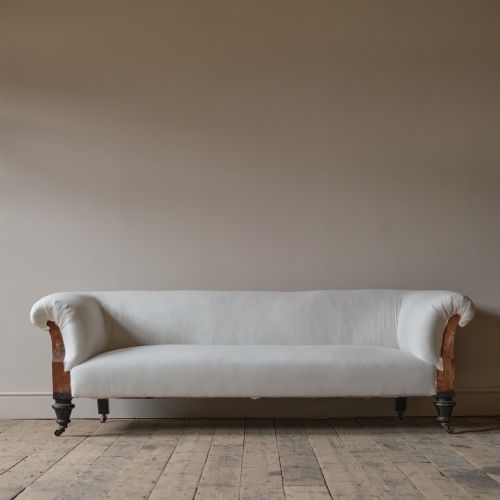
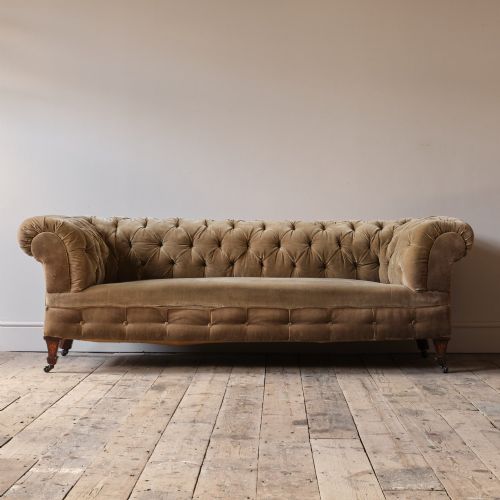
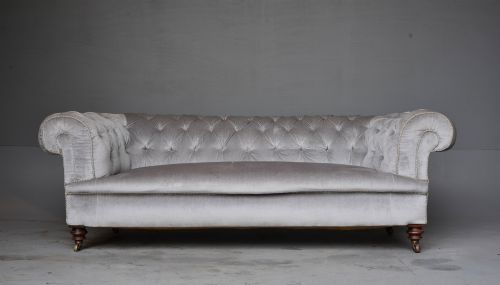
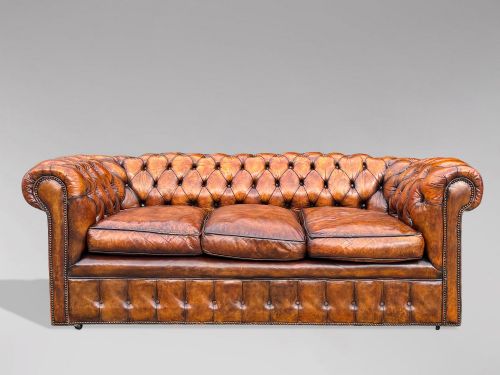
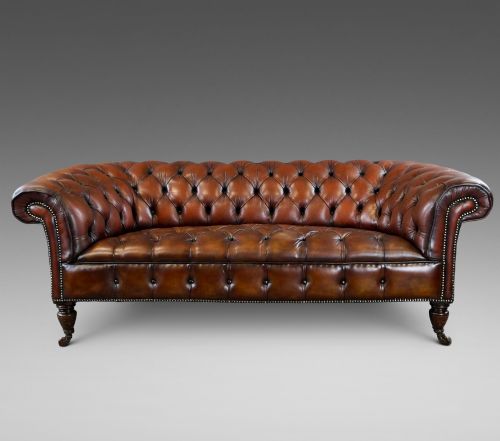
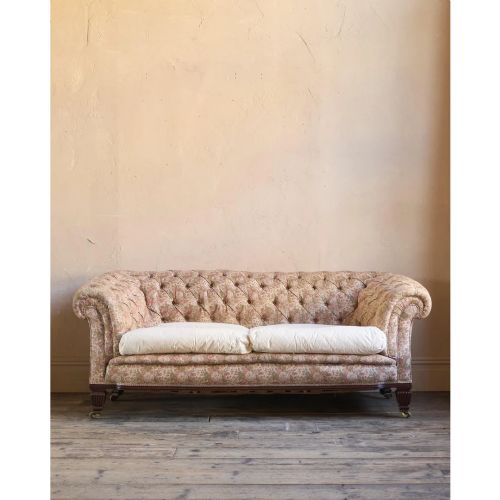
A victorian rolled arm sofa typically appears on this page as a Chesterfield, featuring characteristically low seats and scrolled arms designed for lounging. These seating forms span the nineteenth century and into the early twentieth century, carrying the robust proportions typical of the period.
The selections here run from the mid-nineteenth century up to nineteen ten, encompassing both traditional traditional English pieces and Edwardian examples. Most of these pieces take the form of large three-seaters or deep-buttoned designs intended for daily use.
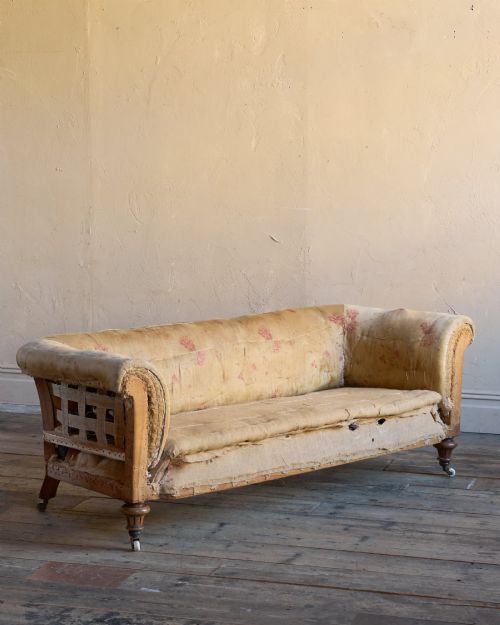
Buyers will find both thoroughly restored frames and pieces awaiting reupholstering or left in un-restored states. The origin of these items traces back to established cabinet makers and workshops operating in nineteenth-century London and beyond.
How they were made
Construction relies upon sturdy hardwood frames built from timber such as mahogany, which provides the structural backbone for deep upholstery. Brass castors frequently finish the feet, allowing these heavy items to be moved across wooden floors.
Upholstery techniques involve traditional stuffing secured with calico linings, finished in either brown, aubergine, or hand-dyed leathers, or in patterned fabric such as Flora Soames. Deep buttoning defines the backs and arms, demanding precise hand-work from skilled artisans.
Victorian Rolled Arm Sofa Retail Price Guide 2026
Typical asking prices for victorian rolled arm sofa among the pieces listed under this phrase on Sellingantiques today, from the lower quarter to the upper quarter. They describe what is for sale here now, not the wider market.
The listings on this page span from the 1850s through to the Edwardian era, featuring wood, brass, leather, and fabric materials.
What varies in quality
Quality in a victorian rolled arm sofa rests upon the integrity of the underlying hardwood frame and the depth of the original padding. Pieces retaining their initial hand-dyed leathers and firm buttoning demonstrate superior craftsmanship compared to those heavily altered over time.
The pedigree of the maker heavily influences the standing of a piece, with workshops like Howard and Sons or Hampton and Sons representing the upper echelon of nineteenth-century seating construction.
Hampton & Sons·Howard & Sons
The Victorian Rolled Arm Sofa Glossary
- Chesterfield
- A traditional style of couch characterised by low seating and rolled arms of equal height. This form is synonymous with deep buttoned leather upholstery.
- Calico
- A plain-woven cotton fabric used as an internal lining beneath the final leather or textile covering. It provides a stable foundation for the stuffing.
- Castor
- A small wheel fitted to the legs of heavier furniture to ease movement. Brass examples are typical on nineteenth-century seating.
- Deep buttoning
- An upholstery method where tufting pulls the fabric deep into the padding to create a padded, diamond-patterned surface. This technique requires considerable skill to execute evenly.
- Hardwood
- Dense timber derived from broad-leaved trees, utilised for the robust internal frames of these couches. It ensures longevity and structural stability.
Victorian Rolled Arm Sofa: Frequently Asked Questions
How do I care for old leather?
Keep vintage leather clean by dusting gently and applying suitable nourishing balms to maintain the suppleness of the hide.
Avoid placing the seating near direct heat sources or strong sunlight, which can dry out nineteenth-century leather and cause cracking.
What is a Chesterfield sofa?
A Chesterfield is a classic British seating form defined by arms that match the height of the back, creating a uniform enclosure.
These pieces rely on deep buttoning and generous proportions to deliver both formal appearance and relaxed comfort.
Are these sofas comfortable for daily use?
Nineteenth-century seating was built with sturdy hardwood frames and dense internal padding designed to withstand regular domestic life.
Many examples offer deep seats suited to lounging, though comfort levels depend on whether the internal padding is original or restored.
How do I identify a Howard and Sons sofa?
Makers like Howard and Sons often stamped their frames or castors, and their pieces are distinguished by exceptionally refined proportions and traditional stuffing techniques.
Examining the internal calico lining and the build quality of the timber frame helps confirm the origin of these workshop pieces.