

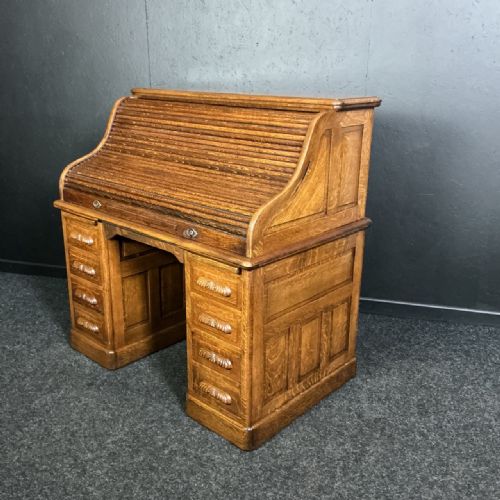


Victorian Roll Top
These pieces of a victorian roll top offer secure privacy for correspondence through a flexible slatted cylinder that conceals the writing surface.
Victorian Roll Top
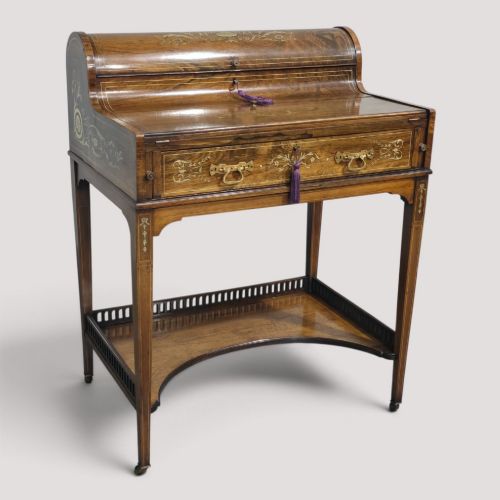
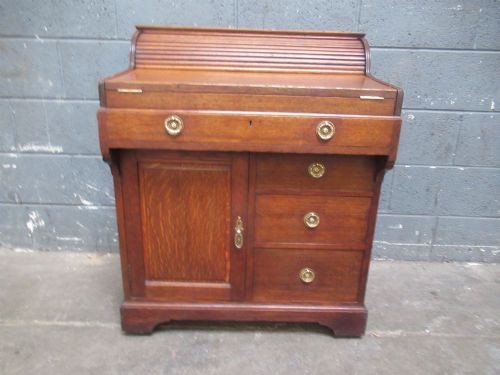
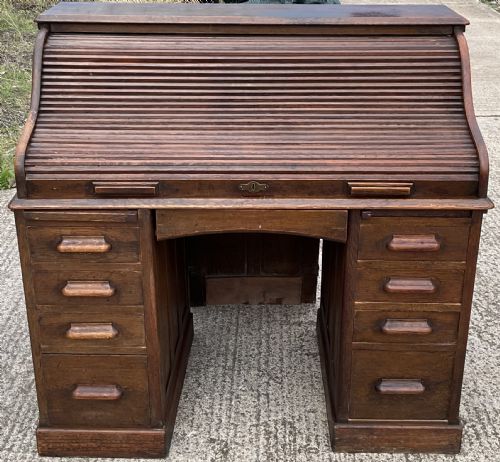
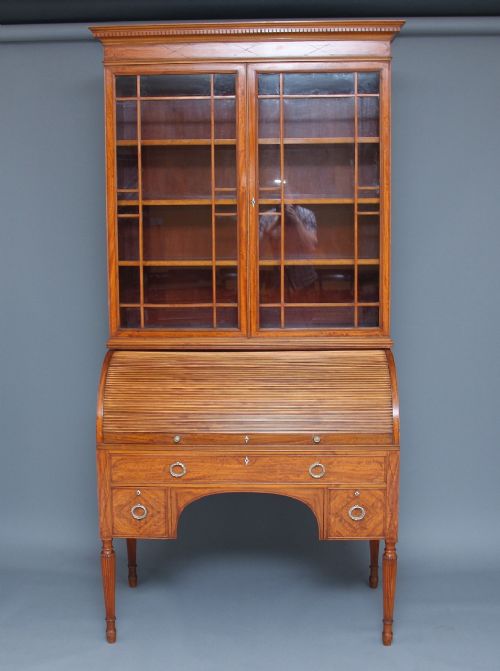
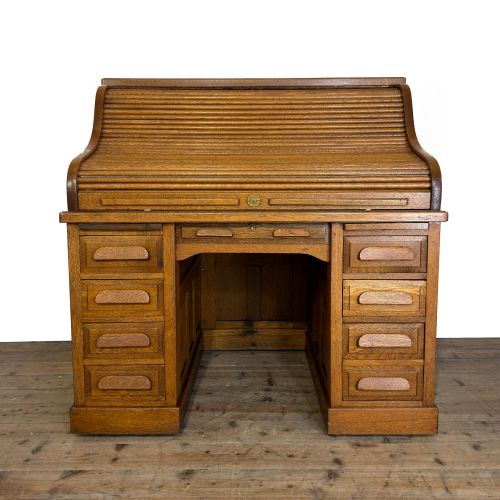
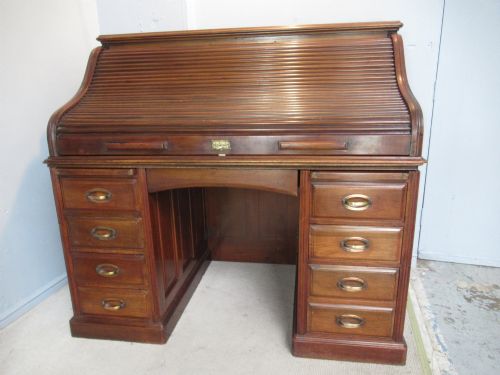
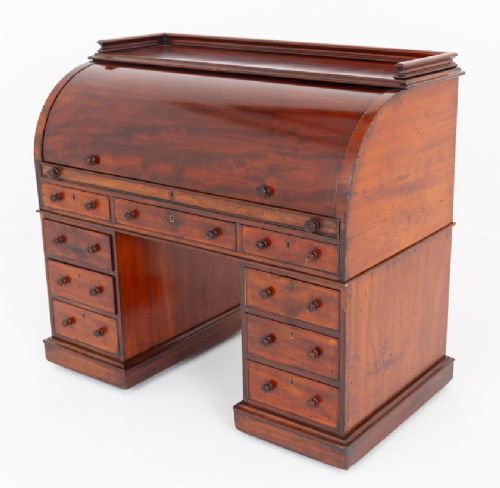
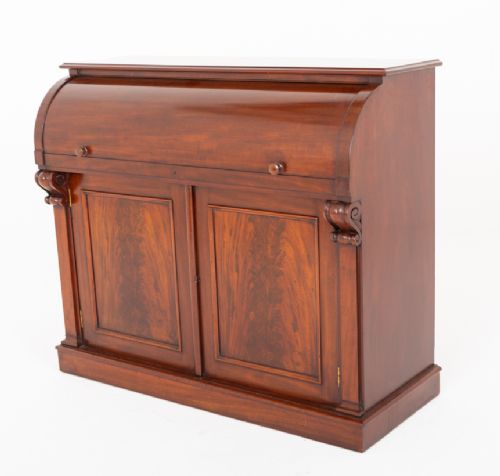
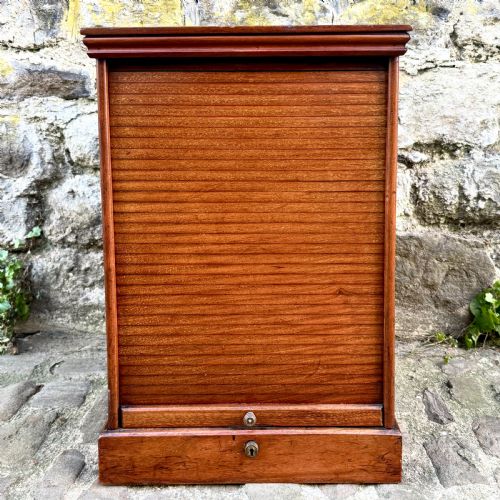
A victorian roll top encompasses sturdy pedestal desks, fitted bureau bookcases, and compact writing boxes designed to house papers out of sight. The surviving examples span the nineteenth century into the Edwardian era, showing both heavy office furniture and refined domestic pieces.
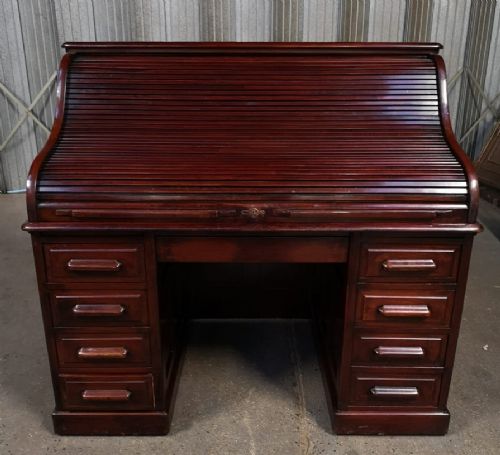
Mahogany and oak dominate the forms seen here, frequently appearing in large double pedestal configurations with tambour shutters. Smaller walnut and satinwood variations provide lighter alternatives intended for parlour or bedroom use.
The working mechanism relies on horizontal slats of wood sliding smoothly within vertical grooves to lock the entire writing compartment. This construction protects confidential documents while maintaining a tidy appearance when the desk is closed.
Materials and Construction
Cabinetmakers utilised dense timbers such as mahogany, oak, and walnut, often applying burr walnut or satinwood veneers to prominent exterior surfaces. Brass hardware, leather writing inserts, and occasionally glass doors complete the structural assembly of these desks.
The flexible shutter, or tambour, requires precise joinery where individual wooden slats are glued to a strong canvas or leather backing. This allows the curved top to glide around tracks without binding or sagging over years of daily operation.
Victorian Roll Top Retail Price Guide 2026
Typical asking prices for victorian roll top among the pieces listed under this phrase on Sellingantiques today, from the lower quarter to the upper quarter. They describe what is for sale here now, not the wider market.
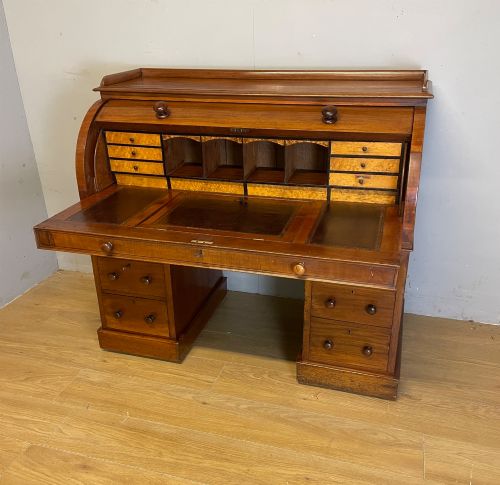
Some models hide tiny secret drawers behind pigeonholes, designed for letters that required absolute discretion.
Defining Quality
Superior examples demonstrate meticulous attention to internal stationery fittings, featuring secret drawers, pigeonholes, and adjustable writing slopes that match the exterior timber. Lesser items rely on simplified carcases with basic compartments and minimal secondary woods.
The smoothness of the sliding action indicates the skill of the original maker, as inferior tambour tracks often stick or rattle during operation. Fine execution also appears in crisp drawer dovetails and well-matched veneer grains across the cylinder front.
Edwards and Roberts·Mappin and Webb·Boston Chair Company
The Victorian Roll Top Glossary
- Tambour
- A flexible shutter made from narrow wooden slats attached to a fabric backing. This allows the desktop to curve around a track and conceal the interior compartments.
- Cylinder desk
- A writing table featuring a quarter-circle solid or panelled cylinder lid that rolls back to reveal the writing surface and pigeonholes.
- Pedestal desk
- A heavy freestanding office or library desk supported by two banks of drawers connected by a central recess.
- Bureau bookcase
- A tall combination piece incorporating a writing desk section below a shelved cabinet enclosed by glass or wooden doors.
- Writing slope
- A portable or table-top box with an angled hinged lid designed to hold paper and writing instruments.
Victorian Roll Top: Frequently Asked Questions
How do I operate the roll top mechanism?
The slatted wooden cylinder slides along curved grooves within the sides of the desk. Pushing the shutter upward reveals the inner writing surface and pigeonholes.
Locking the main drawer often releases an automatic catch that secures the tambour lid in the closed position.
What is the difference between a cylinder desk and a tambour desk?
A cylinder desk typically uses a solid curved wooden panel that rotates on pivots or tracks. This form is common in fine nineteenth-century mahogany and satinwood pieces.
A tambour desk uses many narrow slats joined together flexibly to follow the curved track, which is frequently seen on large oak office desks.
Where were these desks placed in a Victorian home?
Large oak and mahogany pedestal versions stood in libraries, studies, or commercial offices for heavy administrative work. Smaller satinwood and walnut variants were kept in private drawing rooms or ladies' boudoirs for personal correspondence.
Bureau bookcases combined writing facilities with book storage in multi-purpose family spaces.
How should I care for the leather writing surface?
The leather insert requires gentle cleaning with a slightly damp cloth followed by a suitable nourishing leather balm to prevent cracking. Avoid using harsh chemical cleaners or excessive water near the surrounding timber.
Keeping the room at a stable humidity protects both the leather and the moving wooden tambour tracks.