


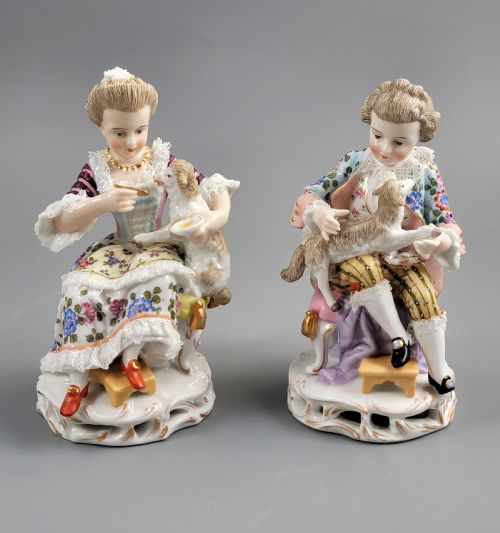


Victorian Rococo Revival Figurine
A victorian rococo revival figurine brings dramatic asymmetric curves and playful eighteenth-century themes into nineteenth-century interiors.
Victorian Rococo Revival Figurine
When you search for a victorian rococo revival figurine, you are examining nineteenth-century decorative items that emulate the ornate scrolls and naturalistic motifs of the earlier French movement. The examples you encounter on this page span the 1870s and 1880s, taking the form of porcelain figures depicting young gallants, shepherdesses, and children with pets.
The selection extends beyond standalone ceramic subjects to include figural groups, candlesticks, mantel clocks involving cherubs, and vases modeled in biscuit porcelain. Most of these decorative objects originate from continental European factories such as Sitzendorf, Volkstedt, and Meissen style workshops, alongside English makers like Minton.
These pieces served as fashionable mantelpiece and table ornaments for Victorian drawing rooms, combining figural sculpture with functional items like clocks or lamps. The styling relies heavily on the revival of rococo aesthetics, characterised by C-scrolls, asymmetric compositions, and pastoral narratives.
Assessing quality and execution
The distinction between standard and superior examples lies in the crispness of the moulding and the delicacy of the hand-painted enamel work on the porcelain surface. Finer figures display subtle gradations of colour, precise facial detailing, and cleanly applied gilding that does not obscure the underlying ceramic form.
In composite pieces involving bronze and marble, the weight and finish of the metal casting alongside the quality of the stone stand determine the standard of the object. Superior examples maintain structural harmony between the figural sculpture and its decorative base, whether configured as a clock or a pair of candlesticks.
Victorian Rococo Revival Figurine Retail Price Guide 2026
Typical asking prices for victorian rococo revival figurine among the pieces listed under this phrase on Sellingantiques today, from the lower quarter to the upper quarter. They describe what is for sale here now, not the wider market.
Listings within this category span porcelain, bisque, bronze, and marble materials, all created during the nineteenth-century Victorian period.
Triebner Ens And Eckert·Sitzendorf Porcelain·Helena Wolfsohn·Minton
The Victorian Rococo Revival Figurine Glossary
- Bisque porcelain
- Unglazed ceramic ware fired once to achieve a matte, marble-like texture that highlights fine sculptural details. This finish became popular in the nineteenth century for figures and decorative vases.
- Rococo Revival
- An artistic movement during the nineteenth century that reinterpreted the curving lines, asymmetrical scrolls, and pastoral themes of the eighteenth-century French style. It appears frequently in Victorian decorative arts and ceramics.
- Gilt
- A thin layer of gold or gold-like material applied to the surface of porcelain, bronze, or wood to provide decorative enrichment. This technique highlights raised scrolls and borders on clocks and figurines.
- Enamel
- Opaque vitreous composition fused to the surface of porcelain or metal through firing to add permanent colour. It provides the vivid hues seen on nineteenth-century figures and floral motifs.
Victorian Rococo Revival Figurine: Frequently Asked Questions
What periods do these pieces date from?
The items listed here belong to the nineteenth century, specifically concentrated in the decades of the 1870s and 1880s during the Victorian era.
Most examples reflect the revival styles popular in Britain and continental Europe during this period, drawing inspiration from earlier French aesthetics.
How were these figures used originally?
These decorative objects functioned primarily as ornamental displays on mantelpieces, drawing room tables, and sideboards within Victorian homes.
Certain pieces combined sculptural figures with practical functions, serving as clocks, table lamps, or figural candlesticks.
What materials are most common?
Porcelain is the dominant material, appearing in both glazed colourful finishes and matte bisque forms across the various figures and vases.
Bronze and variegated marble also feature prominently in the construction of heavier mantel clocks and converted statuary.
How do I identify a revival style?
Revival pieces incorporate the characteristic C-scrolls, asymmetric forms, and pastoral subjects of the eighteenth century while employing nineteenth-century manufacturing techniques.
Factory marks, specific paste compositions, and Victorian dating conventions help distinguish these later interpretations from original eighteenth-century works.