

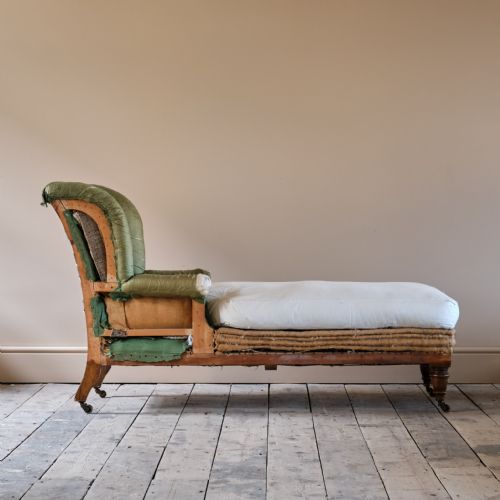
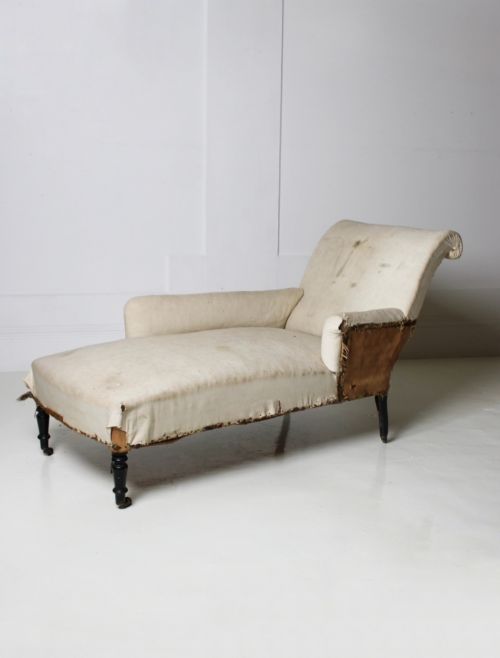


Victorian Reclining Daybed
A victorian reclining daybed offers the ultimate nineteenth-century repose, combining sturdy timber frames with luxurious upholstery for afternoon rest.
Victorian Reclining Daybed
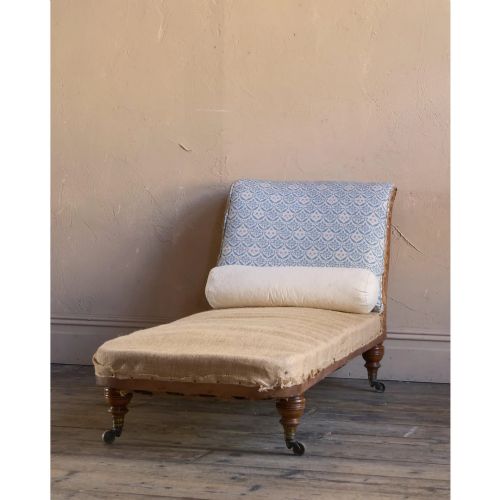
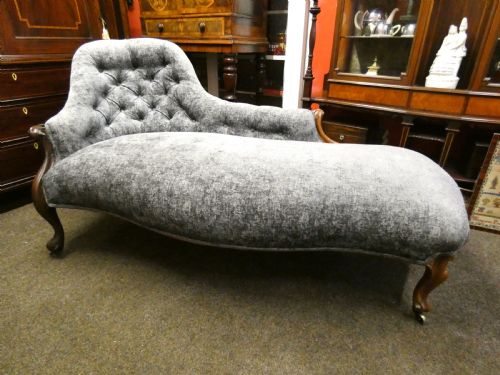
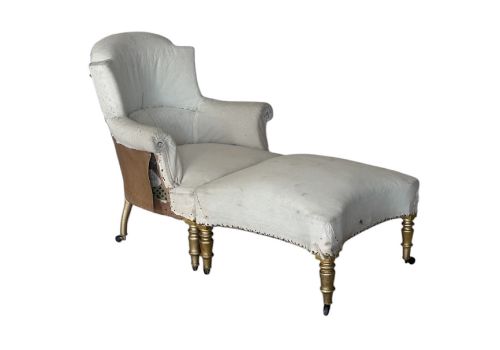
A victorian reclining daybed is a versatile nineteenth-century lounge piece designed for daytime rest, bridging the gap between a comfortable armchair and a full sofa. These items appear in various forms across the inventory, ranging from classic chaise longues to adjustable campaign styles and folding steamer deck chairs.
Buyers will most frequently encounter nineteenth-century mahogany, walnut, and rosewood frameworks paired with low backs and extended seats. Some examples incorporate clever mechanical adjustments or turned legs with original castors for mobility around grand country houses.
Origins stretch from English workshops to French 19th Century ateliers and colonial campaign outposts. The selection spans the broader Victorian era alongside related Regency and Edwardian pieces built for similar domestic comfort.
How they were made
Timbers such as mahogany, walnut, rosewood, and general wood form the structural skeletons of these daybeds, often shaped with carved details or turned legs. Brass fittings frequently appear on campaign variations and castors, providing both structural support and functional movement.
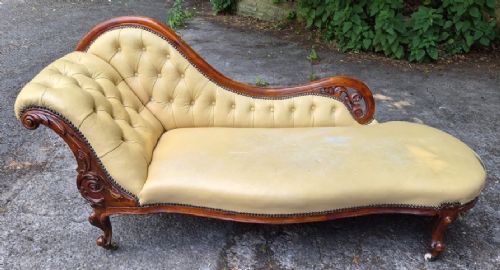
Upholstery techniques rely on traditional stuffing covered in diverse materials like velvet, leather, calico, and standard fabric. Skilled makers utilised deep buttoning, double spoonback designs, and concealed storage compartments within the wooden carcases.
Victorian Reclining Daybed Retail Price Guide 2026
Typical asking prices for victorian reclining daybed among the pieces listed under this phrase on Sellingantiques today, from the lower quarter to the upper quarter. They describe what is for sale here now, not the wider market.
Listings feature timbers like mahogany, walnut, rosewood, and brass alongside upholstery in leather, velvet, calico, and fabric.
What varies in quality
The distinction between standard production and exceptional work lies in the timber selection and the crispness of the carved details on the mahogany or rosewood frames. Finer pieces demonstrate superior joinery in the adjustable mechanisms and sturdy construction of the turned legs.
Upholstery execution and the selection of covering materials, from supple brown leather to rich velvet, dictate the overall refinement of the piece. Maker attributions, particularly those associated with notable nineteenth-century London workshops, elevate the standing of a daybed considerably.
Howard and Sons·H. Goodall and Sons
The Victorian Reclining Daybed Glossary
- Chaise longue
- An upholstered sofa in the shape of a chair that is long enough to support the user's legs. This form dominates the nineteenth-century seating inventory.
- Campaign style
- Portable furniture designed for military officers or travel, typically featuring detachable parts and brass mounts. These pieces prioritise practical disassembly.
- Duchess brisee
- A composite daybed comprising an armchair and a matching stool or a two-part chaise longue arrangement. It provides flexible lounging configurations.
- Double spoonback
- A timber chair back shaped in a double hollow resembling a spoon, providing ergonomic lumbar support. This style is characteristic of mid-nineteenth-century upholstery.
- Castors
- Small wheel attachments fitted to the base of furniture legs for ease of movement. Original examples remain desirable to collectors.
Victorian Reclining Daybed: Frequently Asked Questions
How do I use a daybed today?
A victorian reclining daybed works well in a study, drawing room, or large bedroom as an inviting spot for reading and daytime rest.
Position the piece away from direct sunlight to protect antique leather or velvet upholstery from fading over time.
Are these daybeds comfortable for sleeping?
These nineteenth-century lounges were primarily built for daytime reclining and reading rather than full overnight slumber. The angled backs and fixed headrests support semi-reclined postures rather than flat sleeping.
Buyers intending regular rest should inspect the internal padding depth and overall length to ensure adequate personal comfort.
How do I distinguish campaign styles?
Campaign daybeds feature practical elements like detachable legs, folding frames, and flush brass hardware designed for easy transport. They utilise robust timbers such as mahogany and oak to withstand frequent relocation.
Regular Victorian pieces rely on solid, non-detachable frames with turned wooden legs and fixed castors intended for permanent placement inside a country house.
What maintenance do leather and velvet need?
Leather upholstery requires regular conditioning with appropriate balms to prevent drying and cracking across the surface. Velvet needs gentle brushing with the grain to maintain the pile and prevent flattening.
Keep wooden frames polished with traditional wax to nourish the mahogany, walnut, or rosewood finish.