


Victorian Portrait Brooch
A victorian portrait brooch captures likenesses in miniature, offering wearable history through hand-painted watercolours and carved cameos.
Victorian Portrait Brooch
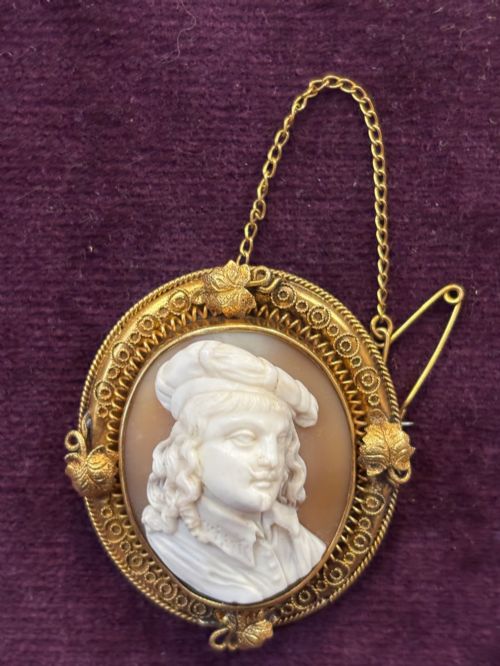
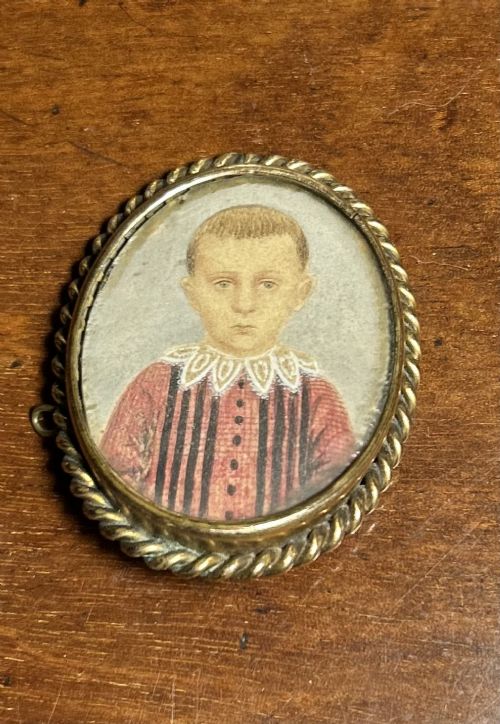
A victorian portrait brooch combines personal likeness with wearable ornament, taking the form of hand-painted miniatures on watercolour or detailed relief carvings. The pieces seen here span the nineteenth century, including Regency survivals and later twentieth-century iterations.
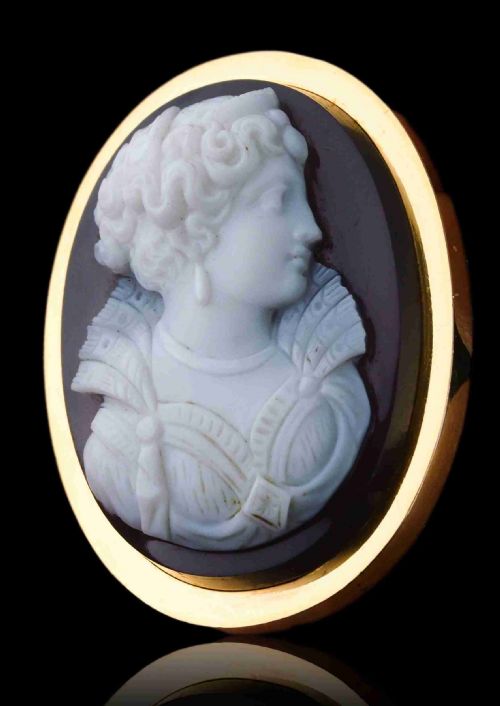
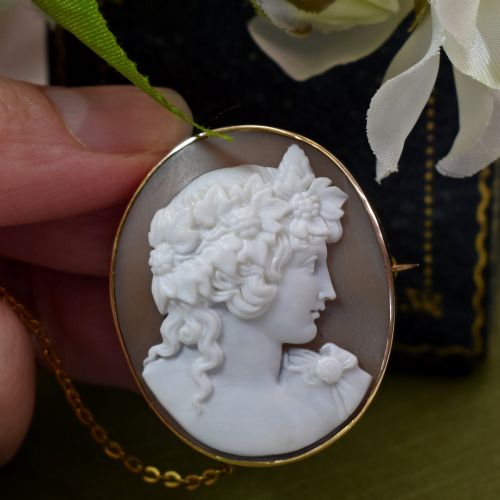
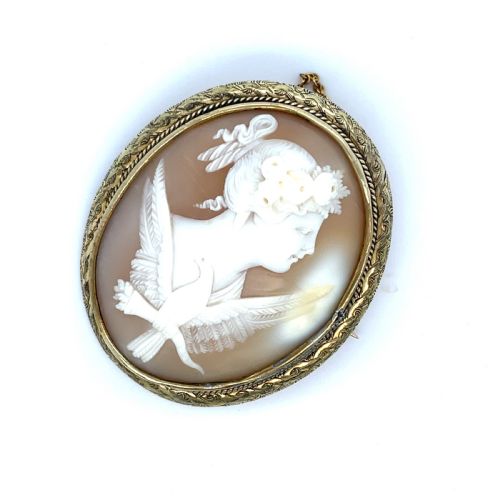
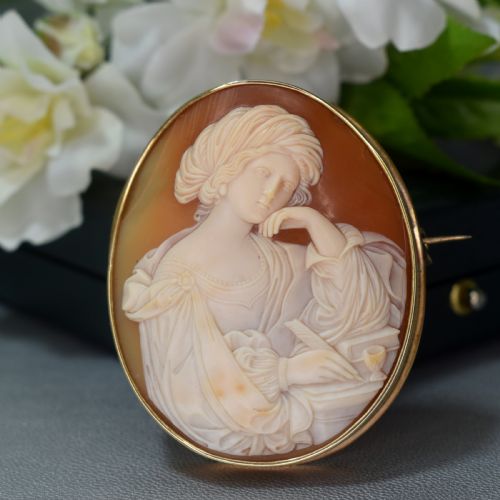
Most examples appear as shell or hardstone cameos mounted in yellow gold, often designed to double as pendants. Subjects range from classical deities like Flora and Aphrodite to specific historical figures and intimate family portraits.
How they were made
Carvers worked by hand in shell, agate and lava, cutting through natural strata to raise white profiles against darker grounds. Goldsmiths framed these panels in yellow gold, utilising filigree, detailed wirework and pinchbeck alongside enamel and pearls.
Miniature portraits were painted in watercolour on ivory or paper, then sealed behind glass within hinged frames or swivel mounts. These techniques required exceptional precision under magnification to achieve depth and expression at such a small scale.
Some portraits immortalise classical deities like Antinous disguised as Vertumnus, letting buyers wear ancient mythology on a lapel.
What varies in quality
Quality rests primarily on the skill of the carver or painter, evident in the proportion, anatomical accuracy and expression of the subject. Finer pieces display crisp undercutting in shell and subtle shading in painted miniatures.
The weight and detail of the metal mount also distinguish pieces, with substantial gold frames, pearls and intricate filigree marking out superior workshops from simpler production.
R. Pernice
The Victorian Portrait Brooch Glossary
- Cameo
- A method of carving where a layered stone or shell is cut to leave a raised design against a contrasting background. The upper stratum forms the subject while the lower provides the field.
- Hardstone
- Minerals such as agate or onyx used for carving cameos, valued for their durability and sharp colour contrast. They yield crisper lines than softer shell materials.
- Pinchbeck
- An alloy of copper and zinc invented to imitate gold, used widely in period jewellery. It offers a rich warm tone without the cost of precious metal.
- Grand Tour
- The nineteenth-century practice of continental travel where tourists acquired local crafts like Italian lava and shell carvings. These souvenirs formed a major source of portrait jewellery.
- Swivel mount
- A setting allowing the central portrait panel to turn on a central axis, often revealing a secondary compartment at the reverse for hair or a secondary view.
Victorian Portrait Brooch: Frequently Asked Questions
How were portrait brooches worn?
Victorians wore these pieces pinned directly to collars, bodices, and heavy shawls to display family likenesses or artistic taste. Many were constructed with hidden loops to accept chains, allowing them to function as pendants.
This dual utility meant frames often incorporated both a pin mechanism and a suspension ring. They served as both personal adornment and portable portraiture during periods of travel or mourning.
What is a lava cameo?
Lava cameos are carved from volcanic rock sourced around Mount Vesuvius, popular during the nineteenth-century Grand Tour. The material is matte and uniform in colour, typically grey, cream, or terracotta.
Carvers worked the soft stone while fresh, producing three-dimensional classical heads and mythological scenes. They are softer than shell or agate and require careful handling.
How do I care for shell cameos?
Shell is a natural organic material sensitive to harsh chemicals, cosmetics, and sudden temperature changes. Clean gently with a soft dry cloth and avoid immersion in water.
Store pieces individually away from harder jewellery to prevent scratching the delicate surface layers. Direct sunlight can also fade the natural tones of the shell over time.
Are these pieces made of solid gold?
Mounts vary widely across the selection, ranging from standard nine-carat and eighteen-carat gold to pinchbeck and gilt metals. Makers stamped or left pieces unmarked depending on the period and origin.
Testing the specific metal content helps determine the origin, as French and English standards differed during the nineteenth century. The weight and construction of the frame usually reflect the overall value of the piece.