





Victorian Porcelain Couple
These Victorian porcelain couple pieces are decorative figurine pairs capturing romantic, pastoral, and musical subjects from the nineteenth century.
Victorian Porcelain Couple
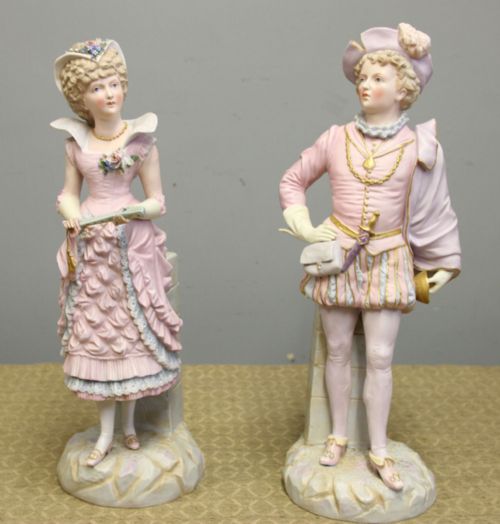
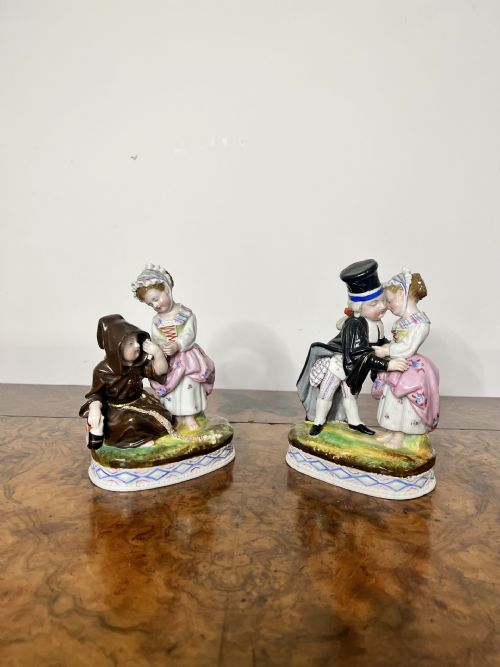
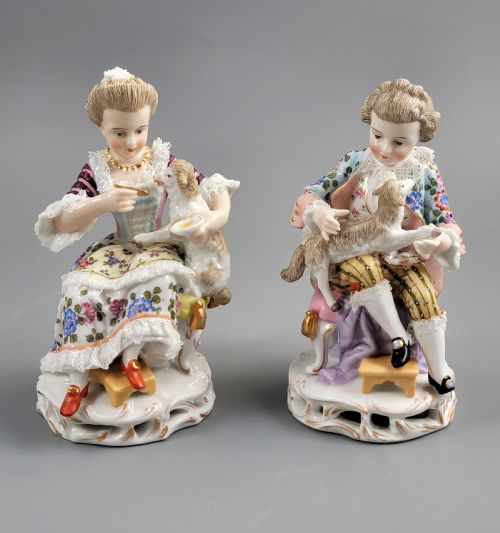
A victorian porcelain couple typically takes the form of paired male and female figures, ranging from romantic companions and harvesters to children with lambs. These pieces emerge in styles like Victorian Rococo Revival and French Second Empire, reflecting the ornamental tastes of the nineteenth century.
You will most frequently encounter continental European works, particularly from German and French factories, alongside English Staffordshire pottery variants. The forms span from standard decorative figurines to functional spill vases designed for the mantelpiece.
The aesthetic leans heavily into theatrical and idealised pastoral scenes, modelled with detailed costumes and expressive postures. Matching pairs dominate the selection, intended to be displayed symmetrically as mantel ornaments.
Materials and production methods
Manufacturers utilised both hard-paste porcelain and unglazed bisque porcelain, also known as biscuit porcelain, to achieve different surface textures. Bisque offered a matte, marble-like finish popular for detailed modelling, whilst hard-paste bodies provided a durable base for subsequent glazing.
Victorian Porcelain Couple Retail Price Guide 2026
Typical asking prices for victorian porcelain couple among the pieces listed under this phrase on Sellingantiques today, from the lower quarter to the upper quarter. They describe what is for sale here now, not the wider market.
Sheep with wool made from tiny applied clay curls populate several pastoral figurine pairs.
Assessing quality in figurine pairs
The sophistication of the composition and the scale of the figures distinguish superior workshops from mass production. Well-preserved gilding and intact delicate appendages, such as fingers or floral wreaths, indicate careful handling and higher initial manufacture.
Letu & Mauger Paris·Vion et Baury·C. G. Schierholz·Sitzendorf·Meissen·Triebner Ens & Co
The Victorian Porcelain Couple Glossary
- Bisque Porcelain
- Unglazed fired porcelain that has a matte, porous surface resembling marble. It was widely utilised for nineteenth-century portrait and decorative figures.
- Hard-paste Porcelain
- A durable ceramic material fired at very high temperatures using kaolin and petuntse. It creates a dense, bright white body that resists scratching.
- Spill Vases
- Hollow cylindrical ceramic vessels integrated into figurine bases, designed to hold wooden splints for lighting fires. They often accompany nineteenth-century pastoral figures.
- Gilt
- A thin layer of gold applied to the porcelain surface for ornamentation. It is typically found accenting clothing edges, bases, and decorative motifs.
- Rococo Revival
- A nineteenth-century design style drawing on eighteenth-century French motifs, characterised by asymmetrical curves, scrollwork, and ornate floral details.
Victorian Porcelain Couple: Frequently Asked Questions
What are victorian porcelain couple figures?
These pieces are paired decorative ceramics depicting human figures, often as romantic partners, harvesters, or musicians. They were modelled to serve as ornamental centrepieces during the nineteenth century.
They reflect the period's preference for sentimental and pastoral subjects, produced in various European workshops.
How were these figurine pairs displayed?
Owners typically placed matching pairs symmetrically on mantelpieces, sideboards, or console tables in Victorian parlours. Their balanced composition made them ideal for framing a central clock or mirror.
Positioning them together created a cohesive narrative scene within the room's decorative scheme.
How do I care for antique porcelain figures?
Dust the figures gently with a soft, dry brush to prevent the accumulation of dirt on delicate painted surfaces and intricate bisque details. Avoid using water or chemical cleaners, which can damage hand-applied enamels and gilding.
Keep them away from areas of high humidity and direct sunlight to preserve the colours over time.
How can I tell German porcelain from English pieces?
German pieces often utilise hard-paste porcelain with fine, elaborate mouldings and factory marks from places like Plaue or Sitzendorf. English variants, such as Staffordshire pottery, frequently employ earthenware bodies with distinct flatbacks and robust glazes.
Stylistic differences in clothing and facial painting also help distinguish continental production from domestic English output.