




Victorian Pitch Pine Drawers
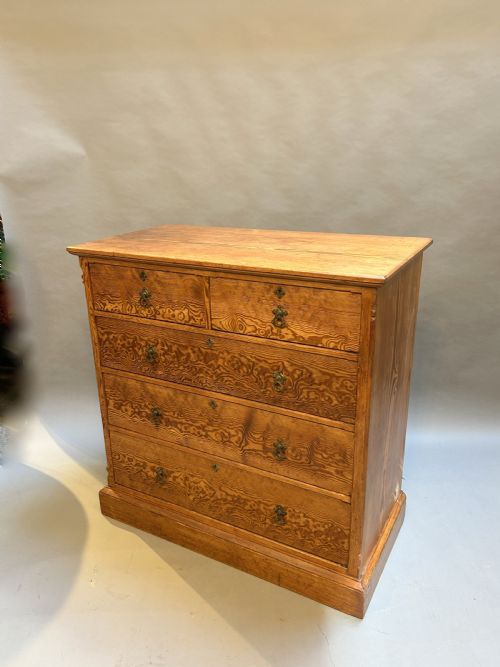
Victorian pitch pine drawers bring honest nineteenth-century utility and striking timber grain into a room.
Victorian Pitch Pine Drawers
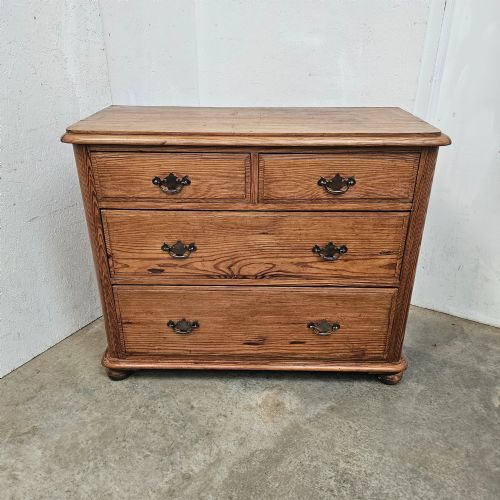
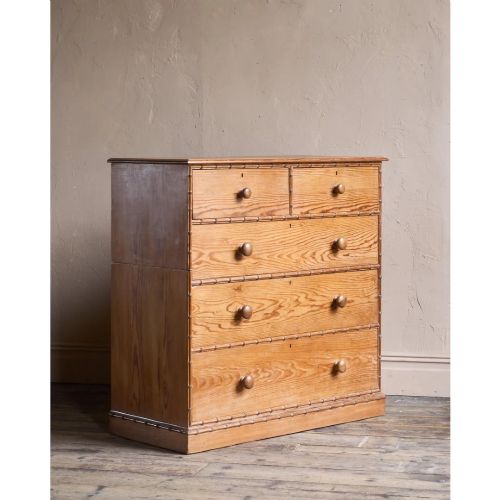
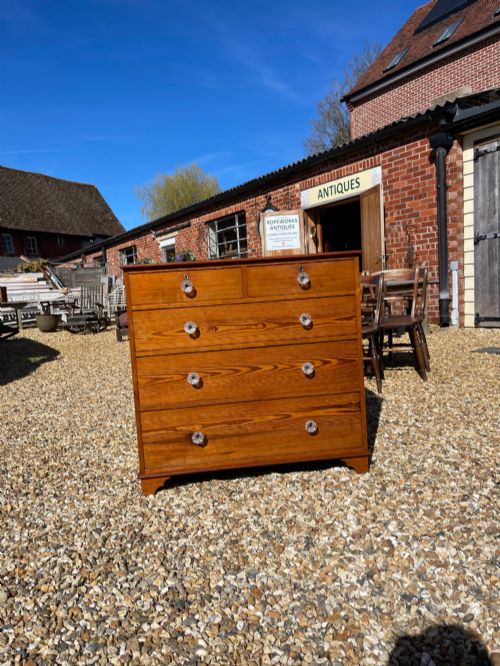
Victorian pitch pine drawers span chest of drawers, campaign pieces, and collectors' cabinets built across the nineteenth century. These forms rely on the durable resinous timber common to the period, often organised in standard arrangements of short and long drawers.
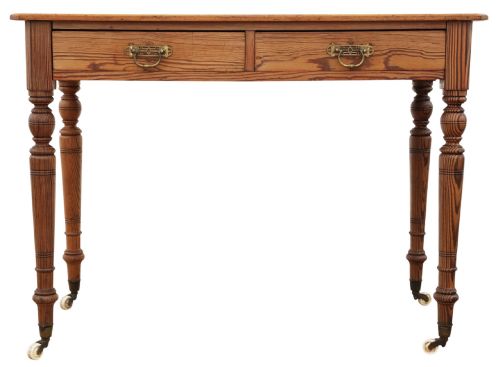
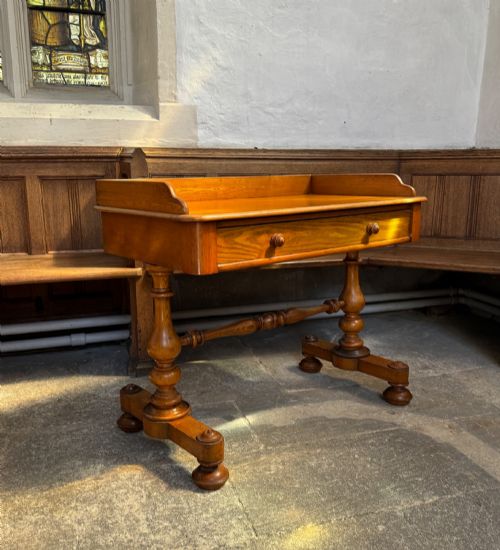
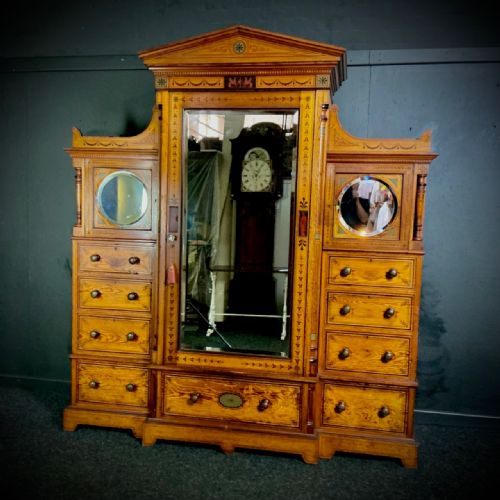
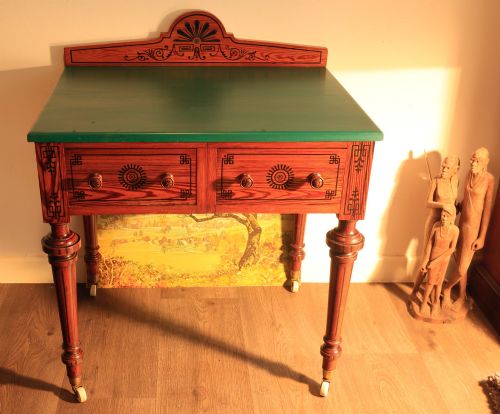
The version most frequently met here is the straightforward chest of drawers, alongside washstands, writing tables, and specialised cabinets with internal drawers. They originate from British workshops and country houses, reflecting both utilitarian function and occasional decorative styles like the Aesthetic Movement.
Makers utilised the dense wood for pieces intended to withstand heavy domestic use, leading to surviving examples ranging from miniature apprentice pieces to large banks of drawers.
Evaluating quality
Quality rests upon the density and figuring of the pitch pine grain, alongside the crispness of any ebonised mouldings or applied decoration. Pieces with retained original brass handles and intact internal drawer arrangements hold greater integrity.
Construction scale influences the distinction between standard domestic items and specialised multi-drawer collectors' cabinets or large pedestal desks. Finer examples balance robust utilitarian framing with refined proportion and untouched surface patination.
Even miniature apprentice cabinets contain fully working drawers built with the same care as their full-size counterparts.
A Howard and Sons·J T Crockett
The Victorian Pitch Pine Drawers Glossary
- Pitch pine
- A dense, resinous softwood characterised by prominent growth rings and strong figuring, widely utilised in nineteenth-century cabinet making. This timber resists wear while offering a distinctive reddish-yellow hue.
- Campaign chest
- A portable set of drawers made in sections with recessed brass handles for military transport. These pieces separate cleanly for travel.
- Wellington chest
- A tall, narrow chest of drawers secured by a hinged locking side flap that fastens over the drawer edges. It typically contains seven graduated drawers.
- Scotch chest
- A regional nineteenth-century chest featuring a deep top drawer flanked by cushion corbels above standard smaller and larger drawers.
- Apprentice cabinet
- A small-scale model created by a craftsman to demonstrate skill or serve as a salesman's sample. These retain full-scale joinery techniques in miniature.
Victorian Pitch Pine Drawers: Frequently Asked Questions
What is pitch pine?
Pitch pine is a heavy nineteenth-century softwood known for its high resin content and prominent, striped grain patterns. It provided a robust alternative to hardwoods for domestic furniture.
The timber yields a warm tone that deepens with age, making the natural grain pattern the primary decorative feature of these pieces.
How do I date a pitch pine chest?
Dating relies on construction methods, hardware styles, and recorded periods stretching from the 1870s through to 1900. Structural details like drawer linings and backboards offer clear chronological clues.
Stamped maker marks or specific regional drawer configurations, such as Scotch chests, also help narrow the decade of production.
Where were these pieces used?
These items served functional roles in bedrooms, libraries, and studies across nineteenth-century homes and offices. Larger banks of drawers and desks equipped professional workspaces.
Domestic settings utilised smaller chests and washstands for daily storage and personal grooming.
How do I care for pitch pine furniture?
Maintenance requires avoiding direct sunlight and excessive heat to protect the resinous timber and varnish finishes. Gentle dusting and occasional wax application preserve the surface.
Keeping humidity stable prevents the dense pine boards from splitting or warping over time.