
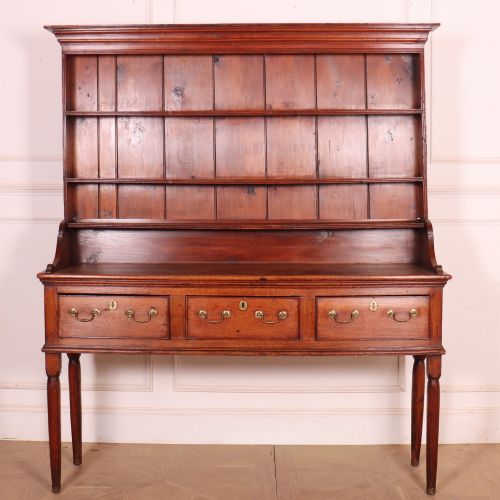
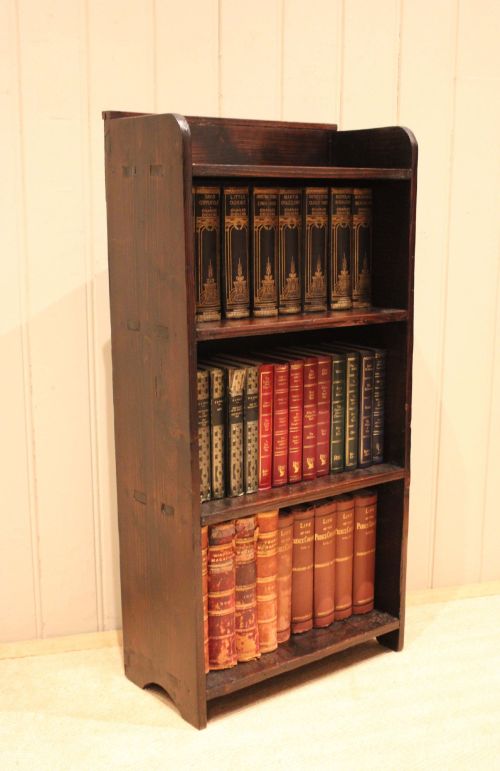
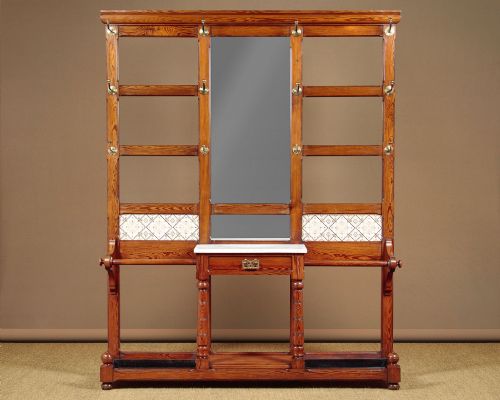
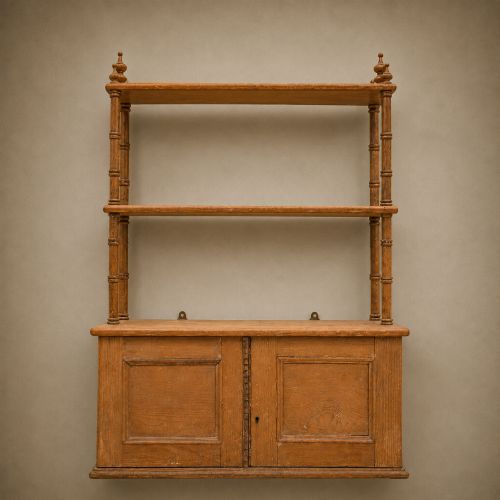

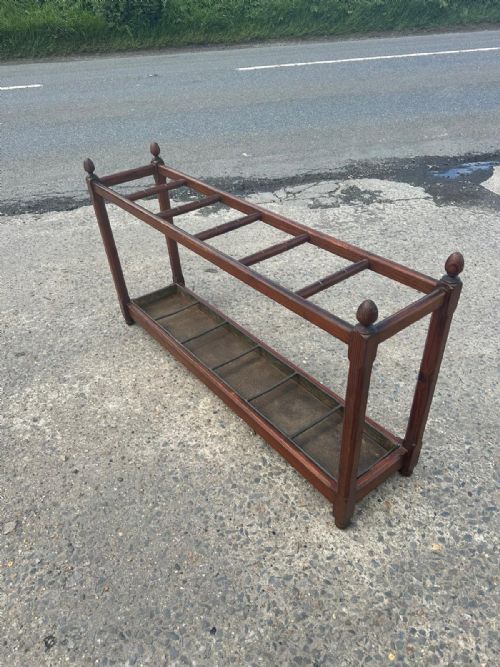

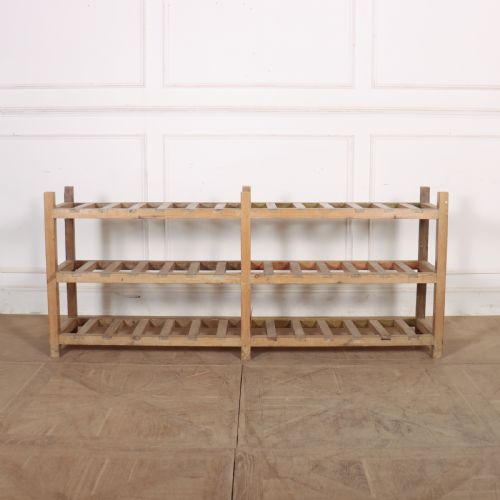
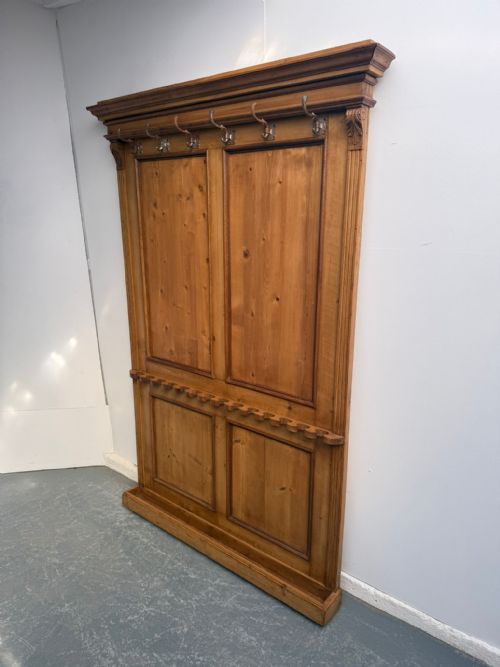


Victorian Pine Rack
A victorian pine rack brings honest utility and warmth to a room, offering practical storage through time-worn timber.
How They Were Made
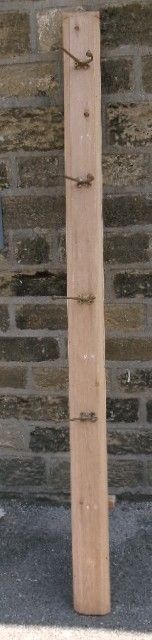
Construction relies primarily on solid pine and pitch pine, chosen for workability and local availability, frequently augmented with brass or iron hardware such as double coat hooks and hanging brackets.
Surfaces show various historical treatments including original paint, waxed finishes, or stripped wood, depending on whether the piece served a working kitchen, hallway, or display area.
Joinery methods reflect traditional vernacular carpentry, prioritising structural strength and straightforward utility over elaborate ornamentation.
What Varies in Quality
The calibre of a piece rests on the integrity of its timber, the survival of original surfaces like early paint or wax, and the retention of working brass or iron fixtures.
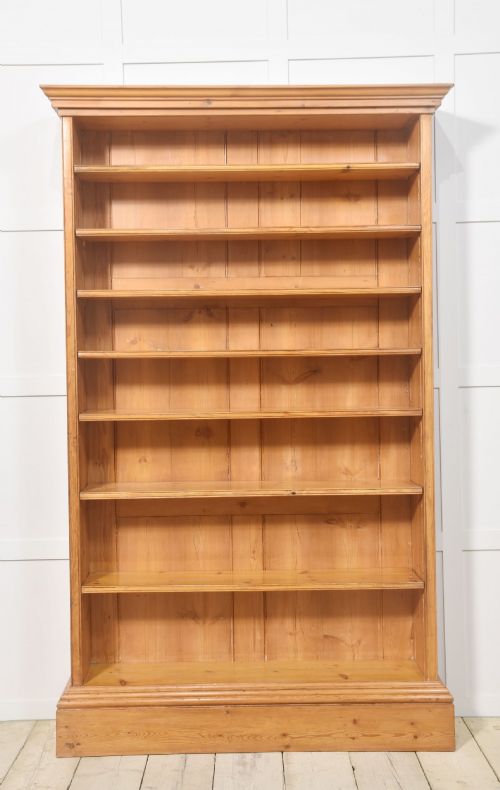
Proportion and regional character distinguish finer vernacular examples, where thoughtful construction and balanced shelving elevate simple utility into enduring craftsmanship.
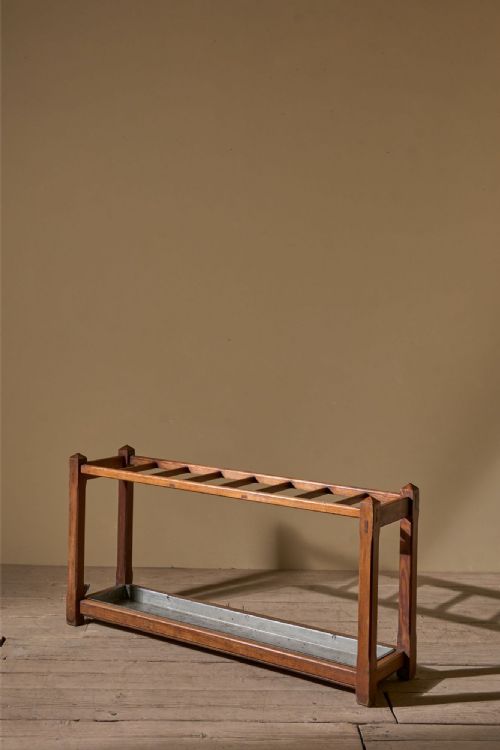
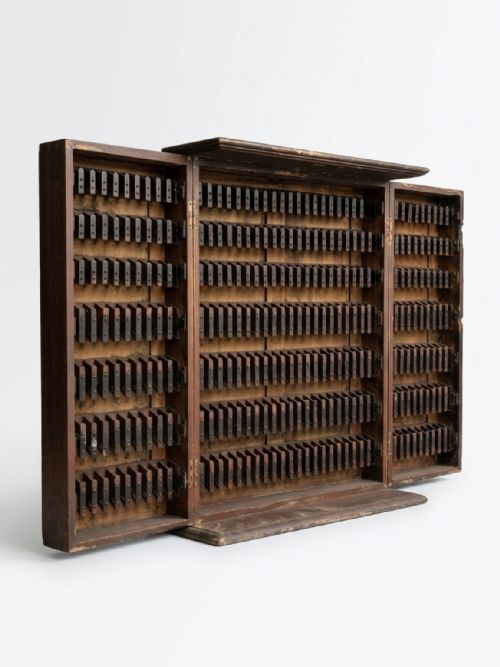
Listings demonstrate a strong presence of nineteenth-century pine, pitch pine, and painted wood formed into wall shelves, dressers, and stick stands.
The Victorian Pine Rack Glossary
- Pitch pine
- A dense, resinous softwood variant yielding strong boards with prominent growth grain, frequently utilised in heavy-use furniture.
- Potboard
- A lower open shelf built into a dresser base, traditionally used for storing heavy pots and domestic vessels.
- Vernacular
- Local architecture or furniture built by traditional craftspeople to meet practical regional needs rather than following academic design rules.
- Pigeon holes
- Small, partitioned compartments grouped together for sorting documents, letters, or small household items.
Victorian Pine Rack: Frequently Asked Questions
How are wall-mounted racks safely hung?
Most wall-hanging shelves and racks rely on sturdy backboards with pre-drilled fixing points or attached brackets designed to bear weight securely into wall studs.
Ensuring proper wall anchors match the weight of the timber and intended load keeps the piece secure during daily use.
Where do these pieces work best at home?
Kitchens and hallways suit these practical items well, providing accessible display space for ceramics or hanging storage for coats and umbrellas.
Living rooms and studies also accommodate open bookcases and wall shelves for books and collected objects.
How should historic pine surfaces be cleaned?
Gentle dusting with a dry or slightly damp cloth preserves the dry surface or wax finish without stripping historical character.
Harsh chemical cleaners remove patination and dry out the softwood timber over time.
Do original hooks and fittings matter?
Original brass or iron hooks and hardware contribute significantly to the authenticity and historical integrity of a piece.
Matching replacement fixings can be sourced if necessary, but surviving original elements remain preferable for collectors.