

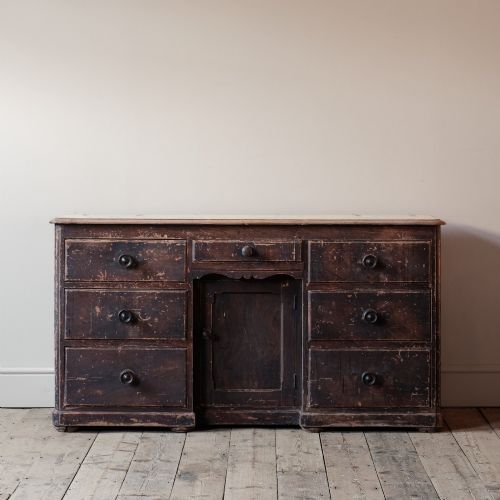
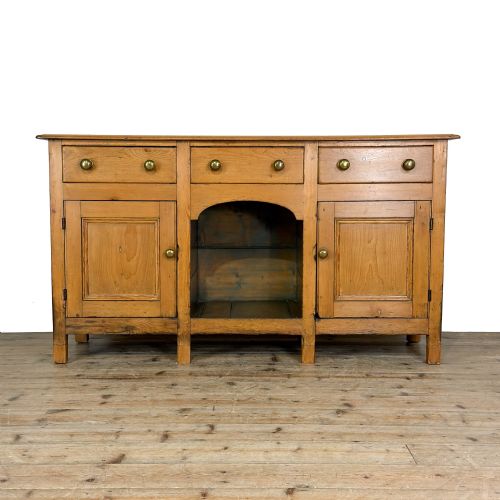
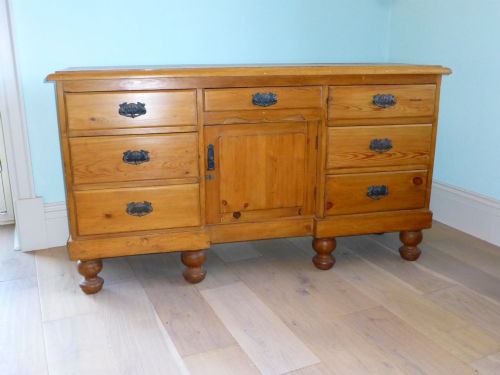
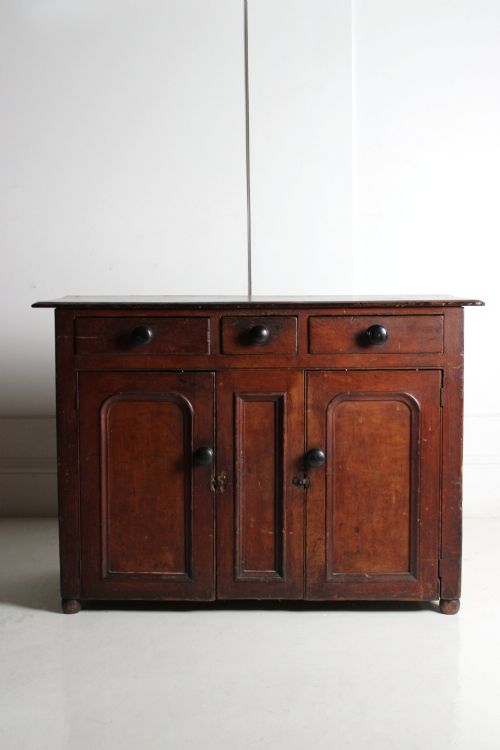
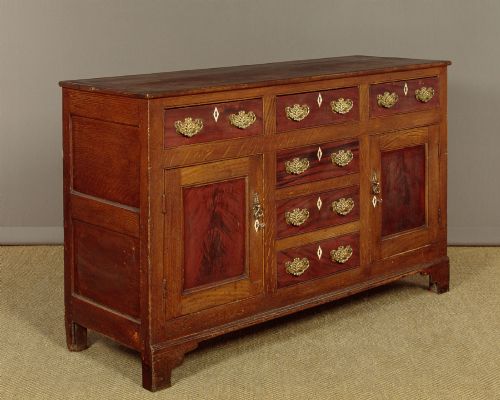
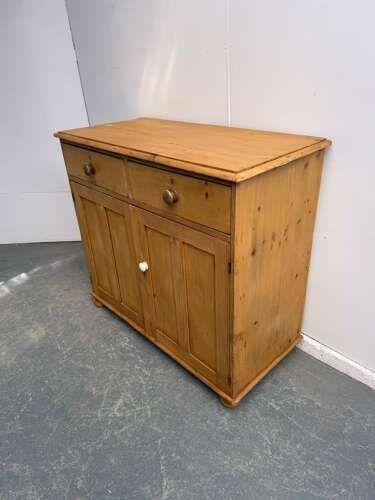
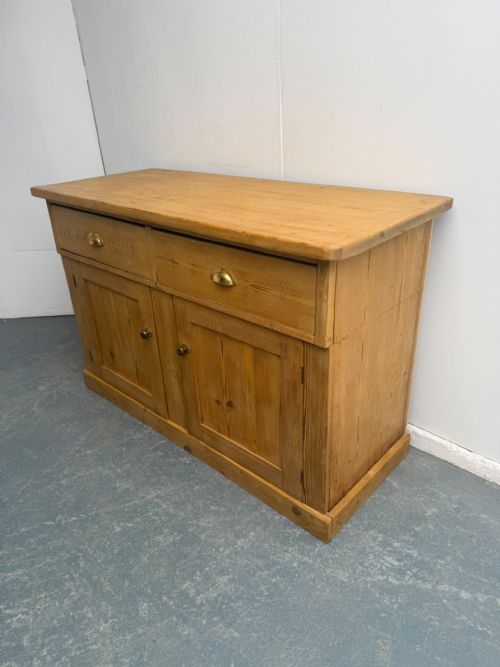
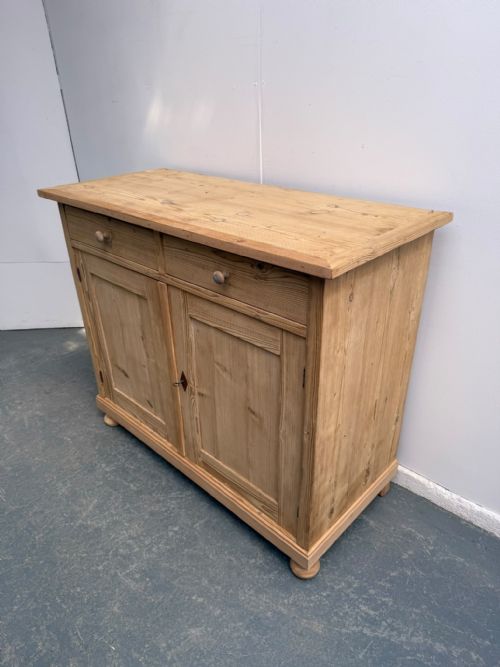
Victorian Pine Kitchen Dresser Base
A victorian pine kitchen dresser base offers robust utility and honest charm, bringing practical storage and timeless character to domestic interiors.
Victorian Pine Kitchen Dresser Base
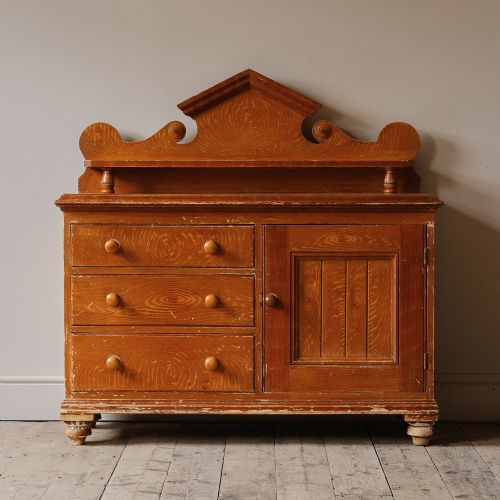
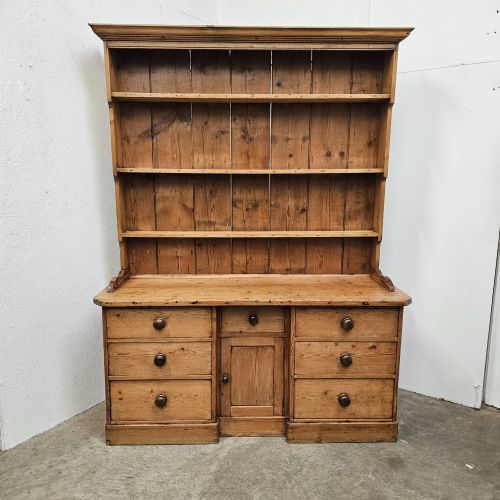
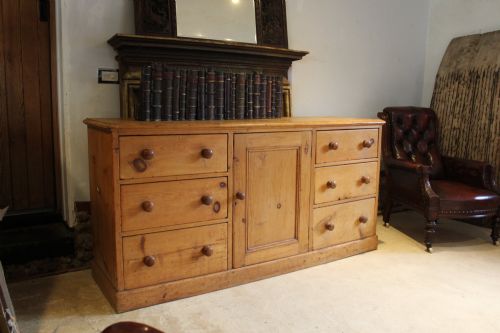
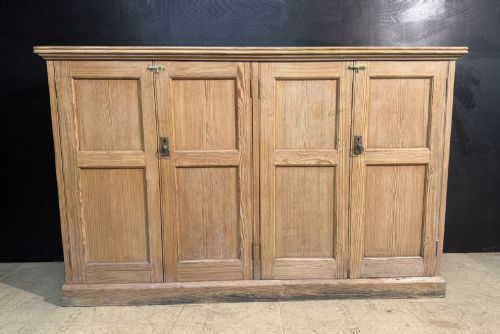
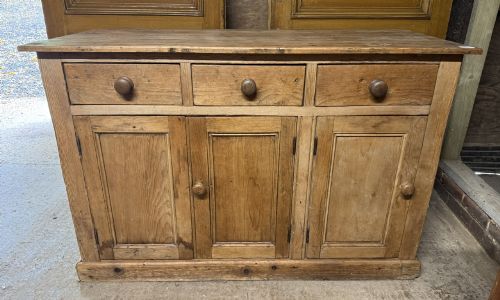
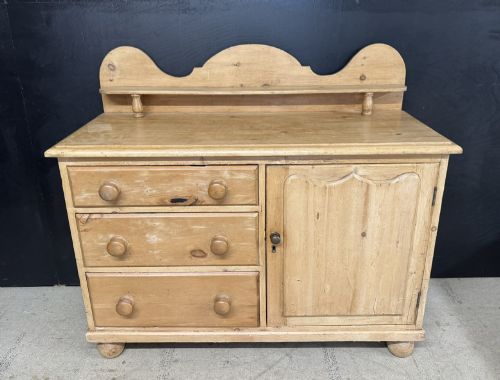
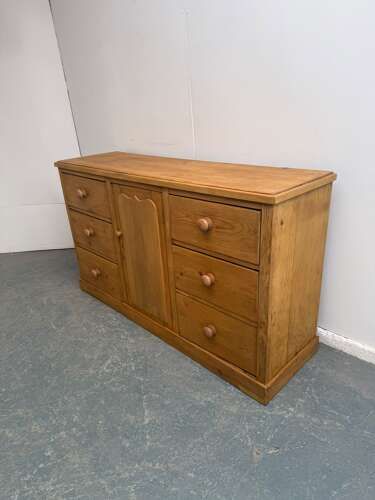
A victorian pine kitchen dresser base is a heavy lower cabinet designed for utilitarian storage, usually fitted with drawers above cupboard doors or a lower pot shelf. These pieces emerge predominantly from the nineteenth century, reflecting regional English, Welsh, Scottish, and continental farmhouse traditions.
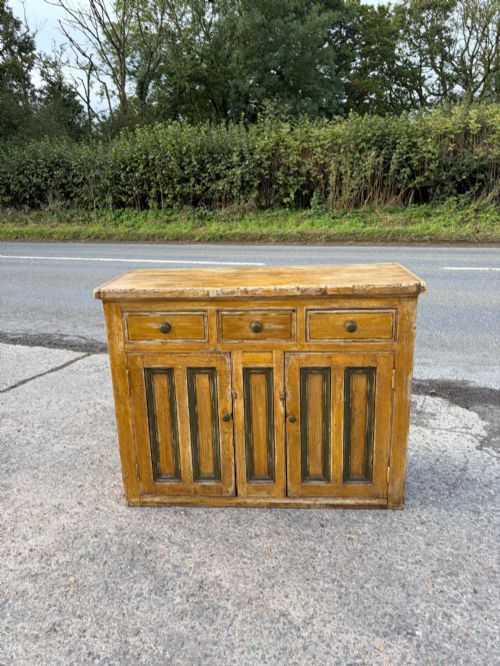
Buyers encounter substantial multi-drawer formats, long sideboard variations, and shallow depths suited to narrow spaces. The forms range from stripped waxed timber surfaces to pieces retaining original paint or folk art details.
Materials and Construction
Construction relies heavily on solid pine timbers, selected for availability and durability in busy domestic environments. Artisans joined carcases with dovetail joints on drawers and pegged framing to withstand daily use.
Surface finishes alternate between traditional wax polish and applied coats of paint. Iron and brass hardware secure doors and drawers, while occasional metal or ceramic elements add functional detail.
Victorian Pine Kitchen Dresser Base Retail Price Guide 2026
Typical asking prices for victorian pine kitchen dresser base among the pieces listed under this phrase on Sellingantiques today, from the lower quarter to the upper quarter. They describe what is for sale here now, not the wider market.
Listings feature pine, painted wood, and brass materials across Victorian and eighteenth-century periods.
Assessing Quality and Character
Quality rests in the integrity of the timber and the preservation of original surfaces, whether unpainted wax finish or early paint. Proportions dictate desirability, with shallower depths and balanced drawer-to-cupboard configurations commanding attention.
Hand-carved decorative flourishes or unusual functional inclusions such as bread slides elevate individual examples above standard utilitarian workshop output. The crispness of original joinery and the harmonious ageing of the pine surface define the upper tier.
The Victorian Pine Kitchen Dresser Base Glossary
- Dresser base
- The lower section of a kitchen dresser, comprising a work surface with drawers and cupboards beneath. This form stands independently without upper shelving.
- Pot shelf
- An open lower shelf built near the floor of a dresser base, traditionally designated for storing heavy pots and pans. It provides structural stability to the legs.
- Bread slide
- A pull-out wooden board integrated into the upper carcase above drawers or cupboards. Bakers utilised this surface to cool loaves or prepare ingredients.
- Chiffonier
- A low sideboard cabinet with enclosed storage beneath, appearing in early nineteenth-century contexts. It shares a compact footprint with smaller dresser bases.
- Waxed finish
- A surface treatment applied to bare timber to nourish the wood and produce a mellow sheen. This method highlights the natural grain and knots of pine.
Victorian Pine Kitchen Dresser Base: Frequently Asked Questions
What is a dresser base used for?
A dresser base serves as a heavy-duty storage cabinet and functional surface for food preparation in domestic kitchens and dining rooms. The combination of drawers and lower cupboards accommodates tableware, dry goods, and kitchen equipment.
Historically, the top surface provided additional workspace in busy houses where fitted counters were absent. Today, these pieces function as sideboards or serving stations in modern living spaces.
How do I distinguish painted and waxed pine?
Waxed pine displays the natural grain, knots, and warm honey tones of the underlying timber. These surfaces result from stripping old finishes or maintaining traditional polished wood.
Painted pine retains historical layers of colour, ranging from utilitarian lead paints to decorative folk art schemes. The paint layer often shows natural wear and craquelure that indicates age and handling.
What does a pot shelf indicate?
A pot shelf denotes a lower horizontal platform positioned close to the floor between the legs of a dresser base. This shelf provided accessible storage for heavy cast iron cookware and earthenware vessels.
Its presence often signals a utilitarian country origin where open kitchen storage was standard practice. The shelf also braces the lower framework against heavy loads.