
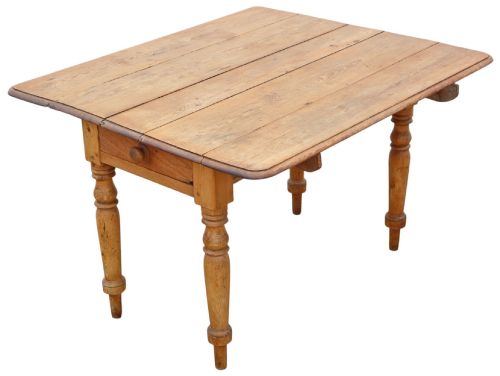
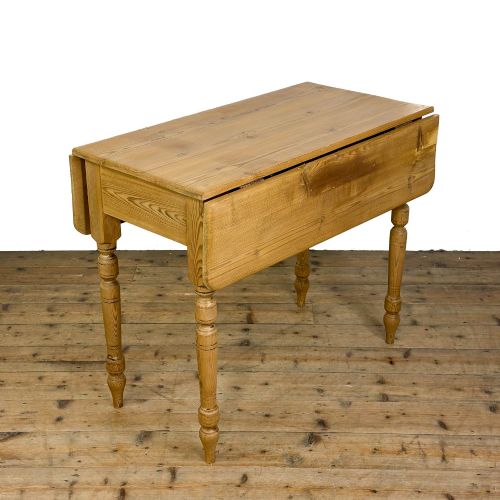


Victorian Pine Drop Leaf Table
A victorian pine drop leaf table offers utilitarian charm and versatile workspace, combining nineteenth-century practicality with warm domestic timber.
Victorian Pine Drop Leaf Table
When you search for a victorian pine drop leaf table, you are looking at nineteenth-century domestic furniture designed for flexible use in kitchens, dining rooms, and smaller living spaces. These tables feature hinged flaps that raise to extend the surface area and drop down when floor space is at a premium.
On this page, you are most likely to meet kitchen tables, dining tables, side tables, and sofa tables originating from the nineteenth century and the Victorian era. Forms range from compact occasional Pembroke tables to large-proportioned kitchen preparation surfaces and rustic farmhouse designs.
The evidence shows these pieces often incorporate drawers for storage and sometimes combine pine with fruitwood or oak. Styles span Victorian country, rustic farmhouse, and rustic country, alongside painted grey and painted green variants.
Construction and materials
These tables are constructed primarily from pine, occasionally paired with fruitwood or oak, utilising sturdy timber frames suited to daily domestic labour. Scrub top variants indicate surfaces designed for rigorous cleaning in nineteenth-century kitchens.
Iron and metal components such as hinges and drawer mechanisms provide the mechanical support necessary for folding leaves and operational drawers. Painted finishes in grey and green sit alongside stripped pine and natural wood surfaces.
Joinery techniques reflect nineteenth-century workshop practices, creating durable frames that support folding leaves without sagging. The combination of softwood bodies and hardwood accents demonstrates practical resourcefulness in period furniture making.
Object forms recorded in the archive range from occasional Pembroke tables to large kitchen preparation surfaces and chapel tables.
Distinctions in quality
Quality in these tables is determined by the robustness of the timber and the integrity of the folding mechanism. Fine quality examples show thoughtful timber selection in the top and leaves, maintaining stability whether the flaps are raised or dropped.
The presence of integrated drawers and the clever use of contrasting secondary timbers like fruitwood elevate certain pieces above standard utility furniture. Proportion and scale also matter, as larger preparation tables require heavier framing to remain stable.
Surface treatment plays a significant role in character, with original painted finishes or honest scrub tops demonstrating genuine period use rather than later embellishment.
The Victorian Pine Drop Leaf Table Glossary
- Drop-Leaf Table
- A table with a fixed central section and hinged flaps that fold down to save space. These flaps are supported by swing legs or brackets when raised.
- Pembroke Table
- A small rectangular table with two hinged flaps on opposite sides and usually one or more drawers. They originated in the eighteenth century and remained popular through the Victorian era.
- Scrub Top
- A bare wooden tabletop, usually pine, left unsealed and repeatedly scrubbed clean with water and sand or soap. This finish is typical of nineteenth-century kitchen preparation surfaces.
- Sofa Table
- A type of Pembroke table originally designed to stand in front of a sofa. They typically feature drop leaves and end supports or pedestal bases.
- Fruitwood
- Dense hardwood obtained from fruit-bearing trees such as pear or apple, sometimes used alongside pine in nineteenth-century furniture for contrast or strength.
Victorian Pine Drop Leaf Table: Frequently Asked Questions
What is a victorian pine drop leaf table used for?
These tables served primarily as adaptable workspace in nineteenth-century kitchens and pantries. The folding leaves allowed households to expand the surface for food preparation or dining and collapse it afterward to reclaim floor space.
Today, they function equally well as compact dining tables, console surfaces, or kitchen islands in modern homes where spatial efficiency is valued.
What does a scrub top mean on a pine table?
A scrub top indicates an unpolished wooden surface that was subjected to frequent washing with water and scouring agents during the nineteenth century. This process bleached the pine to a pale, clean finish.
Tables with scrub tops were working surfaces in kitchens and dairies rather than formal dining furniture, giving them a distinct rustic character.
Did Victorian pine tables have painted finishes originally?
Many nineteenth-century utility pieces received coats of paint to protect the softer pine timber or to match specific room interiors. Grey and green paints were common choices for utilitarian furniture.
Over time, these painted surfaces wear and weather organically, providing the aged patinas seen on regional country pieces today.
How do I fit a drop leaf table into a small room?
Keep one or both leaves dropped against the base when the table is not in use to minimise its footprint against a wall. Raising only a single leaf creates a functional desk or serving surface.
Position the table where the drop-action mechanism has clear clearance so the leaves can be easily raised and lowered without obstruction.