
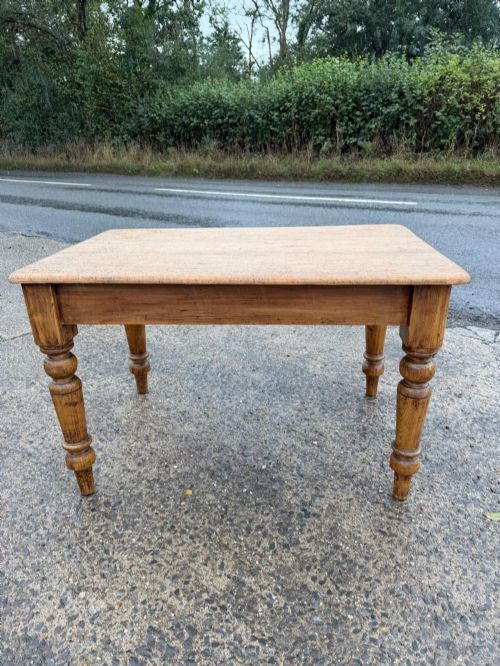
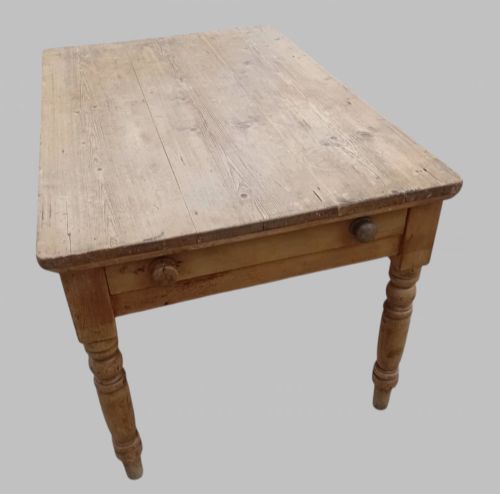
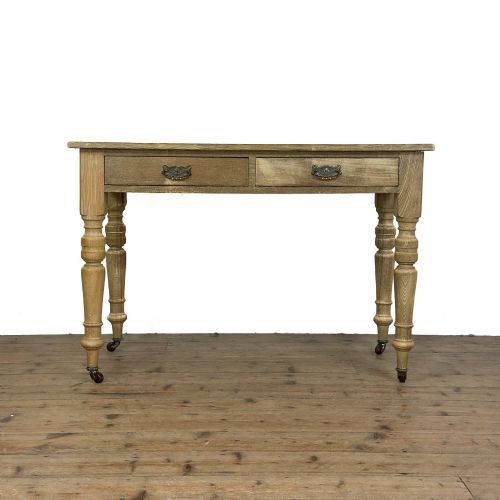
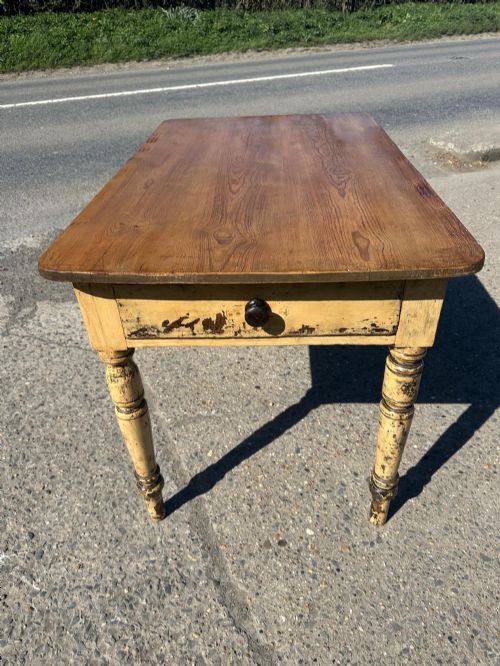
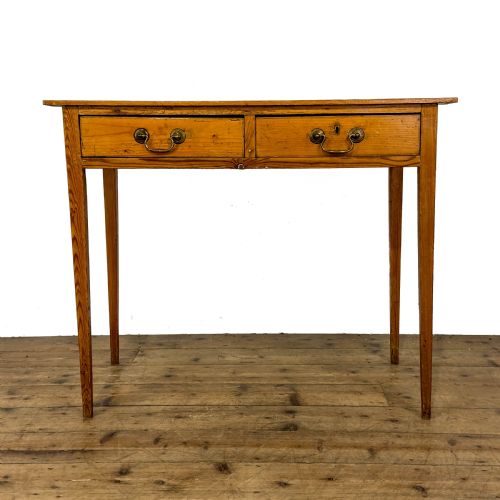


Natural Pine Side Desk
Natural pine side desks bring honest utility and warmth to a room, offering practical surface space through durable wooden construction.
Natural Pine Side Desk
A natural pine side desk combines the sturdy utility of historic tables and work surfaces with the adaptable scale needed for contemporary rooms. When searching for a natural pine side desk, buyers encounter robust pieces dating from the eighteenth and nineteenth centuries, spanning Victorian, Scandinavian, and French country traditions.
The selection ranges from simple kitchen tables and hall side tables to servers, drop leaf pieces, and trestle tables equipped with single drawers to the front frieze. These items serve equally well as compact writing surfaces, side tables, or functional console furniture within domestic interiors.
Most examples hail from the Victorian era or the broader nineteenth century, reflecting regional European vernacular design through scrubbed timber tops, painted legs, and primitive construction details. Their straightforward forms prioritize practicality, offering deep drawers and sturdy framing suited for daily use.
Assessing Quality
Proportion and structural balance also distinguish finer examples, where primitive country craftsmanship aligns with practical daily utility. The presence of untouched hardware and honest wear patterns communicates the authentic age and working history of each desk.
Listings feature pine and timber across Victorian, eighteenth, and nineteenth-century periods, alongside Swedish, French, and rustic country styles.
The Natural Pine Side Desk Glossary
- Scrubbed top
- A wooden tabletop cleaned repeatedly with water and scrubbing brushes over generations, leaving a pale, smooth grain. This treatment creates a characteristic tactile finish prized in historic country furniture.
- Frieze drawer
- A storage compartment integrated directly into the horizontal band beneath the tabletop. These drawers typically feature simple wooden pulls and served to hold small writing implements or kitchen utensils.
- Drop leaf
- A hinged tabletop flap that folds down to reduce the footprint of the furniture when not in use. It allows the desk or table to adapt to restricted spaces.
- Trestle table
- A rigid form supported by two or more upright frames connected by a horizontal stretcher beam. This construction provides robust knee clearance beneath the surface.
Natural Pine Side Desk: Frequently Asked Questions
What is a pine side desk?
A pine side desk is a versatile wooden surface, often originating as a nineteenth-century kitchen table, hall table, or work bench. These pieces typically feature a single drawer and a compact footprint suited for auxiliary workspace.
They combine utilitarian construction with vernacular charm, using durable pine timber that patinates well over decades of domestic use.
How do I style a pine side desk?
Place a pine side desk against a wall in a hallway, kitchen, or study where its warm timber tones can soften contemporary interiors. Its compact scale accommodates a lamp, books, or writing materials without dominating the room.
Allow the natural grain or original painted legs to remain visible to highlight the historic character of the piece.
Are these desks sturdy enough for daily work?
Historic pine tables and work desks were built for heavy domestic or trade use, making them naturally durable for daily writing and administrative tasks. Their solid timber construction and pegged joints offer reliable structural stability.
Periodic care with appropriate soft waxes helps preserve the softwood surface against regular friction and spills.
How do I identify Victorian pine furniture?
Victorian pine furniture often displays straightforward vernacular construction methods, visible tool marks, and occasional painted legs or scrubbed tabletops. Eighteenth and nineteenth-century examples frequently include single frieze drawers with hand-cut dovetail joints.
Swedish and French regional pieces from the same era share similar utilitarian lines, sometimes incorporating rococo revival motifs or simpler country framing.