



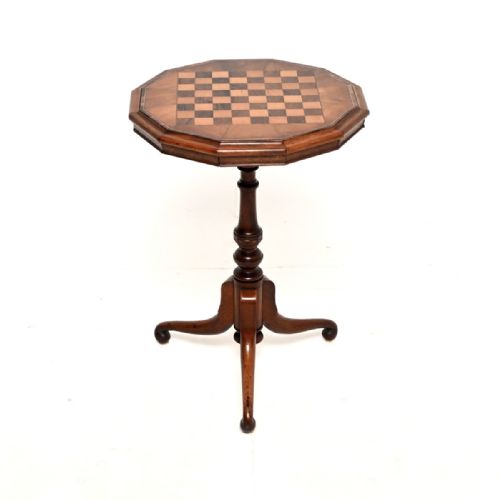


Victorian Pedestal Work Table
A victorian pedestal work table brings domestic craft and centre-stage presence together through compartmented tops and central pillars.
Victorian Pedestal Work Table
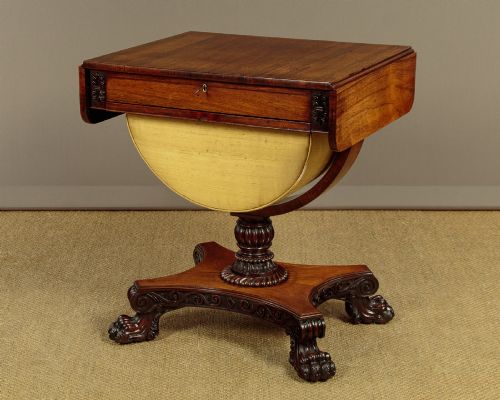
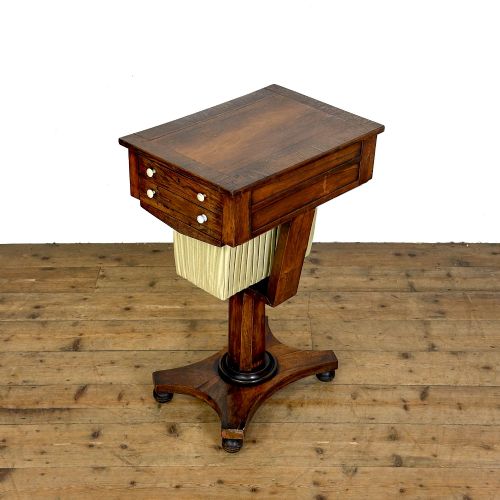
A victorian pedestal work table is a versatile piece designed for sewing, writing and light leisure, supported by a central column rather than four corner legs. These tables frequently combine a drop-leaf or hinged top with an internal compartment or fabric bag for storage.
The versions most commonly met on this page date from the nineteenth century, spanning early Victorian, mid-period and late Victorian phases. Walnut, burr walnut and rosewood dominate the selections, alongside occasional examples in mahogany and birch.
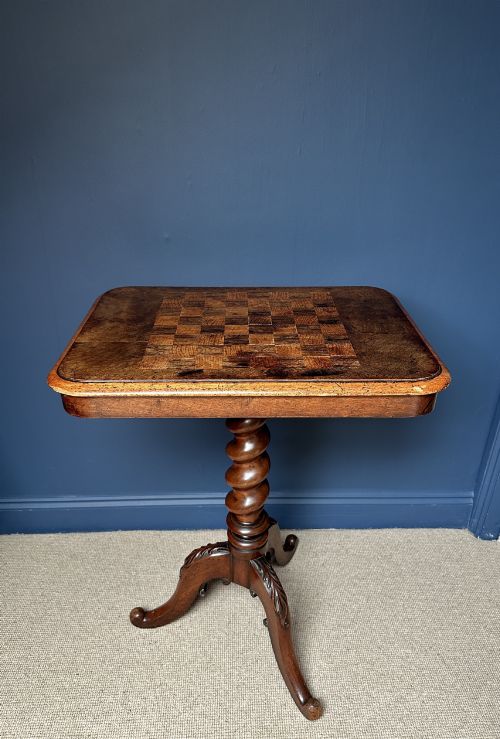
Many of these pieces double as games tables, featuring inlaid chess boards on the lid or reversible tops that conceal backgammon and work compartments underneath. Forms range from circular lamp tables to octagonal sewing stands and drop-leaf variations.
Materials and construction
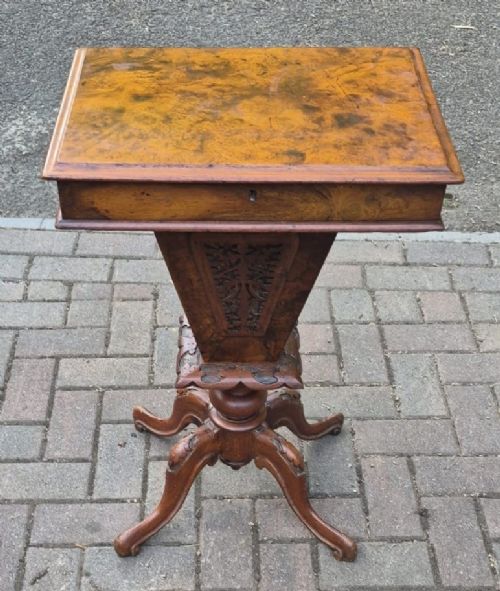
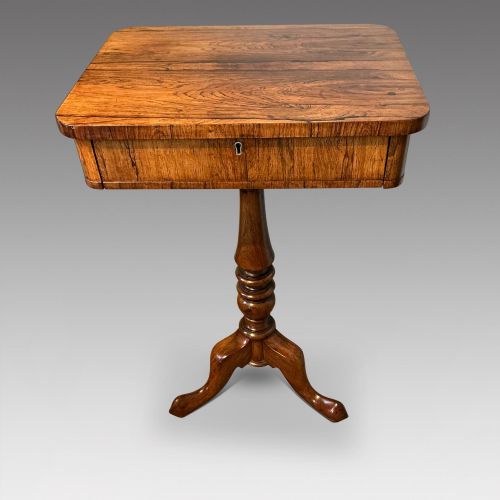
Cabinet makers utilised dense tropical hardwoods such as rosewood and mahogany, alongside richly figured burr walnut veneers. These timbers were selected for their stability and grain movement, providing a robust canvas for French polishing and decorative inlay.
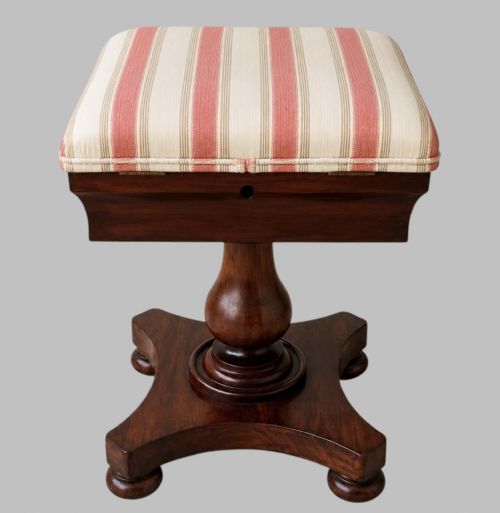
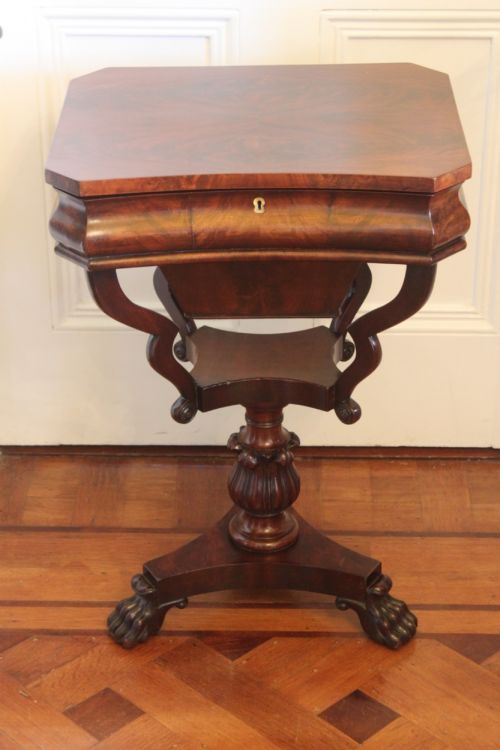
Structural integrity relied on sturdy turned or carved central pedestals rising from platform bases fitted with scrolled feet, occasionally housing concealed castors. Tops incorporated hinged lids, drop leaves and intricate internal compartments fashioned from fine secondary woods.
Some nineteenth-century sewing tables arrived complete with their original contents, meaning modern buyers occasionally unearth long-forgotten needlework pins and thimbles.
Assessing quality
The standard of a victorian pedestal work table depends heavily on the crispness of its timber carving, the depth of its grain and the precision of any wood inlay or marquetry. Superior pieces display seamless veneer matching across the top and well-balanced proportions in the central pedestal.
Internal joinery and the completeness of original sewing bags, compartments and fitted interiors distinguish masterwork items from simpler utilitarian versions. Attention to detail in the turning of the column and the solidity of the base assembly reveal the original maker's intent.
The Victorian Pedestal Work Table Glossary
- Drop-leaf
- A table design featuring hinged flaps on one or both sides that fold down to save space or lift up to extend the surface area.
- Marquetry
- The art of applying decorative pieces of veneer to a structure to form intricate pictorial or geometric designs. This technique appears on the lids of refined sewing and games tables.
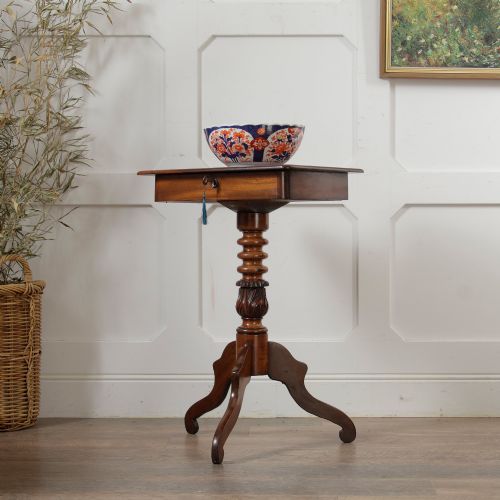
- Bobbin turned
- A style of furniture turning that creates a series of rounded, spool-like shapes along the length of a wooden column or leg.
Victorian Pedestal Work Table: Frequently Asked Questions
What is a victorian pedestal work table?
A victorian pedestal work table is a nineteenth-century multi-purpose furnishing designed to hold sewing gear, writing materials or games equipment. It stands on a central column and base rather than conventional legs.
These pieces typically feature a lidded compartment or hanging bag beneath the top surface. They served as decorative yet functional items for the Victorian parlour or drawing room.
How do I identify a games table?
A games table usually incorporates an inlaid chess or checkerboard pattern directly into the top surface, or conceals a playing board underneath a reversible lid. Many combine this function with a sewing or work drawer.
Look for folding tops or rotating mechanisms that reveal specialised storage for game pieces and cards. These versatile dual-purpose designs were exceptionally popular throughout the mid-nineteenth century.
What timbers were used for these tables?
Cabinet makers predominantly used dark, richly grained hardwoods including rosewood, mahogany and walnut. Burr walnut veneer was frequently applied to the top surfaces for decorative impact.
Lighter woods like birch and specialised regional materials such as arbutus also appear in specific nineteenth-century pieces. French polishing was standard to enhance the natural depth of the grain.
How do I style one in a modern home?
A victorian pedestal work table functions wonderfully as an occasional side table next to a sofa or armchair. The compact footprint and central pillar allow it to fit neatly into smaller spaces.
Use the surface for a lamp or small display items while utilising the internal compartments for hidden storage. The contrasting timber tones anchor contemporary neutral interiors with historic warmth.