



Victorian Parlor Stool
These Victorian parlor stool pieces bring domestic comfort and refined craftsmanship into sitting rooms, offering tactile historical character that anchors a traditional interior.
Victorian Parlor Stool
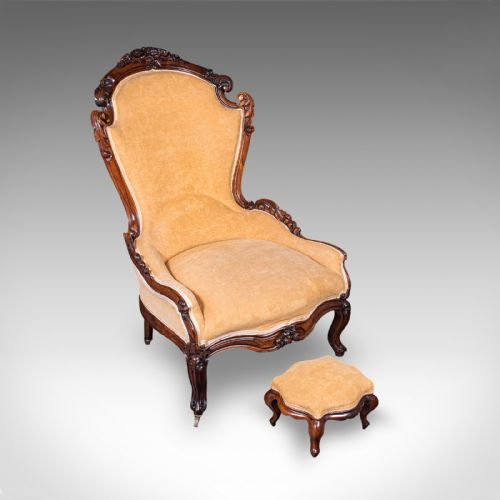
A Victorian parlor stool serves as a low seating or footrest form, encompassing compact footstools alongside larger centre stools and matched salon sets. They originate predominantly from the Victorian era, supplemented by occasional Georgian influences and precise dates spanning eighteen-sixty to eighteen-eighty.
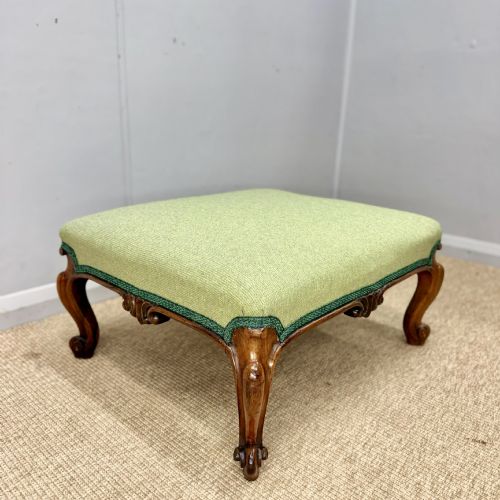
The versions most commonly met on this page include carved rosewood footstools, mahogany embroidery stools, and walnut frames featuring needlepoint, kilim tapestry, or velvet upholstery. Forms range from small round footstools to freestanding centre pieces and paired footstools designed for formal reception rooms.
How they were made
Frames rely on dense hardwoods such as mahogany, rosewood, and walnut, often shaped with carved details and specialist decorative techniques like Tunbridge Ware inlay. These timber structures provide the rigid skeleton necessary for domestic daily support.
Upper surfaces combine traditional textile elements including velvet, fabric, needlepoint, and geometric kilim tapestry, occasionally mounted over ceramic or brass fittings. Makers secured these coverings tightly across the wooden bases to create firm, durable padded tops.
Victorian Parlor Stool Retail Price Guide 2026
Typical asking prices for victorian parlor stool among the pieces listed under this phrase on Sellingantiques today, from the lower quarter to the upper quarter. They describe what is for sale here now, not the wider market.
Geometric kilim tapestries and tiny mosaic wood blocks ensure your feet rest upon miniature architectural wonders.
What varies in quality
Subtlety and depth of the timber carving set superior examples apart from simpler work, with fluid floral or scroll motifs showing disciplined hand chiselling rather than mechanical uniformity. The choice of primary wood also dictates standing, where richly grained rosewood and figured walnut command greater visual presence than plain secondary timbers.
The integrity of the upholstery interface defines the upper tier, particularly where original needlepoint, tapestry, or Tunbridge Ware inlay remains crisp and intact. Superior execution integrates the textile surface harmoniously with the structural woodwork beneath.
The Victorian Parlor Stool Glossary
- Tunbridge Ware
- A type of woodwork featuring intricate mosaic patterns built from tiny blocks of naturally coloured wood. It creates geometric or pictorial scenes inlaid directly into the surface.
- Centre stool
- A larger freestanding seating piece designed to sit in the middle of a room rather than against a wall. These items often feature elaborate carving visible from all angles.
- Needlepoint
- Hand-stitched embroidery worked on a stiff open-weave canvas foundation. It provides durable and colourful decorative coverage for Victorian footstool tops.
- Rococo Revival
- A mid-nineteenth-century style drawing on eighteenth-century French design motifs. It is characterised by asymmetrical curves, naturalistic leaf carving, and ornamental scrolls.
Victorian Parlor Stool: Frequently Asked Questions
What is a Victorian parlor stool used for?
These pieces served primarily as footrests or low auxiliary seats in formal nineteenth-century reception rooms. They provided comfortable leg support while seated on larger armchairs or salon chairs.
Over time, their decorative frames and intricate needlepoint tops allowed them to function as decorative display pieces within domestic interiors.
How do I tell an 1860 stool from a Georgian one?
Pieces attributed to eighteen-sixty typically display heavier rosewood or walnut frames shaped by Victorian revival aesthetics, such as curved Rococo scrollwork. In contrast, items linked to the Georgian period often rely on simpler mahogany forms and distinct structural proportions.
Examining the underlying timber joinery and the style of any carved ornament helps clarify the likely manufacturing era of each specific piece.
Are these stools suitable for daily use?
Solid hardwood frames built from mahogany, rosewood, or walnut offer durable structural foundations that withstand regular sitting. Many examples retain sturdy joinery capable of supporting everyday domestic environments.
Delicate textile surfaces like velvet, needlepoint, or tapestries benefit from thoughtful placement to preserve the historic fabric against heavy wear.
What is Tunbridge Ware inlay?
Tunbridge Ware is a specialised form of decorative woodworking originating from Kent, where small wood blocks of various natural colours form geometric mosaics. Artisans inlaid these tiny tesserae into panels on the wooden frames to create striking decorative patterns.
This meticulous technique adds a distinctive miniature mosaic detail to specific Victorian small round footstools.