



Victorian Parlor Shelf
A victorian parlor shelf brings domestic display to nineteenth-century rooms, offering a small stage for cherished ornaments.
Victorian Parlor Shelf
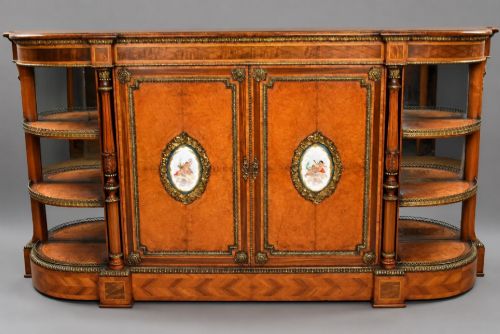
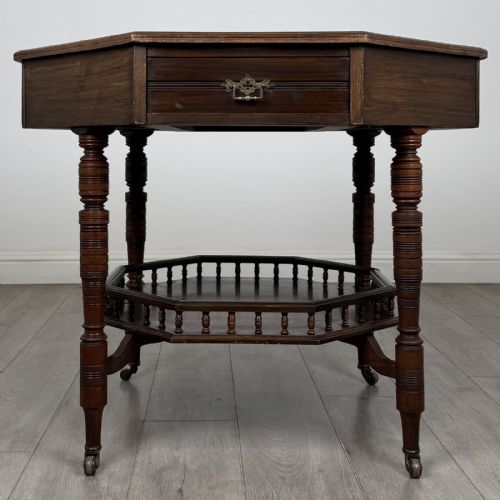
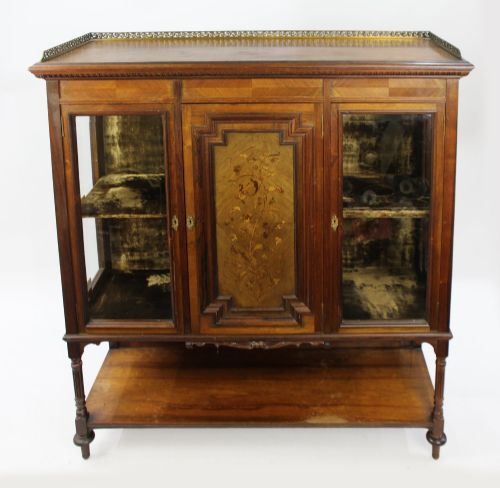
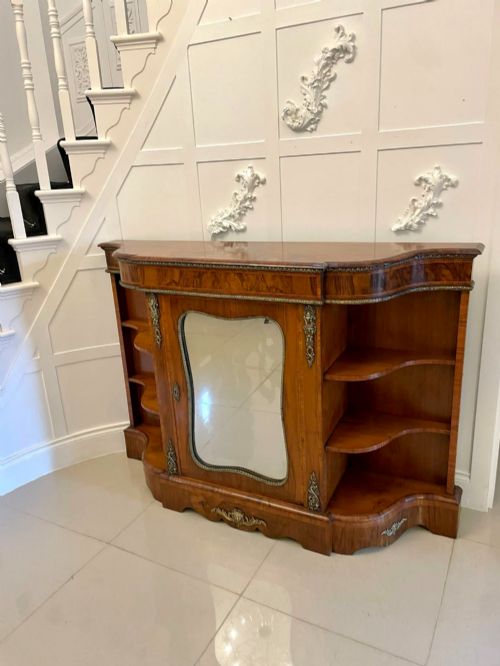
When a buyer searches for a victorian parlor shelf, they are looking at nineteenth-century furniture designed to hold decorative objects, ceramics, and small collections within the home. The pieces found here span the Victorian and Edwardian periods, including side cabinets, display cabinets, credenzas, and occasional tables that incorporate galleried surfaces and upper shelves.
The most common forms on this page include mahogany centre tables with galleried shelves, walnut display cabinets, and rosewood side cabinets inlaid with contrasting timbers. These items reflect the domestic habits of the late nineteenth century, where every surface provided an opportunity to display personal taste and accumulated curiosities.
Materials and construction
The makers of these pieces relied on fine hardwoods such as mahogany, walnut, burr walnut, and rosewood, often selected for rich grain patterns or utilised as delicate veneers. Timber carcasses were frequently enhanced with marquetry inlay, brass mounts, and ormolu details to elevate the visual appeal of display furniture.
Structural elements included integrated glass doors for cabinets, mirrored backs to reflect light in dim parlours, and raised wooden galleries around table tops to keep ornaments secure. These techniques combined structural stability with refined decorative finishes suited to formal entertaining spaces.
Victorian Parlor Shelf Retail Price Guide 2026
Typical asking prices for victorian parlor shelf among the pieces listed under this phrase on Sellingantiques today, from the lower quarter to the upper quarter. They describe what is for sale here now, not the wider market.
Listings on this site show furniture spanning the Victorian and Edwardian periods, utilising walnut, mahogany, and rosewood.
Judging quality and character
Quality in these items rests on the selection of timber veneers, the precision of cabinet joinery, and the delicacy of any applied marquetry inlay. Pieces utilising burr walnut or figured rosewood with crisp brass and ormolu mounts sit firmly at the upper end of the range.
Proportion and utility also dictate the distinction between standard items and superior examples, particularly where mirrored backs and galleried shelves integrate harmoniously into the main carcass without crowding the design.
The Victorian Parlor Shelf Glossary
- Galleried shelf
- A small raised ledge or railing running along the edge of a shelf or table top, designed to prevent items from sliding off. This feature is common on centre tables and display furniture.
- Credenza
- A sideboard or display cabinet originating in the nineteenth century, often featuring glass panels and decorative mounts for exhibiting porcelain and glassware. It serves as a focal point in formal rooms.
- Ormolu
- Gilt bronze ornamentation applied to furniture, adding metallic contrast and rich decorative detail to timber surfaces. It appears frequently on finer Victorian credenzas and cabinets.
- Burr walnut
- Timber taken from the burl growth of a walnut tree, producing swirling and knotted grain patterns prized for decorative veneer work. It brings intense texture to cabinet doors and tops.
Victorian Parlor Shelf: Frequently Asked Questions
What is a victorian parlor shelf used for?
These pieces were designed to hold decorative ceramics, silver, and small ornaments in the main reception rooms of nineteenth-century homes.
Today, they function well in modern interiors for displaying collections while providing practical surface storage.
How do I identify a Victorian piece?
Look for characteristic timber selections such as burr walnut and rosewood, alongside decorative details like brass mounts and mirrored backs.
Construction methods and period styles recorded in the listings also help confirm the nineteenth-century origin.
Are Edwardian and Victorian styles similar?
Edwardian furniture often shares the timber palette and inlay techniques of the late Victorian era, such as rosewood with delicate marquetry.
However, Edwardian designs can exhibit slightly lighter proportions while maintaining the tradition of display cabinets and centre tables.
How should I care for polished wood?
Maintain polished hardwood surfaces by keeping them away from direct sunlight and sudden temperature changes that affect timber.
Regular dusting with a soft cloth preserves the finish of walnut, mahogany, and rosewood without needing harsh cleaning agents.