



Victorian Paper Cut
These Victorian paper cut works are framed profile portraits and narrative scenes that collectors prize for their crisp profile cutting and period character.
Victorian Paper Cut
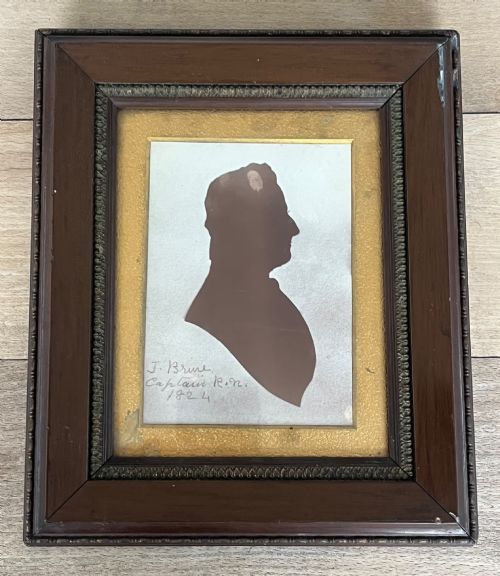
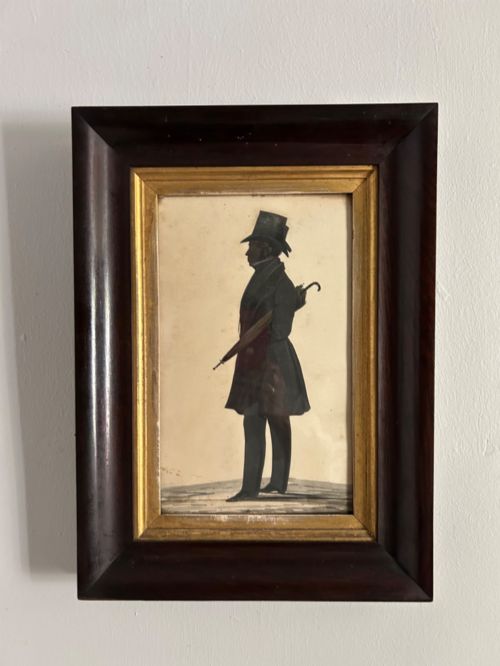
A victorian paper cut typically takes the form of a framed silhouette portrait, depicting individuals, children, or gentlemen in precise profile against a contrasting background. Collectors encounter various formats ranging from single bust portraits to complex conversation pieces featuring multiple figures and animals.
The objects span the nineteenth century, incorporating earlier Regency survivals and later Victorian examples up to eighteen eighty. They appear primarily as framed wall art utilising paper, ink, and watercolour touches within wood and gilt frames.
Examples on this page include solo portraits, pairs, and elaborate family groupings created by notable practitioners of the craft. Each piece preserves a direct physical record of sitter and cutter through scissor work alone.
Materials and Making
Makers produced these works using dark paper cut by hand with fine scissors, occasionally supplemented by delicate ink or watercolour details on the surface. The finished cutouts were mounted against pale backgrounds to emphasise the crisp outline of the profile.
Framing protected the fragile paper works, utilising wood, glass, and occasional gilt or gold leaf to secure the portrait. Many pieces rely on simple card backing within traditional frames to preserve the delicate edges of the silhouette.
Victorian Paper Cut Retail Price Guide 2026
Typical asking prices for victorian paper cut among the pieces listed under this phrase on Sellingantiques today, from the lower quarter to the upper quarter. They describe what is for sale here now, not the wider market.
Early silhouette cutters worked entirely by eye, snipping likenesses in seconds without drawing a preliminary guideline on the paper.
Variations in Quality
Quality depends upon the dexterity of the cutting, where finer scissor work achieves precise likenesses and intricate details without tearing the paper. Superior examples display clean edges and thoughtful composition, particularly in multi-figure conversation pieces.
The sophistication of the secondary details, such as subtle watercolour highlights or period framing, distinguishes finer gallery pieces from simpler output. Preservation of the original paper surface and frame also determines the overall standing of an individual work.
Augustin Edouart·William James Hubard·Frederick Frith·Alfred Darbyshire·Skeolan
The Victorian Paper Cut Glossary
- Silhouette
- A solid profile portrait, usually cut from dark paper and mounted on a light background. The form derives its name from Etienne de Silhouette and became a popular portrait medium in the nineteenth century.
- Conversation piece
- An artwork depicting a group of figures engaged in a narrative scene or daily interaction. In paper cut work, these compositions include multiple people, animals, and domestic objects.
- Gilt wood
- Wood treated with gold leaf or a gold-coloured finish for framing. This material provides a traditional nineteenth-century border for portrait silhouettes.
- Regency
- The stylistic period preceding the Victorian era, spanning the early nineteenth century. Pieces from this time often exhibit distinct costume details and portrait conventions.
Victorian Paper Cut: Frequently Asked Questions
How do I date a silhouette?
Dating relies heavily on the clothing styles, hairstyles, and accessories worn by the sitters depicted in the portrait.
Frame types and handwritten notes on the reverse also help establish the decade of creation during the nineteenth century.
Where were these displayed?
Owners typically hung these framed portraits in domestic parlours and family sitting rooms as personal mementoes.
They functioned both as family records and decorative wall art before the widespread adoption of photography.
Are all silhouettes cut from paper?
Most examples utilise hand cut paper, sometimes enhanced with ink or watercolour highlights applied directly to the surface.
Some pieces incorporate multiple layers of paper or fabric to add depth to the costume and background.