




Victorian Painted Terracotta
Victorian painted terracotta brings together moulded earth and brushwork, offering figural and decorative pieces that capture nineteenth-century taste.
Victorian Painted Terracotta
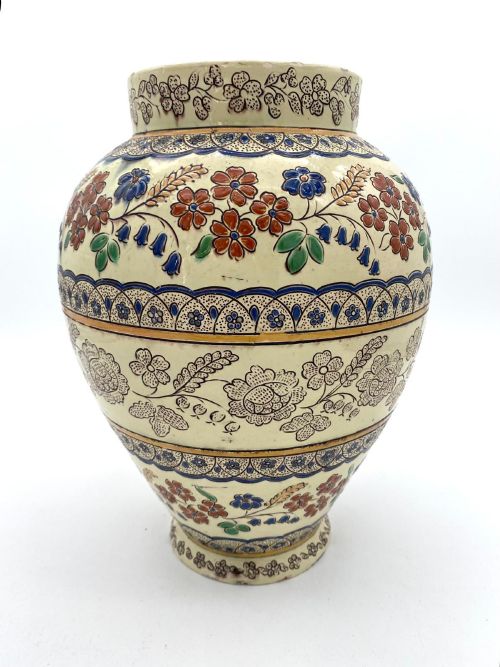
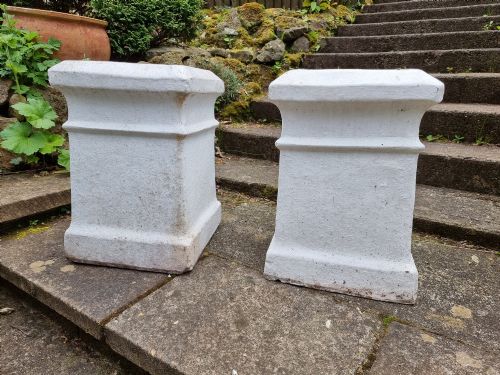
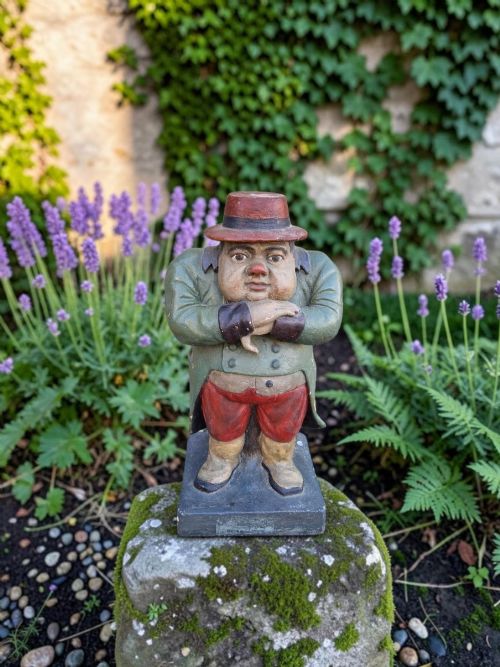
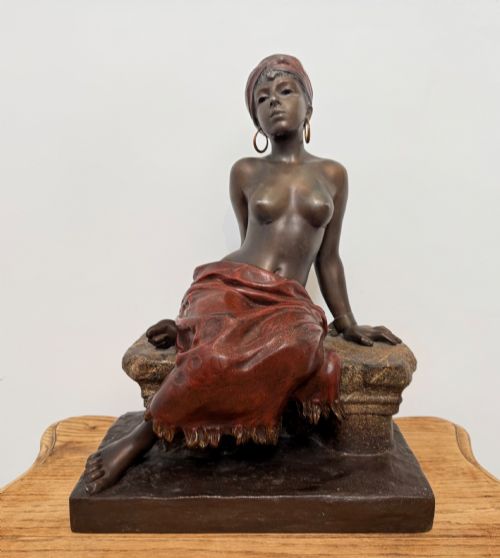
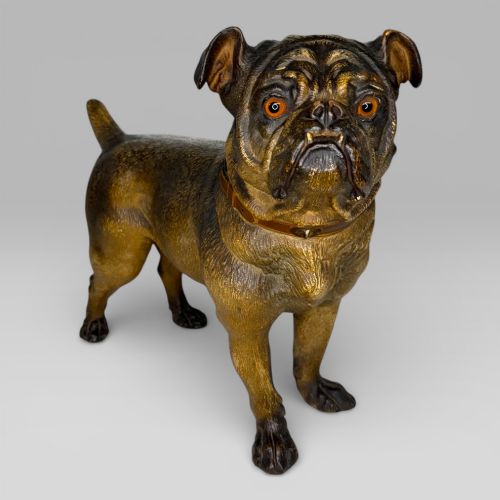
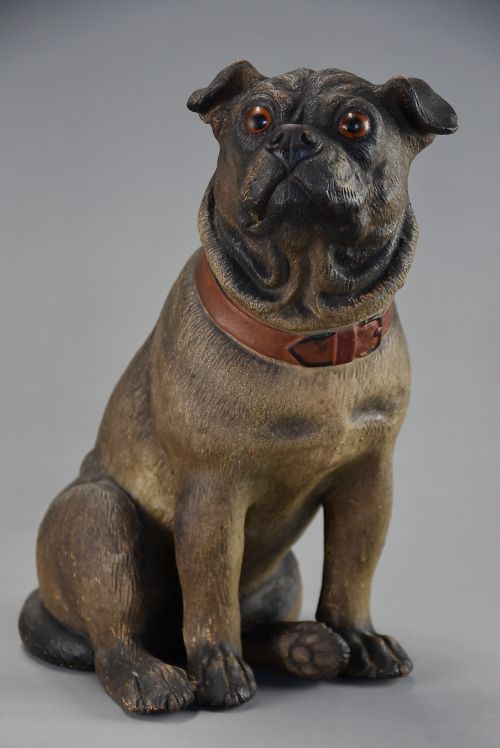
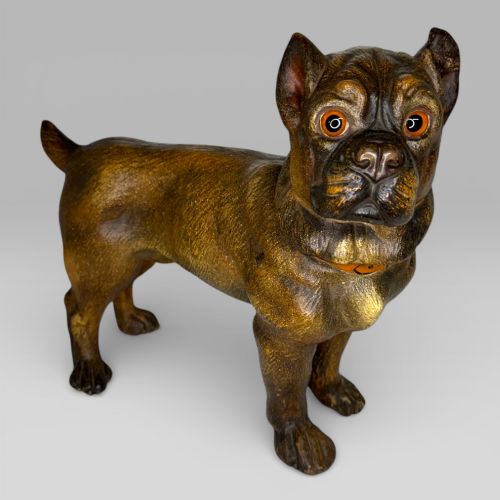
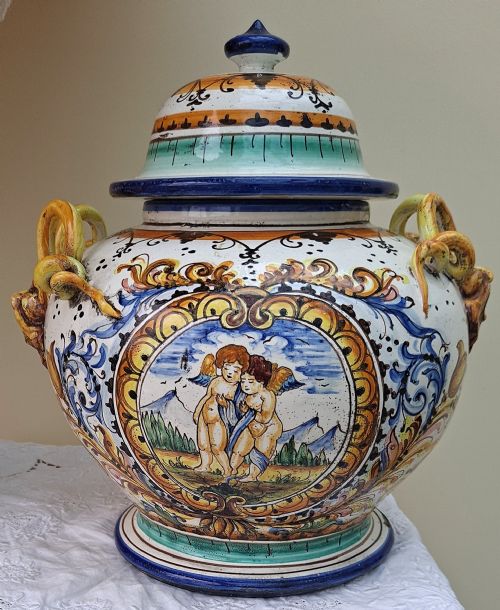
Victorian painted terracotta encompasses figural sculptures, animal models, and decorative wall plaques produced during the nineteenth century. These items range from life-size canine figures and human subjects to architectural pedestals and relief panels. Collectors pursuing Victorian painted terracotta often encounter Austrian and British works that combine moulded clay with surface colour.
The objects on this page derive primarily from nineteenth-century production, spanning periods marked as Victorian, Georgian, and into the early twentieth century. Animal models, particularly pugs and chimpanzees, sit alongside human figures and decorative display columns. This selection reflects the diverse domestic and garden ornamentation of the era.
How they were made
Surface treatments often involved layers of paint to simulate natural textures, skin tones, or metallic sheens on the fired clay body. Some pieces received additional glazes or protective coatings, while others retained a matte painted finish typical of nineteenth-century decorative figures.
Victorian Painted Terracotta Retail Price Guide 2026
Typical asking prices for victorian painted terracotta among the pieces listed under this phrase on Sellingantiques today, from the lower quarter to the upper quarter. They describe what is for sale here now, not the wider market.
Several listings showcase life-size terracotta pugs and satirical monkey families, proving the Victorians had a wonderful sense of humour.
What varies in quality
The fineness of the modelling determines the sharpness of facial expressions, anatomy, and drapery in figural pieces. Superior examples exhibit deep relief and precise anatomical detail, whereas lesser items show softer contours and hurried finishing. Surface preservation also dictates worth, as original paint layers that remain intact without extensive overpainting command greater interest.
The execution of the painted surface separates standard production from exceptional studio output. Skilled brushwork brings depth to eyes, fur, and garments, whereas basic items rely on flat, uniform colour applications. Maker attribution further elevates certain works, distinguishing factory output from documented artistic pieces.
Dunfermline Clay Company·Ernst Wahliss·Bernard Bloch
The Victorian Painted Terracotta Glossary
- Terracotta
- Fired unglazed clay of a brownish-red colour used for sculpture and pottery. It provides a sturdy structural base for subsequent painting.
- Polychrome
- Decorated in several colours. This term describes pieces finished with multiple painted pigments across their surfaces.
- Relief plaque
- A wall panel where figures or designs project from a flat background. These items were often modelled in terracotta and hung as decorative art.
- Cold painted
- Painted after the ceramic or metal object has been fired, without a subsequent kiln firing to set the pigment. This technique leaves the paint more susceptible to wear over time.
- Display column
- A tall architectural support or pedestal used for elevating sculptures or vases. These structural items frequently utilised moulded terracotta.
Victorian Painted Terracotta: Frequently Asked Questions
What is Victorian painted terracotta?
Victorian painted terracotta comprises moulded clay objects finished with surface pigments, created during the nineteenth century. These pieces include animal figures, human busts, and decorative wall plaques.
Makers utilised local clays and applied various paints to achieve realistic or decorative finishes. The category spans both domestic ornaments and larger garden or architectural items.
How should I clean painted terracotta?
Cleaning requires dry, gentle methods to protect the delicate painted or cold-painted surfaces from moisture damage. Using soft brushes helps remove dust without disturbing the pigment.
Water and liquid cleaners should generally be avoided because nineteenth-century paints can lift or dissolve when wet. Professional advice is recommended for pieces with significant surface grime.
Were these pieces meant for indoors?
Many painted terracotta items served as indoor decorative objects, displayed on tables, mantels, or pedestals. Figures like dogs and human subjects were popular household ornaments.
Conversely, items designated as garden pedestals or chimney pots were built to withstand external conditions. The presence of delicate cold-painted finishes usually indicates an interior origin.
How do I identify the period?
Dating relies on stylistic markers, maker stamps, and the specific composition of the terracotta body. Nineteenth-century pieces often display characteristic Victorian realism or early art nouveau influences.
Examining the underside or base frequently reveals impressed factory marks or artist signatures. Comparing the modelling style with documented workshop outputs helps confirm the era.