



Victorian Oval Silver Pendant
These Victorian oval silver pendants are wearable keepsakes of the nineteenth century, prized for holding portraits or hair beneath engraved or enamelled covers.
Victorian Oval Silver Pendant
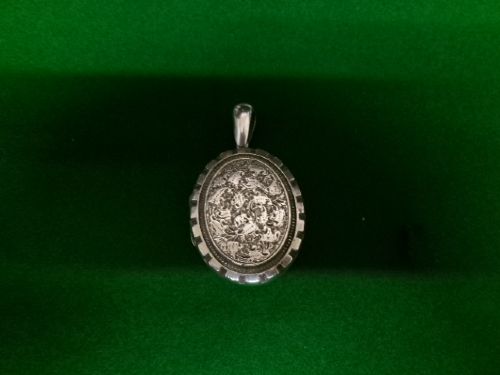
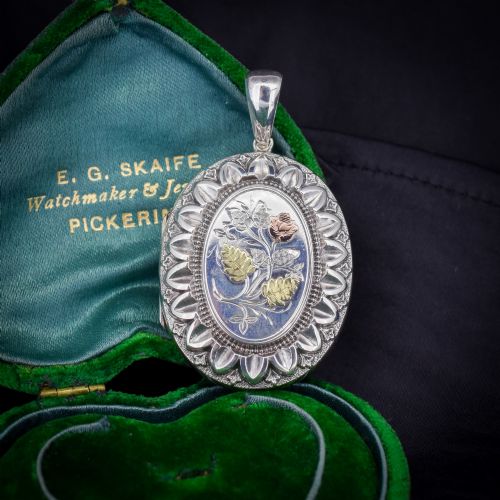
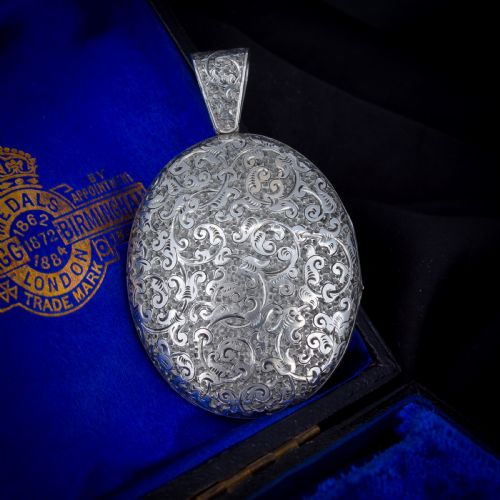
A victorian oval silver pendant on this page most commonly takes the form of a hinged locket designed to hold a miniature photograph or keepsake. These pieces date from the nineteenth century, encompassing specific years within the period such as eighteen eighty and eighteen ninety.
The inventory shows these items function as lockets, pendant lockets, and necklaces, frequently paired with matching silver chains. Makers of the era also produced related items like earrings and crucifixes in matching metals.
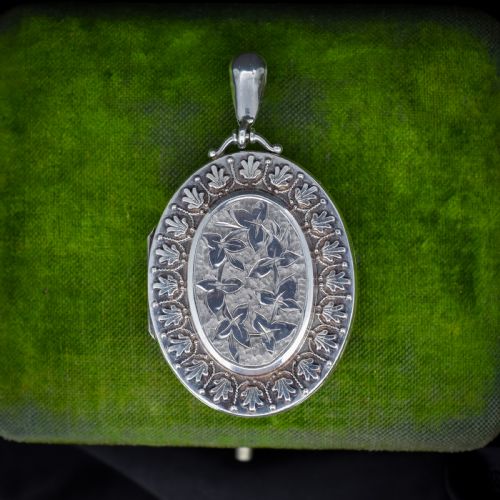
Designs span plain solid silver surfaces to intricate hand-engraved foliage, swallows, horseshoe motifs, and black enamel work. Some examples incorporate precious and semi-precious stones including aquamarine, seed pearls, and old cut paste.
Materials and construction
These items are fashioned predominantly from sterling silver and solid silver, sometimes accented with gold highlights or black enamel decoration. Metals are shaped into oval frames and hinged compartments designed to secure personal mementos safely inside.
Surface decoration relies on hand engraving, featuring botanical subjects like ivy and flowers, alongside avian motifs such as swallows. Gemstones including seed pearls, aquamarine, and paste are handset into the silver or gold mounts.
Victorian Oval Silver Pendant Retail Price Guide 2026
Typical asking prices for victorian oval silver pendant among the pieces listed under this phrase on Sellingantiques today, from the lower quarter to the upper quarter. They describe what is for sale here now, not the wider market.
Swallows and horseshoe motifs flutter across these silver plates, ensuring someone in eighteen ninety wore a pocketful of good luck.
Assessing quality and craftsmanship
Quality rests in the crispness of the hand engraving and the precision of the hinged mechanism. Deeper, sharper cuts on ivy or floral motifs demonstrate superior handwork by nineteenth-century silversmiths.
The inclusion of specialist materials such as hand-painted black enamel, natural seed pearls, or faceted aquamarine elevates a piece above standard engraved silver variants.
The Victorian Oval Silver Pendant Glossary
- Locket
- A small ornamental hinged case worn on a chain around the neck, used to hold a portrait or lock of hair. Victorian examples often feature secure snap closures and interior glass frames.
- Sterling silver
- An alloy of silver containing ninety-two point five percent silver and seven point five percent other metals, usually copper. This standard ensures durability for everyday nineteenth-century wear.
- Aesthetic Movement
- A late nineteenth-century design style that emphasised visual beauty over narrative subject matter. Pieces from this movement often display stylised natural motifs.
- Seed pearl
- A very small natural or cultured pearl, often drilled and sewn or set closely together. They create delicate white accents against dark enamel or polished silver.
Victorian Oval Silver Pendant: Frequently Asked Questions
What do I put inside a locket?
These nineteenth-century pieces were traditionally used to store miniature photographs of loved ones or small locks of human hair. Many retain their original interior rims and glass covers for securing these keepsakes.
Modern wearers continue this tradition by inserting tiny photographs, printed paper notes, or fabric fragments behind the internal frames.
How do I date a silver locket?
Dating relies on stylistic clues such as engraved motifs, the presence of black enamel, or associated hallmarks. Pieces from the eighteen eighties often show Aesthetic Movement influence through stylised birds and geometric frames.
Broader attribution comes from manufacturing techniques and accompanying chain types characteristic of the nineteenth century.
Are these items solid silver?
The listings comprise sterling silver and solid silver constructions from the Victorian era. These metals provide the structural rigidity needed for hinged locket cases and deep hand engraving.
Weight varies depending on the gauge of the silver used, with some larger examples exceeding twenty grams.
Can I wear a locket every day?
Victorian silver lockets were built for daily wear by nineteenth-century owners, utilising durable sterling silver alloys. Regular checks of the hinge and clasp help secure the contents during daily use.
Gentle cleaning with a soft cloth preserves the engraved details and enamel work without wearing away the antique metal surface.