

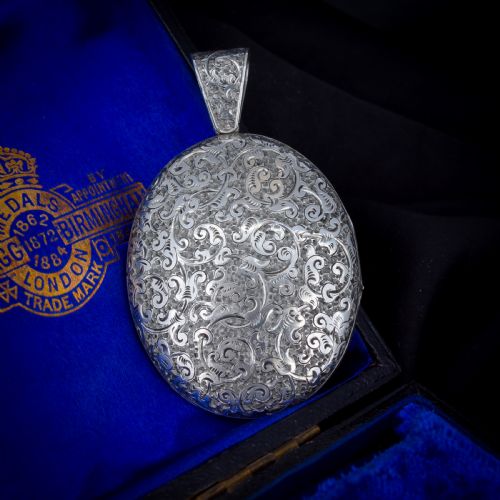


Victorian Oval Locket
A Victorian oval locket is a hinged sentimental jewel designed to hold miniature portraits or locks of hair, prized for its tactile warmth and intricate surface decoration.
Victorian Oval Locket
When searching for a victorian oval locket, you encounter pieces that function primarily as photo holders or keepsakes, often suspended from matching silver or gold chains. The form spans several decades of the nineteenth century, reflecting shifts in taste from floral engraving to geometric motifs.
Origins and periods represented in the selection lean heavily towards the Victorian era, supplemented by pieces from the late nineteenth and early twentieth centuries. Styles stretch from classic Victorian ornamentation to Aesthetic Movement minimalism and Etruscan Revival granulation.
Materials and Construction
Metals form the structural core of these jewels, utilising sterling silver, nine-carat gold, and eighteen-carat yellow gold alongside gilt metals and back-and-front constructions. Goldsmiths and silversmiths shaped these materials into robust oval frames designed to withstand daily wear while protecting fragile interior contents.
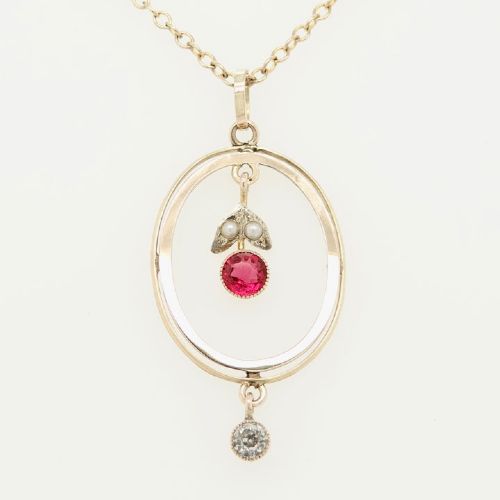
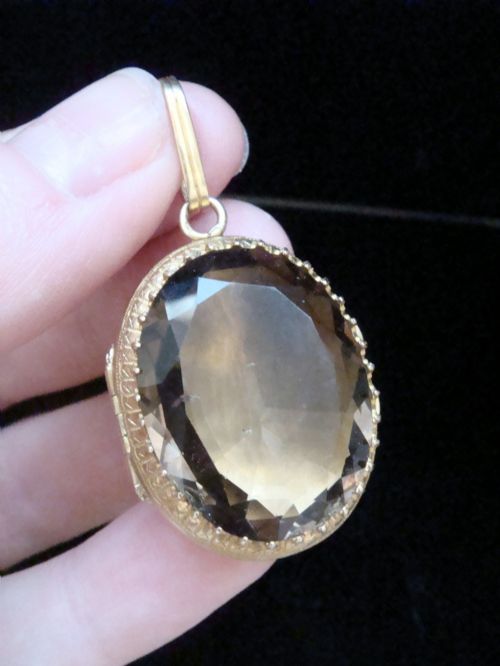
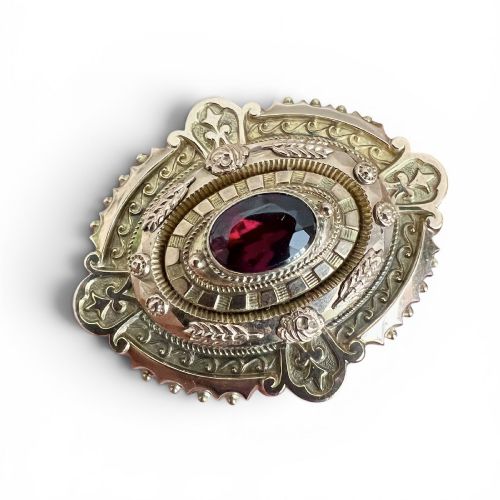
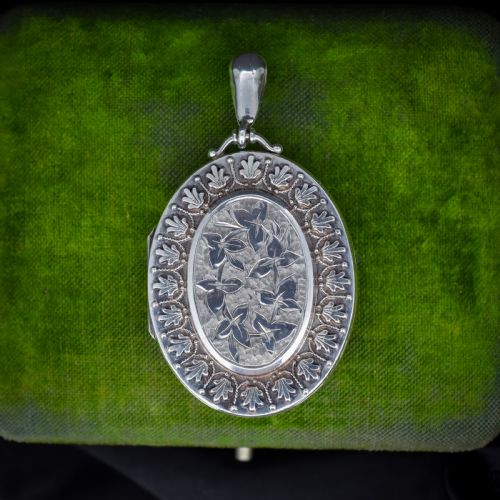
Surface embellishment relies on hand engraving, black enamel work, and applied wirework, complemented by bezel-set gemstones such as garnets, citrines, sapphires, diamonds, and paste stones. Seed pearls and coral elements are frequently pinned or glued into dedicated recesses to create floral or symbolic patterns.
Internal components typically include thin gold or silver rims holding miniature glass panes, allowing photographs or hair mementoes to be slipped securely into place. Hinges and snap closures require precise mechanical alignment to ensure the locket remains securely shut during movement.
Listings feature sterling silver, nine-carat gold, and eighteen-carat yellow gold, decorated with seed pearls, enamel, garnets, citrines, and paste.
Distinctions in Quality
The degree of hand-finishing defines the boundary between standard production and exceptional work, particularly in the crispness of floral engraving and the precision of applied wirework. Pieces featuring complex enamel details or multi-gemstone settings demand greater technical mastery from the maker.
Structural integrity of the hinge and closure mechanism dictates the longevity and daily usability of the locket. Superior examples maintain a tight spring action and a flush fit when closed, whereas lesser pieces show misalignment or wear around the pivot point.
The Victorian Oval Locket Glossary
- Back and front
- A method of construction where the exterior plates are made of gold, such as nine-carat gold, bonded to a base metal core for added durability.
- Paste
- Hand-cut lead glass used to imitate gemstones, valued in antique jewellery for its bright facets and historical authenticity.
- Etruscan Revival
- A nineteenth-century design style inspired by archaeological discoveries, characterised by applied granulation and wirework.
- Aesthetic Movement
- A late-nineteenth-century style emphasising asymmetrical natural motifs, swallows, and simplified forms over heavy historicism.
Victorian Oval Locket: Frequently Asked Questions
How do I open an antique locket?
Most lockets rely on a small thumbnail notch or a push-button mechanism on the side opposite the hinge. Apply gentle, steady pressure rather than forcing the covers apart.
If the locket resists, old dirt or packed lint may be binding the snap closure. A professional jeweller can clean the mechanism without damaging internal glass frames.
Can I put a modern photo inside?
Yes, modern paper photographs can be trimmed to fit the internal bezel or glass frame of the locket. Use a thin template or the original internal surround to trace the correct oval shape.
Avoid using modern glues or adhesive tape inside antique compartments, as these leave residues that can stain the metal or ruin fabric keepsakes.
What is back and front gold?
Back and front jewellery consists of thin sheets of solid gold applied to a base metal or brass interior. This technique allowed Victorian makers to produce larger, sturdier lockets at a more accessible cost.
The gold exterior provides the traditional warm colour and polish of solid metal while keeping the overall weight manageable for chain wear.
How do I care for silver and gold lockets?
Clean silver and gold components gently with a soft microfibre cloth to remove daily oils and dust. Avoid submerging lockets with internal hair mementoes or paper photographs in liquid cleaning solutions.
Store each piece individually in a lined box or pouch to prevent the engraved surfaces and glass covers from scratching against other jewellery.