






Victorian Officers Trunk
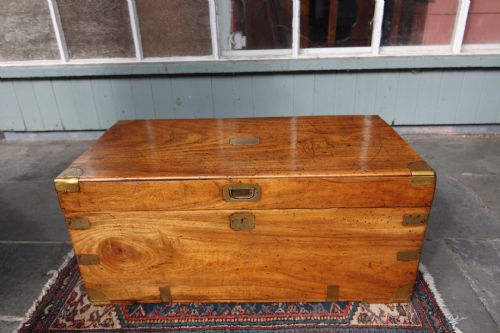
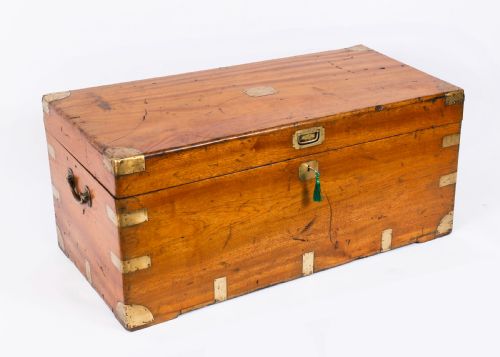
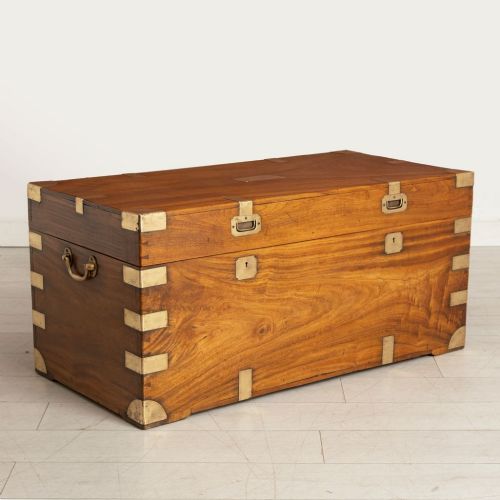
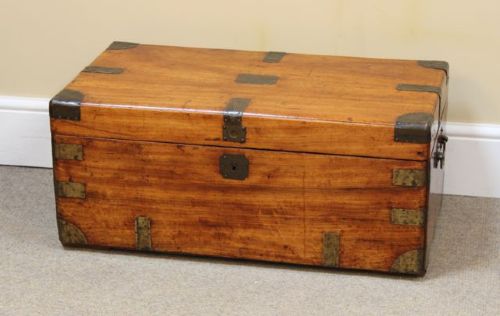
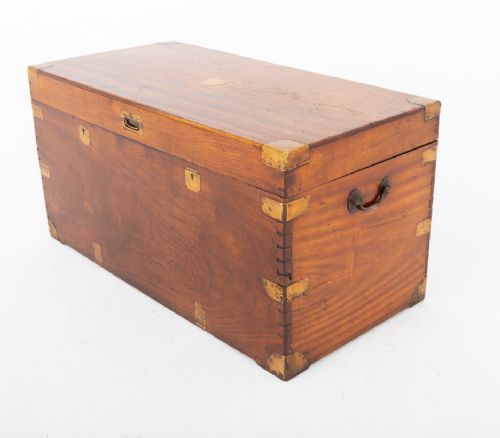
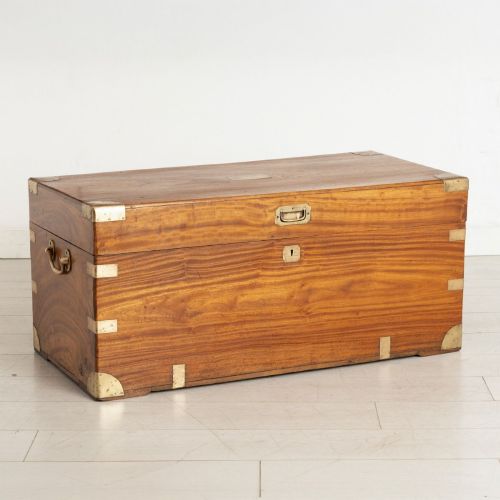
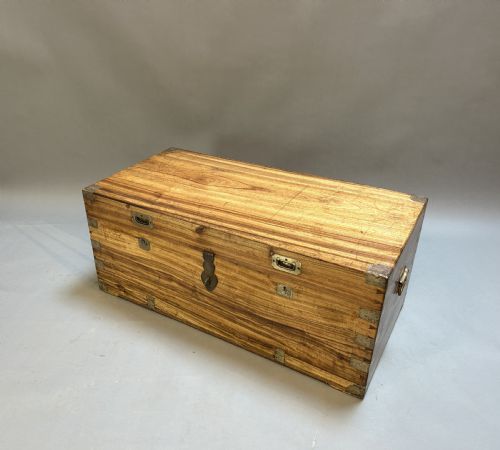
A victorian officers trunk is a durable travel chest built for military service overseas, prized today for rugged timber construction and recessed brass hardware.

Victorian Officers Trunk
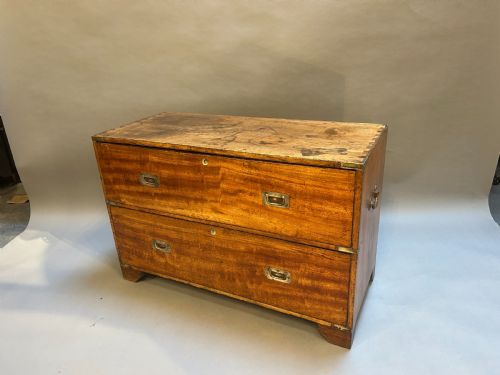
A victorian officers trunk encompasses utilitarian travel containers made for military campaigns during the nineteenth century. These pieces include single-lidded travel trunks, blanket boxes, divided chests of drawers, and lidded hat boxes.
Camphorwood forms the primary timber encountered in these listings, alongside teak, mahogany, oak, walnut, pine, and painted toleware. Many examples date from the mid to late nineteenth century, reflecting the periods of British military expansion.
The objects served British officers moving between postings across the empire, constructed to withstand arduous journeys by sea and rail. Their origins lie in military necessity, yielding sturdy proportions designed to pack efficiently.
Materials and Construction
Cabinetmakers utilised dense, moisture-resistant timbers such as camphorwood and teak to counter tropical humidity and insect damage during overseas service. These woods were joined robustly to endure rough handling.
Makers reinforced corners and edges with brass plates, strapping, and flush-fitting carrying handles that avoided catching on tight ship berths. Lock plates and binding strips added structural rigidity to the primary box forms.
A good camphorwood trunk doubles as a linen chest that smells pleasantly of mothballs without any artificial additives.
Evaluating Build and Detail
Quality rests on the integrity of the timber selection and the precision of the brass mountings inset into the wood. Heavy brass hardware set flush into the surface indicates careful workmanship.
Finer pieces incorporate internal fittings like secret drawers, secure locks with original keys, and secondary timbers like mahogany or teak rather than plain pine. The grain of the camphorwood or walnut further separates standard transit boxes from exceptional officer pieces.
Drew and Sons·Hawkes and Co
The Victorian Officers Trunk Glossary
- Campaign chest
- A modular chest of drawers built in two or more sections to facilitate packing and transport on military campaigns. Brass corners and recessed pull handles protect the edges during transit.
- Camphorwood
- An aromatic timber native to Asia, utilised for campaign trunks because its natural oils repel insects and resist damp conditions. It often displays a distinct grain and pleasant scent.
- Toleware
- Enamelled and painted tinplate used for durable military hat boxes and small containers. The painted surface provided protection against rust.
- Recessed brass
- Hardware let into the surface of the wood so that handles and corners do not project beyond the plane of the trunk. This prevented snagging in cramped quarters.
- Secretaire
- A chest fitted with a drop-front writing drawer containing small compartments and pigeonholes for correspondence. These combined desk and storage functions for officers in the field.
Victorian Officers Trunk: Frequently Asked Questions
What are victorian officers trunks?
These pieces are portable storage chests manufactured during the nineteenth century for British military personnel on active service. They provided secure transport for uniforms, equipment, and personal papers.
Constructed from sturdy timbers like camphorwood and teak, the designs incorporated brass protective brackets and flush handles. Their modular nature allowed officers to pack belongings efficiently for travel across the British Empire.
How were campaign chests used?
Officers utilised these chests during active campaigns and long sea voyages to protect uniforms and valuables from moisture and rough handling. Trunks often doubled as makeshift furniture or desks inside campaign tents.
Chest of drawers variants separated into two stacked sections held by brass side brackets, making them easier to load onto pack animals or wagons. Hat boxes protected specialised headwear such as shakos and helmets.
How do I care for camphorwood?
Keep camphorwood furniture away from direct heat sources and strong sunlight to prevent the timber from drying out or splitting. Occasional gentle dusting preserves the surface finish without stripping natural oils.
The distinct natural aroma can be refreshed lightly with fine abrasive paper on the interior if the scent fades over decades. Avoid harsh chemical polishes on antique wood surfaces.
How can I date these trunks?
Dating relies on observing construction methods, timber choices, and the style of the brass hardware used across the nineteenth century. Mid-century examples often feature heavy brass bound corners and solid camphorwood construction.
Later Victorian pieces from the eighteen-eighties and nineties sometimes incorporate iron reinforcement or simpler box configurations alongside manufacturer inscriptions. Documented regiments or named officer inscriptions offer further historical markers.