

Victorian Office Table
A victorian office table brings solid nineteenth-century timber and leather writing surfaces directly into a modern workspace.
Victorian Office Table
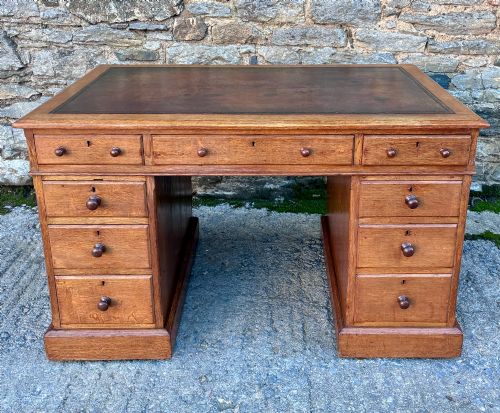
When you search for a victorian office table, you encounter substantial writing surfaces, pedestal desks, and partners desks designed for heavy administrative use. These pieces originate predominantly from the Victorian and nineteenth-century periods, alongside occasional Edwardian, Regency, and early twentieth-century examples.
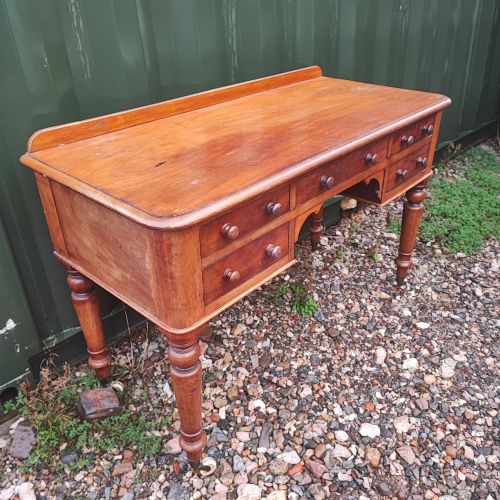
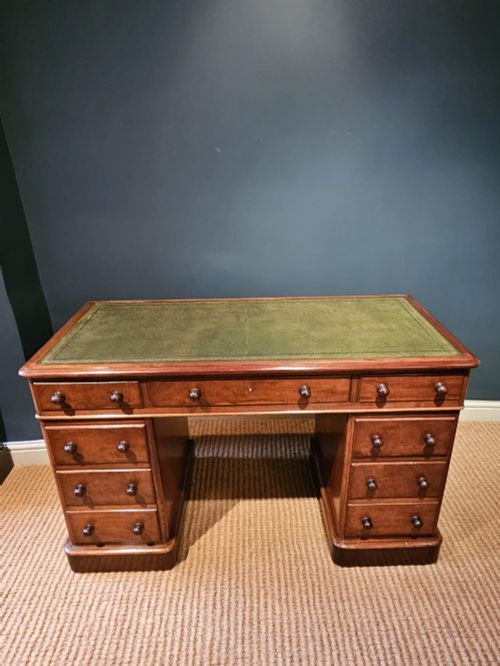
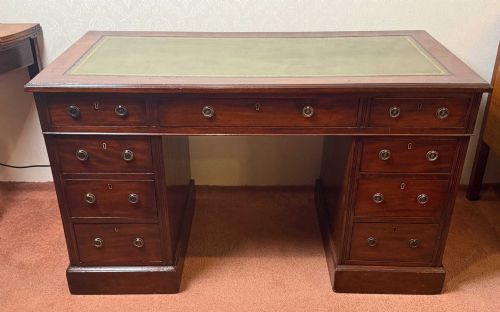
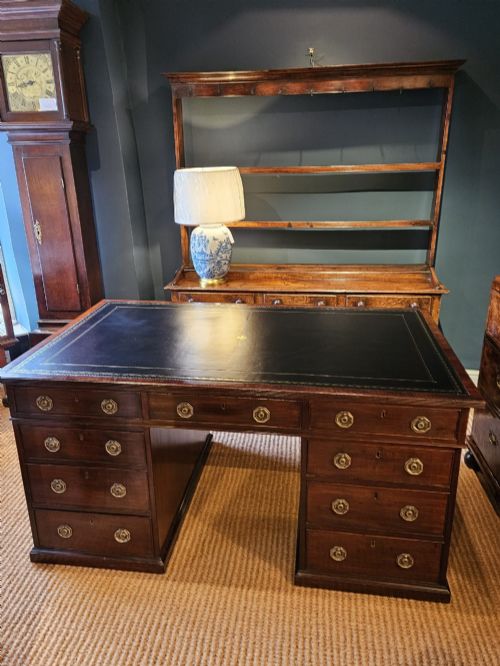
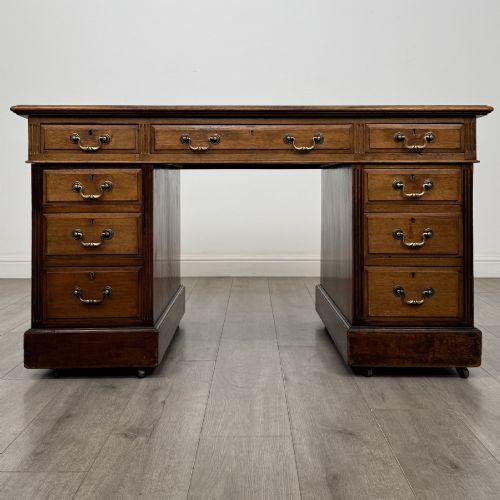
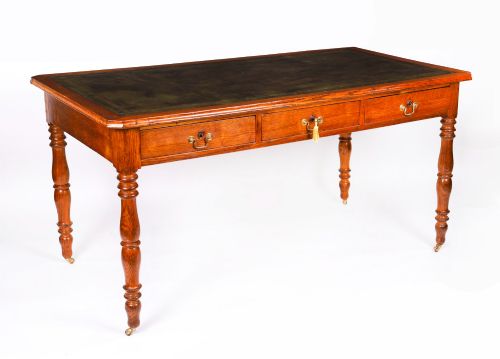
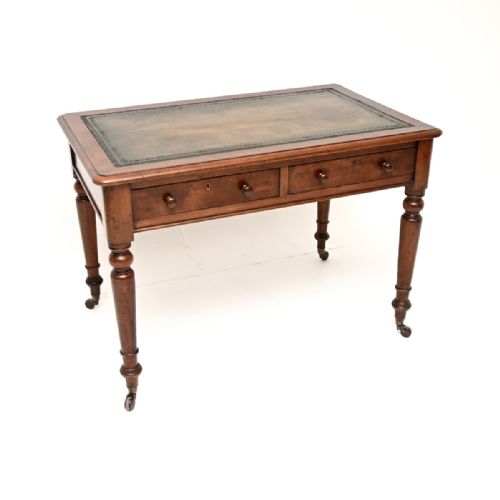
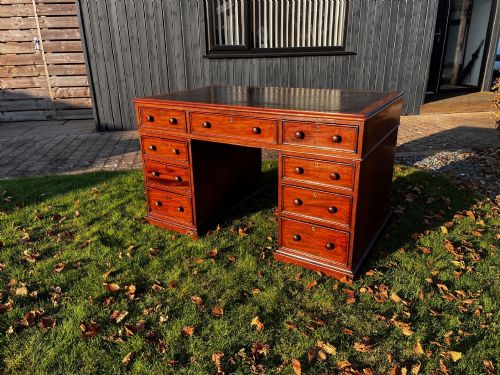
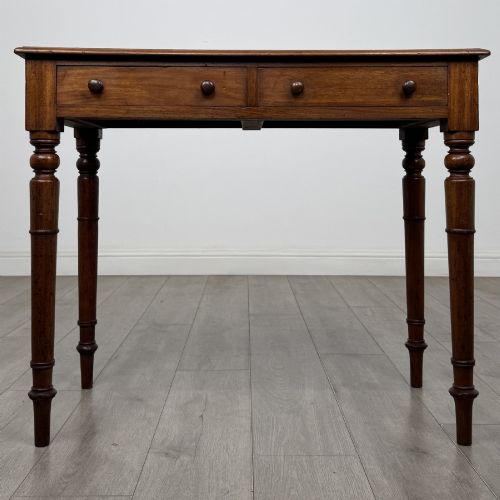
The most common form on this page is the pedestal desk in mahogany, featuring banks of drawers beneath the writing surface. Writing tables with two or more drawers also appear frequently, offering a lighter silhouette for domestic studies.
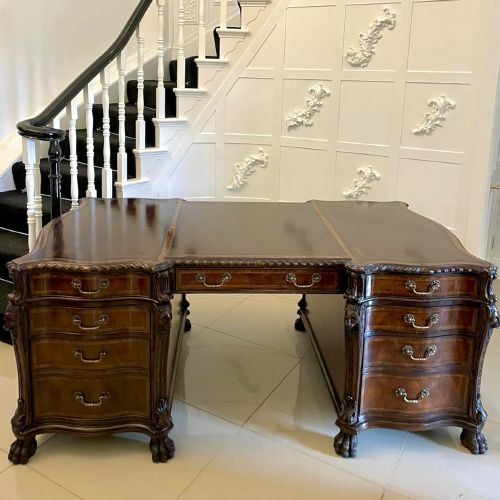
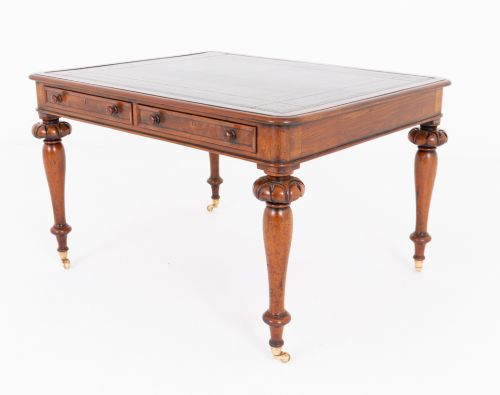
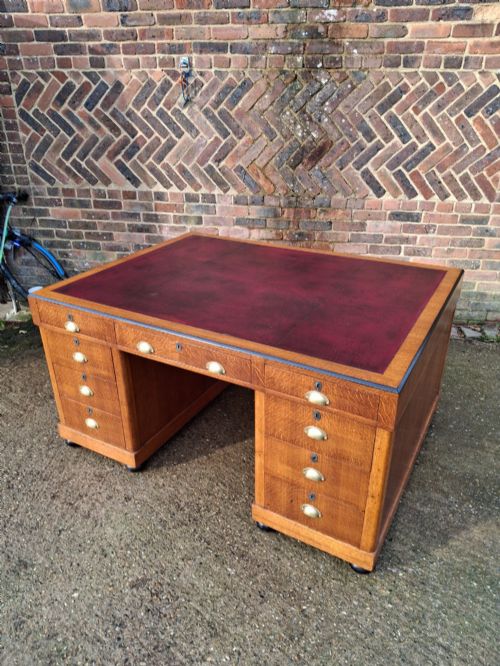
Larger variants include partners desks, which accommodate users on both sides, and library writing tables built for institutional or grand residential spaces. Cabinetmakers of the era utilised robust construction methods to ensure longevity under daily clerical work.
How they were made
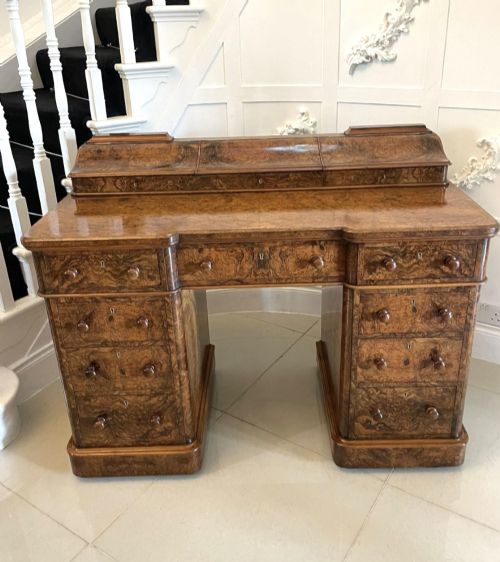
Cabinetmakers constructed these tables primarily using mahogany, oak, and walnut, often selecting figured timbers like burr walnut, birdseye maple, or satinwood for primary display surfaces. Secondary woods provided structural integrity within drawer linings and interior framing.
Writing surfaces typically feature inset panels of tooled leather, providing a durable and tactile plane for correspondence. Hardware such as campaign handles, swan neck pulls, and brass drawer furniture secured functional access while adding decorative contrast to the timber.
Victorian Office Table Retail Price Guide 2026
Typical asking prices for victorian office table among the pieces listed under this phrase on Sellingantiques today, from the lower quarter to the upper quarter. They describe what is for sale here now, not the wider market.
Some nineteenth-century drawers still conceal hidden stationery compartments, built to keep private correspondence safe from prying eyes.
What varies in quality
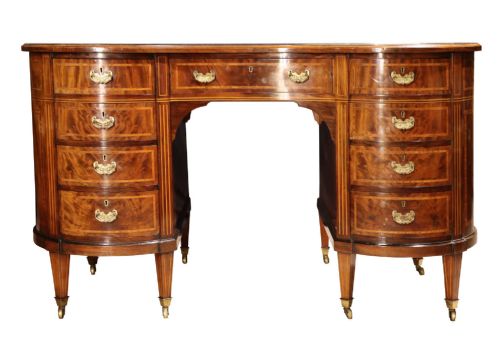
The grade of timber selection and the complexity of the cabinetry distinguish exceptional pieces from standard utility furniture. Master workshops employed finely figured veneers, sophisticated breakfront configurations, and elaborate fitted stationery interiors that elevate the work above plain utilitarian designs.
Proportion and architectural presence govern the hierarchy of these desks. Pieces that are free-standing, meaning finished with panel detail on all four sides rather than meant to face a wall, demand higher regard among collectors.
Maple and Co·Howard and Sons·Trollope and sons
The Victorian Office Table Glossary
- Partners desk
- A large pedestal desk designed with drawer and cupboard storage accessible from both opposing sides, allowing two people to work simultaneously. These substantial pieces typically served senior partners in banking and legal offices.
- Pedestal desk
- A heavy writing desk supported by two distinct vertical columns of drawers flanking a central kneehole space. They frequently incorporate inset leather writing surfaces on the top.
- Writing table
- A freestanding table with one or more drawers beneath the top, lacking the heavy twin drawer pedestals of a standard desk. They offer a lighter profile suitable for domestic rooms.
- Kneehole desk
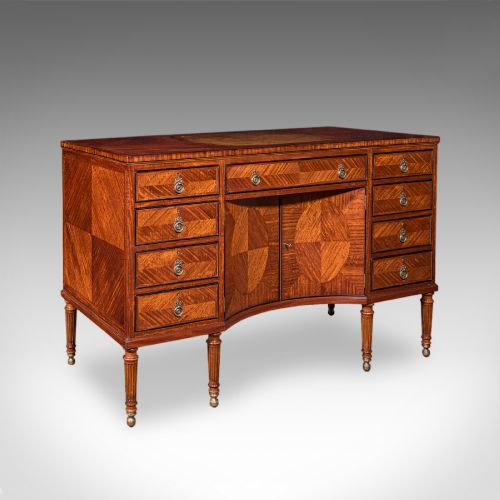
- A compact desk configuration featuring a central recess for the user's legs, framed by smaller side drawers. They provide organised storage without dominating room space.
- Campaign handles
- Flush-fitting brass handles inset into the drawer fronts to prevent catching during transport or military deployment. They appear on select nineteenth-century campaign-style furniture.
- Breakfront
- A piece of furniture featuring a central section that projects forward from the flanking pedestals or cabinets. This architectural device creates shadow and depth across the front elevation.
Victorian Office Table: Frequently Asked Questions
What is a partners desk?
A partners desk is a double-sided pedestal table featuring drawers and cupboards on both fronts. This layout allowed two people to sit opposite each other and work at the same time.
Cabinetmakers built these large pieces for boardrooms, studies, and legal practices. They represent the grandest scale of nineteenth-century office furniture.
How do I care for leather desk tops?
Leather writing surfaces require gentle cleaning with a slightly damp cloth followed by specialised leather dressings. Avoid harsh chemical cleaners that strip the original colour and gold tooling.
Keep these tables away from direct sunlight and heat sources to prevent the leather from drying and cracking over time.
Are these desks suitable for daily work?
These historical tables adapt readily to modern laptop and computer use while providing generous drawer storage for stationery. Their solid timber construction handles daily clerical demands with ease.
Selecting a piece with appropriate dimensions ensures comfortable legroom and working height for contemporary seating.
How do I distinguish a writing table from a desk?
A writing table relies on four legs and a frieze containing drawers, presenting an open and lighter silhouette. A pedestal desk uses solid banks of drawers to support the work surface on both sides.
Writing tables function well in living spaces, whereas pedestal desks suit dedicated studies and home offices requiring substantial storage.