



Victorian Oak Pot Cupboards
Victorian oak pot cupboards are compact bedroom and hallway storage pieces built to hold chamber pots, which bring sturdy timber character to modern interiors.
Victorian Oak Pot Cupboards
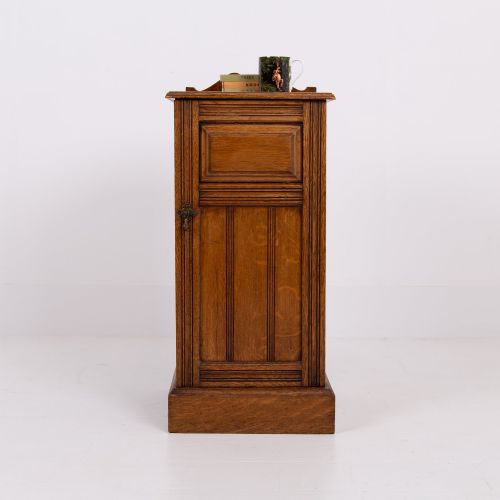
When you search for victorian oak pot cupboards, you encounter a range of compact bedside cabinets and night stands primarily dating from the nineteenth century. These sturdy wooden pieces were originally designed to sit beside the bed and conceal a chamber pot behind a single panelled door.
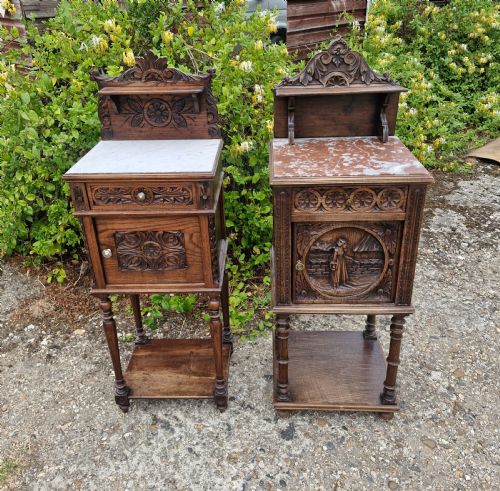
The examples available on this page encompass various regional and stylistic interpretations, from plain nineteenth century models to highly decorative revival forms. Most versions are constructed from solid oak, sometimes combined with secondary woods such as pine, and occasionally embellished with fruitwood marquetry inlay, brass handles, or iron fittings.
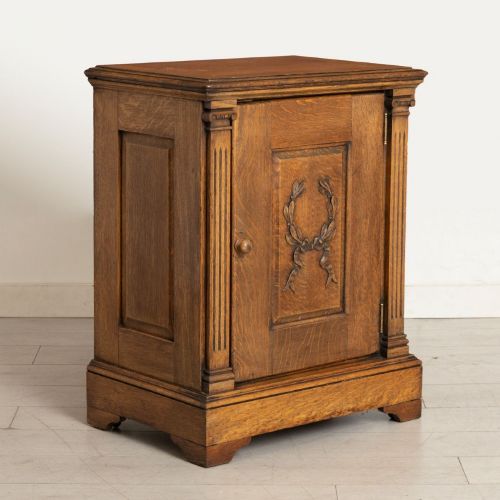
Beyond the standard bedside cabinet, you also find related forms like hall cupboards and small buffets sharing the same robust timber construction. These functional items suit modern homes just as well as they did in the Victorian era, offering compact surface space and discreet interior storage.
How they were made
Cabinet makers constructed these cupboards using solid oak planks, frequently utilising traditional joinery methods such as mortise and tenon frames to ensure durability. Secondary timbers like pine often appear in internal carcases and drawer linings, reflecting standard nineteenth century workshop economy.
Surface ornamentation relied heavily on hand carving, applied mouldings, and occasionally fruitwood marquetry inlay to create striking visual contrast. Hardware typically consisted of brass or iron handles and hinges, while some upper surfaces incorporated marble slabs for practical daily use.
Listings feature oak, pine, fruitwood marquetry inlay, brass, iron, and marble across Victorian, Regency, and nineteenth century periods.
What varies in quality
The distinction between standard and superior pieces rests on the depth of hand carving, the choice of timber selection, and the presence of decorative details like fruitwood marquetry. Plain nineteenth century utilitarian cupboards sit at one end of the scale, while elaborate Gothic Revival and Renaissance Revival examples demonstrate far greater artisan skill.
Original hardware, sound structural timber joinery, and intact marble tops elevate the standing of any given cabinet. Lesser pieces often exhibit replacement elements or heavy alterations made during subsequent decades of use.
The Victorian Oak Pot Cupboards Glossary
- Marquetry inlay
- Decorative patterns formed by fitting small pieces of contrasting wood veneer into a prepared timber surface. This technique appears on finer Victorian cabinet doors and drawer fronts.
- Gothic Revival
- An architectural and decorative style drawing inspiration from medieval design, featuring pointed arches, tracery, and heavy carved details. This aesthetic heavily influenced late nineteenth century furniture production.
- Carcase
- The foundational structural body or frame of a piece of cabinet furniture before doors, drawers, and decorative mouldings are attached. It provides the main strength for small bedside cupboards.
- Aesthetic Movement
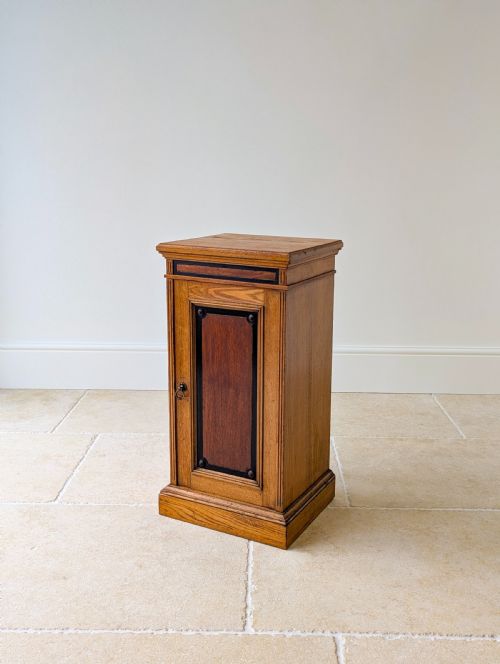
- A late nineteenth century design philosophy that rejected industrial production in favour of artistic craftsmanship and simplified forms. Pieces from this movement often combine ebonised wood details with natural timber.
Victorian Oak Pot Cupboards: Frequently Asked Questions
What was a pot cupboard used for?
These compact cabinets were originally designed for nineteenth century bedrooms to safely house a chamber pot behind a closed door. The interior space kept necessities hidden while the top surface held a water jug and basin.
Today, buyers repurpose these versatile items as bedside tables, lamp stands, or small hallway cabinets. Their enclosed shelving makes them ideal for storing books, electronics, or modern odds and ends.
How do I identify a Gothic Revival piece?
Gothic Revival cupboards display architectural motifs borrowed from medieval churches and buildings, such as pointed arches, quatrefoils, and heavy chamfered edges. Makers used deep carving to create dramatic shadows and texture on the oak surfaces.
These pieces often date from the latter half of the nineteenth century and carry a more imposing visual weight than standard plain bedside cabinets.
Are all these cupboards made of solid oak?
While oak serves as the primary exterior timber for these listings, makers frequently incorporated secondary woods like pine into the internal carcases, drawer bottoms, and back panels. This traditional practice reduced overall weight and material costs.
Some examples also feature decorative additions like ebonised wood highlights, brass hardware, iron fittings, or inset marble tops.
How do I date a nineteenth century cupboard?
Dating relies on examining the construction methods, timber selection, and stylistic cues present in the design. Plain utilitarian forms often date to the mid nineteenth century, while revival styles like Renaissance or Aesthetic Movement typically point toward the final decades of the eighteen hundreds.
Makers' marks or stamps, when present, can occasionally provide a more precise workshop origin.