

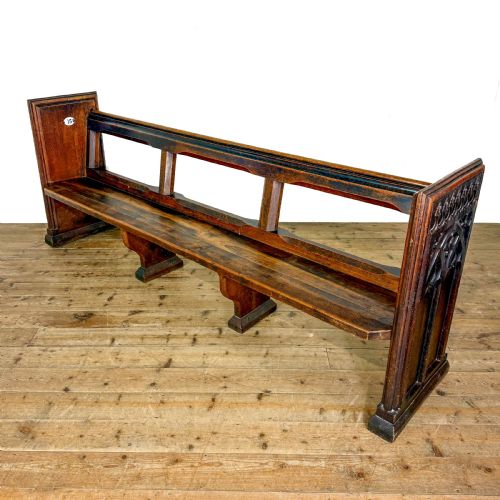


Victorian Oak Pew
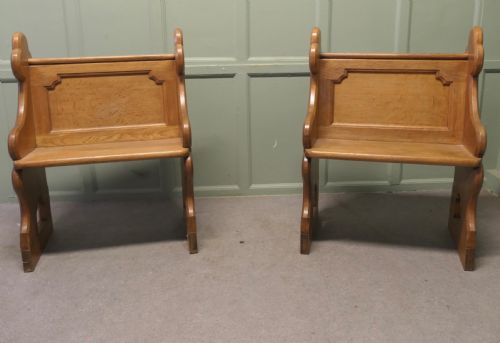
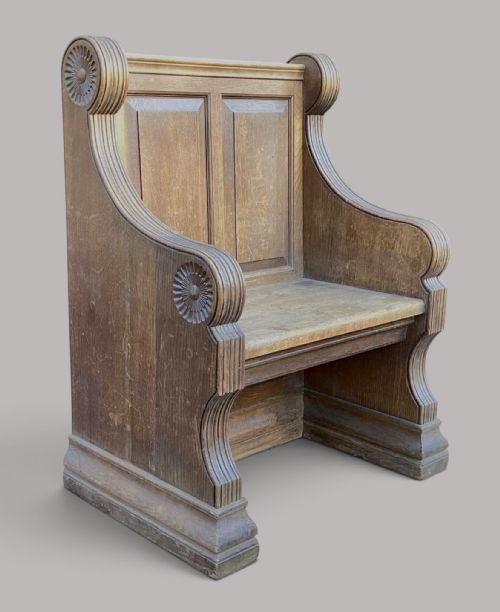
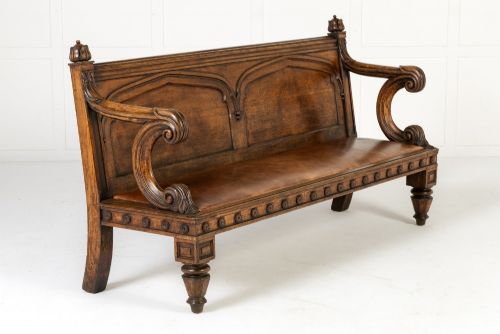
These robust victorian oak pew examples bring solid architectural presence and historic ecclesiastical character straight into a domestic hallway or dining space.
Victorian Oak Pew
A victorian oak pew usually originates from a church, cathedral, school, or country house setting, taking the form of a long bench, box settle, or architectural hall seat. These seating pieces emerge predominantly from nineteenth century workshops carrying Gothic Revival, ecclesiastical, or rustic farmhouse influences.
The version most commonly encountered on this page is the straight timber bench or pew front panel, often constructed in solid oak with carved detailing. Pieces range from straightforward institutional seating to elaborate hall benches designed with storage or high architectural backs.
Materials and construction
Makers built these pieces primarily from solid English oak, occasionally incorporating secondary timbers such as elm, pine, or rush for seating and structural elements. Boards were selected for density and strength, designed to endure heavy institutional use over decades.
Joinery relied on traditional pegged mortise and tenon joints, complemented by raised and fielded panels and deep relief carving in the Gothic or architectural manner. Surfaces were frequently left untreated or finished with simple waxes that allowed the natural grain of the timber to darken with age.
Victorian Oak Pew Retail Price Guide 2026
Typical asking prices for victorian oak pew among the pieces listed under this phrase on Sellingantiques today, from the lower quarter to the upper quarter. They describe what is for sale here now, not the wider market.
Some nineteenth century oak pews still carry the carved initials of restless parishioners who sat through long sermons.
Evaluating quality
Quality in a victorian oak pew rests on the integrity of the timber, the depth and precision of any architectural carving, and whether the piece retains its original length and structural form. Pieces commissioned for specific cathedrals or designed by notable cabinet makers display superior proportions and finer joinery than standard institutional seating.
Provenance and unaltered original surfaces dictate distinction at the upper end of the scale. Adaptations, cut-down lengths, or replacement panels alter the character and historical coherence of the piece.
Edwards and Roberts
The Victorian Oak Pew Glossary
- Settle
- A wooden bench with a high back, solid arms, and frequently a box seat for storage. This form kept drafts away from occupants in large halls.
- Gothic Revival
- An architectural and decorative style drawing inspiration from medieval design. It employs pointed arches, tracery, and quatrefoils.
- Box seat
- A bench seat featuring a hinged lid opening to a storage compartment underneath. This practical design was common in country houses and school rooms.
- Ecclesiastical
- Pertaining to churches and Christian clergy. Pieces described this way were originally made for houses of worship.
- Pew front
- The decorative end panel or barrier of a church pew. These architectural fragments are often repurposed as wall panels or hall seats.
Victorian Oak Pew: Frequently Asked Questions
How do I fit a long pew into a modern hallway?
Measure your available floor space carefully, accounting for the depth of the seat and the height of the backrest against skirting boards and light switches.
Position the pew flat against a load-bearing wall where its linear form can anchor the room without obstructing doorways or walkways.
Can these pews be used around a dining table?
Standard dining tables require a specific clearance height between the floor and the underside of the table apron. Many church pews sit lower than typical dining chairs, so check seat heights before pairing them.
Adding thin, custom seat cushions can raise the seating position comfortably for dining use while protecting the historic timber.
How should I clean and maintain antique oak timber?
Dust the timber regularly with a dry, soft lint-free cloth to prevent grit accumulation in the grain and carved recesses. Avoid modern silicone sprays or wet cloths that can damage old wax finishes.
Apply a traditional beeswax sparingly once or twice a year to nourish the dry wood and maintain a gentle, natural lustre.
Were all these pews actually made for churches?
While a significant portion originated in churches, cathedrals, and chapels, many were built for schools, guild halls, and large country house reception rooms. Gothic Revival pieces were frequently commissioned for domestic halls during the nineteenth century.
Inspect the back of the timber and fixing points for clues regarding original placement, such as ledger marks or cathedral stamps.