


Victorian Oak Longcase Clock
A victorian oak longcase clock brings solid presence and steady timekeeping to a room, offering the rich grain and traditional craftsmanship collectors prize.
Victorian Oak Longcase Clock
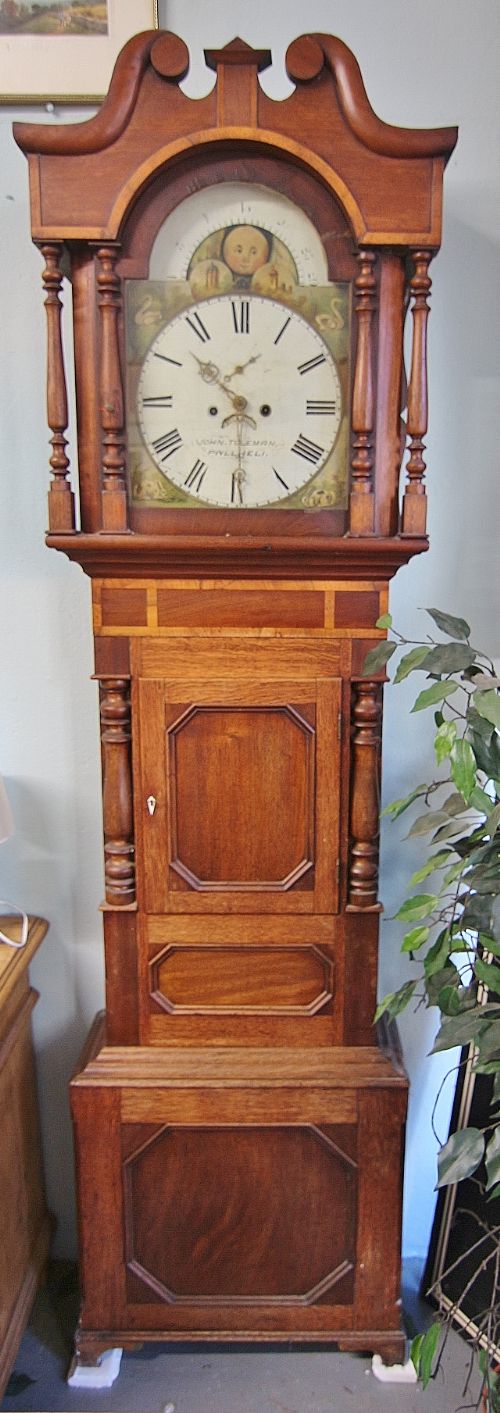
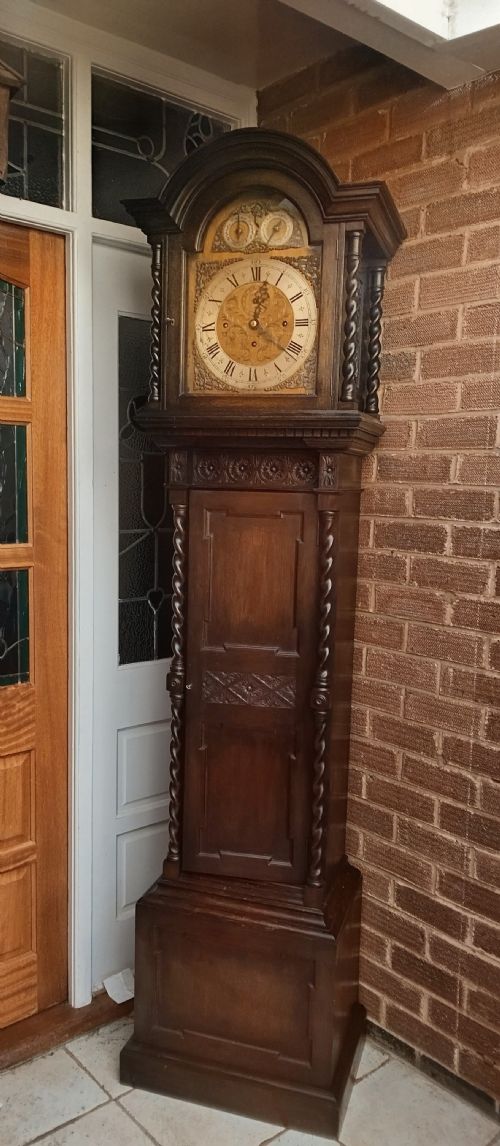
A victorian oak longcase clock stands as a traditional floor-standing timepiece housed in a tall wooden case. These pieces combine functional timekeeping with substantial furniture presence, standing upright to display a dial behind glass.
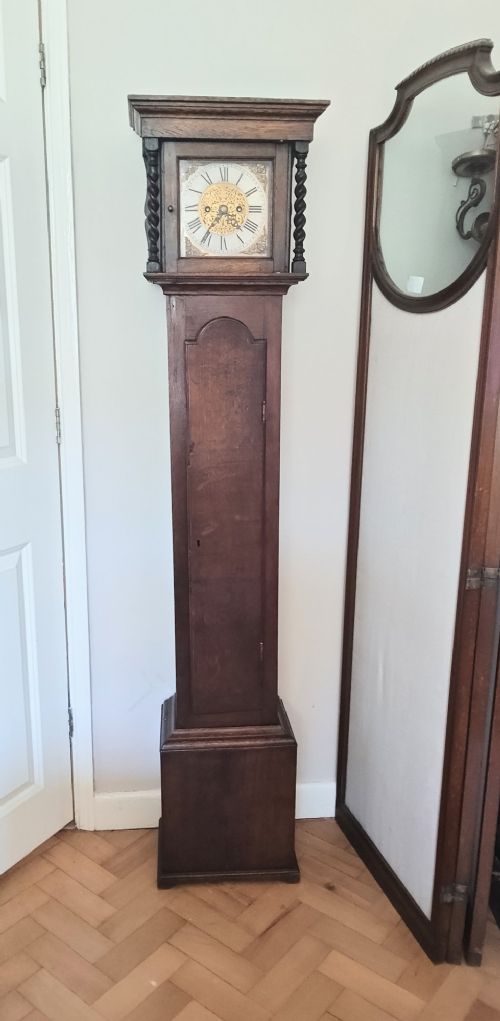
The selections found here include standard eight-day models, smaller grandmother variations, and regional styles such as Welsh and Scottish examples. Oak serves as the primary timber, sometimes paired with mahogany or enhanced by carved details.
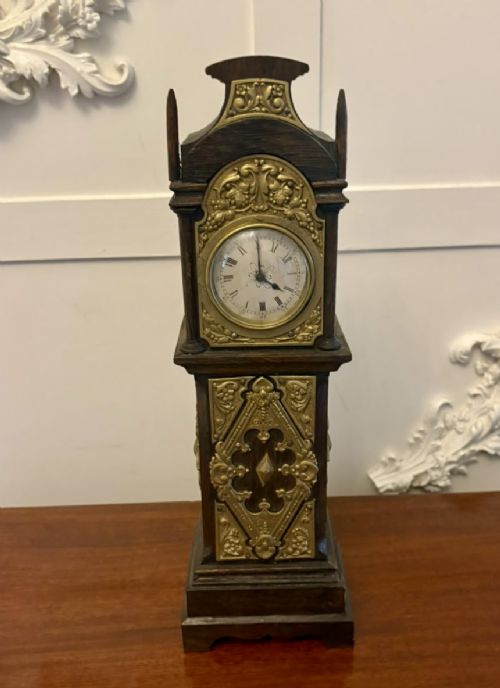
Pieces span the nineteenth century, incorporating arch dials, brass faces, and chimes. Buyers encounter both full-size grandfather clocks and smaller table-top or miniature versions designed for more compact spaces.
How they were made
Cabinet makers constructed the tall housings primarily from oak, utilising solid timber planks and occasionally incorporating mahogany accents or hand-carved decorative elements. Glass protects the dial area, while iron and brass components form the mechanical interior.
Movement mechanisms rely on weights and pendulums, driving systems that range from standard eight-day workings to tubular bell chimes and twin fusee setups. Dials feature painted surfaces or engraved brass faces, often set beneath an arched glass door.
Some nineteenth-century makers hid tiny carved kings inside the clock casework, giving owners a secret royal watcher standing guard over the hours.
What varies in quality
The refinement of the cabinet work distinguishes simpler regional country pieces from elaborately carved or architectural examples. Superior items display crisp hand carving on the oak case and harmonious proportions between the hood, trunk, and base.
Movement complexity and dial execution set the standard for value among timepieces. Clocks housing intricate bell chimes, twin fusee mechanisms, or finely engraved brass faces represent the higher tier of workmanship.
The Victorian Oak Longcase Clock Glossary
- Longcase clock
- A tall, floor-standing pendulum clock housed in a protective wooden case. These pieces are commonly known as grandfather clocks.
- Grandmother clock
- A smaller, more compact version of the traditional longcase clock. They offer the classic appearance of a grandfather clock in a reduced height.
- Fusee
- A conical pulley mechanism designed to maintain even tension on the clock movement as the drive weight descends. This device improves timekeeping accuracy.
- Arch dial
- A clock face featuring a curved upper section above the main circular dial. This space frequently displays maker details or decorative painted scenes.
- Eight day
- A clock movement requiring winding once a week. This system uses hanging weights that take approximately eight days to reach the bottom of the case.
Victorian Oak Longcase Clock: Frequently Asked Questions
How do I wind a longcase clock?
Winding involves using a key or crank to pull the driving weights back up inside the trunk. Doing this carefully once a week keeps the pendulum swinging.
Ensure you do not overwind the movement, as this can damage the internal cogs and springs. Regular gentle winding maintains accurate timekeeping.
What is the difference between a grandfather and a grandmother clock?
The primary difference lies in the overall height and scale of the wooden case. Grandmother clocks are noticeably shorter and narrower than traditional grandfather clocks.
This smaller stature allows them to fit comfortably into rooms with lower ceilings or tighter wall spaces where a full-size clock would overwhelm the area.
Where should I place an oak longcase clock?
Position the clock against a sturdy interior wall away from direct sunlight, heating vents, and damp areas. Stable temperatures help preserve the oak timber and prevent wood movement.
The floor beneath must be level to ensure the pendulum swings freely and the clock keeps accurate time.