


Victorian Oak Console
When you search for a victorian oak console, you are looking at solid timber hall tables and side furniture produced across the nineteenth century.
Victorian Oak Console
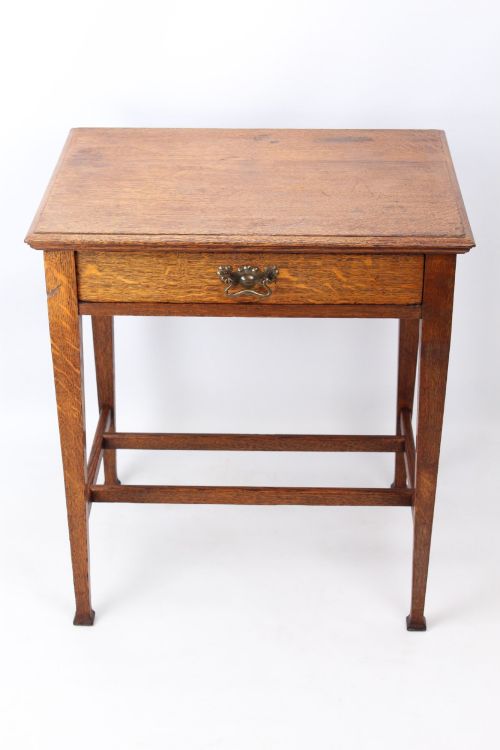
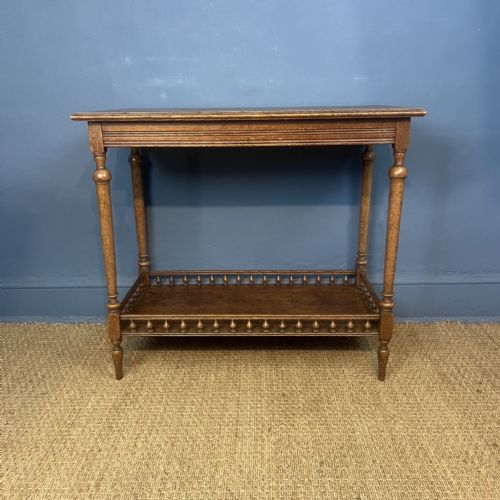
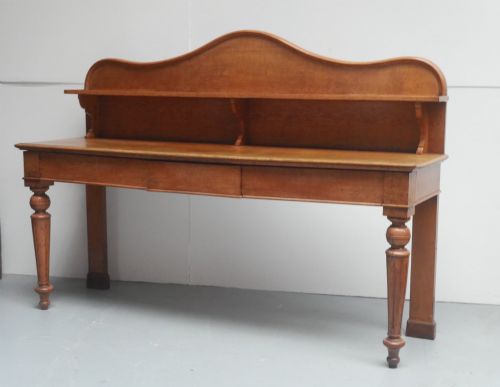
A victorian oak console typically manifests as a narrow hall table, side table, or writing desk designed to stand flat against a wall in a reception room or entrance passage. The form prioritises a shallow depth to fit transitional spaces while providing a useful surface for lamps, letters, or decorative objects.
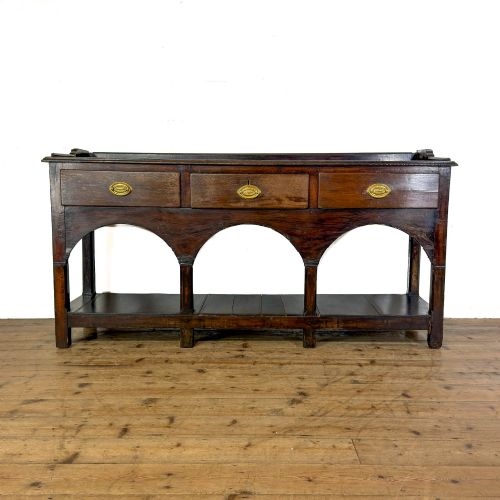
Examples on this page span the broader nineteenth century, with frequent appearances from the 1850s through to the 1900s, alongside related Gothic Revival and Arts and Crafts iterations. Makers adapted the console format into diverse configurations, incorporating single or twin drawers, tiered shelves, and occasionally marble or granite tops.
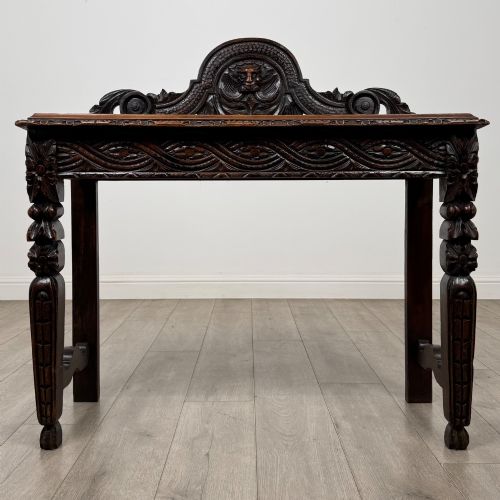
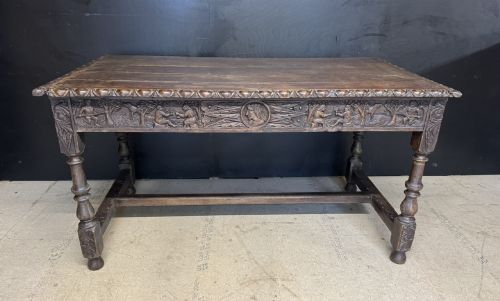
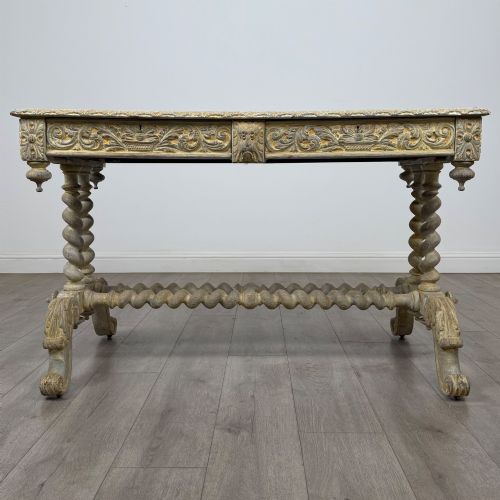
Origins range widely across regional workshops in Britain, including Scottish examples in golden or burr oak, alongside heavily carved English country pieces displaying Green Man motifs or grape-vine reliefs. Buyers encounter both restrained architectural lines and exuberant carved ornament reflecting changing tastes from early Victorian severity to later aesthetic movements.
How they were made
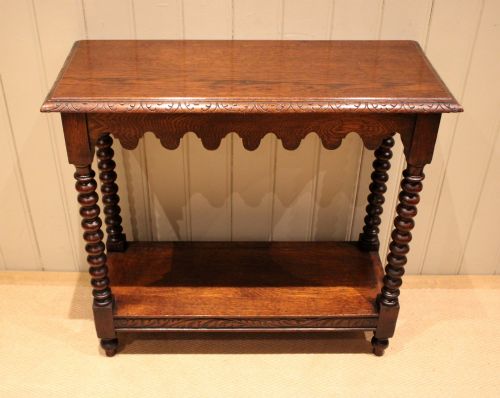
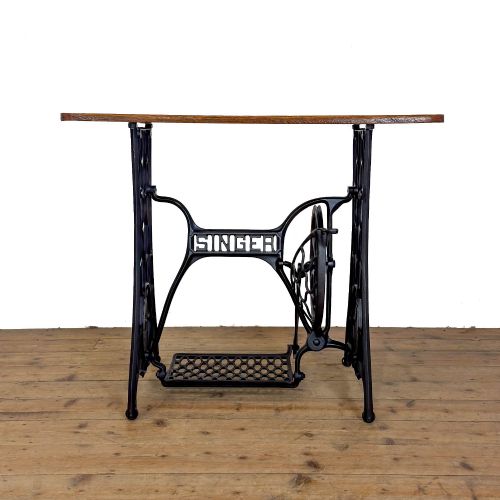
Cabinetmakers utilised solid oak alongside decorative veneers such as burr oak to construct these sturdy frames, frequently employing brass hardware, cast iron stretchers, and occasionally leather writing inserts. Construction methods relied on traditional joinery, dovetailing drawer boxes, and mounting timber tops onto sturdy friezes supported by bobbin-turned, fluted, or heavily carved legs.
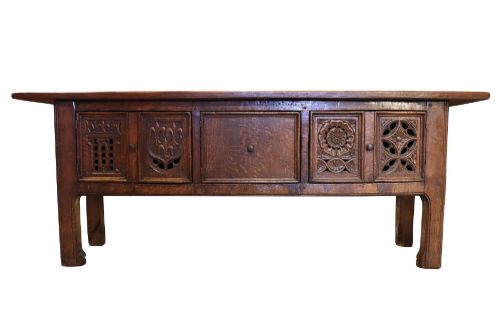
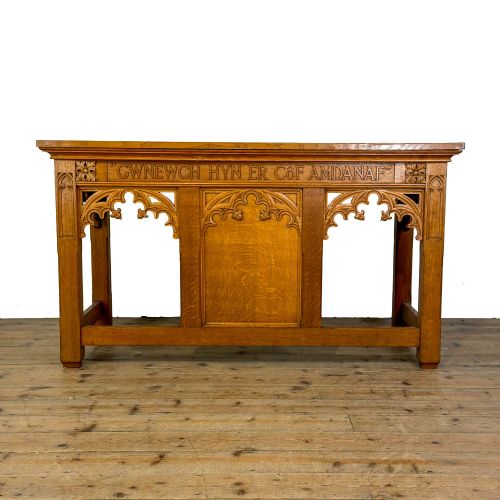
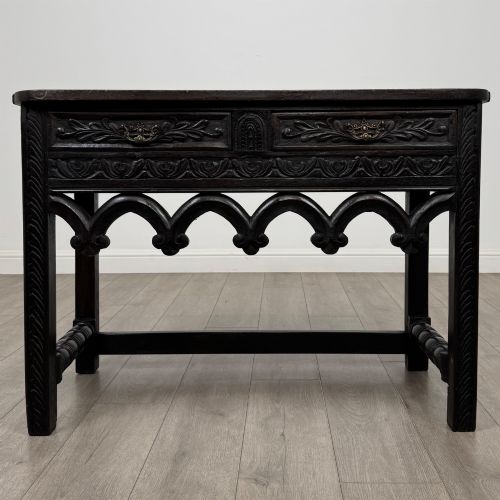
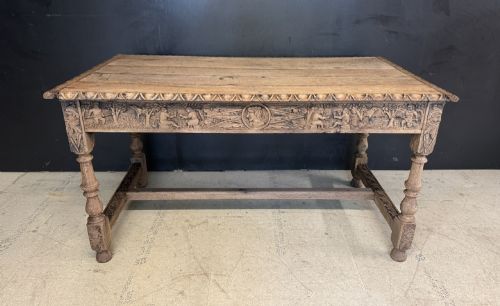
Surface ornamentation involved deep hand-carving displaying gothic tracery, foliate scrolls, and figural reliefs, finished with wax or polish to highlight the grain and natural figure of the wood. Some workshops introduced contrasting materials like marble slabs or granite inserts to upper surfaces, enhancing durability for functional hall or washstand use.
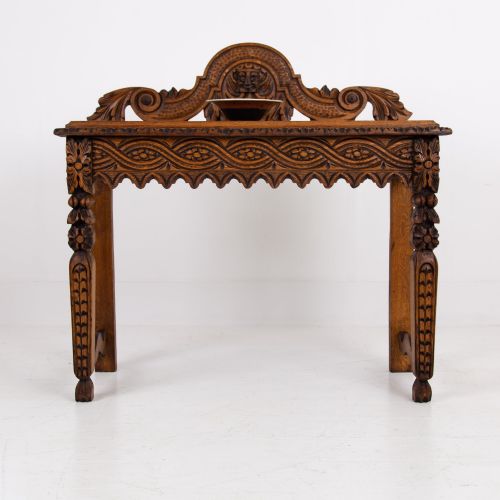
Several tables retain the watchful gaze of carved Green Man masks peering out from beneath the drawer frieze.
What varies in quality
The standard of a victorian oak console rests upon the selection of timber and the ambition of the carver's hand. Superior examples display figured grain, tight burr patterns, and crisp, undercut relief carving rather than shallow, mechanical tooling.
Structural integrity and proportion also separate baseline utility furniture from masterwork production. Pieces featuring thick timber tops, stable stretcher bases, and original brass drawer furniture command greater appreciation among collectors.
Alexander McKenzie of Glasgow
The Victorian Oak Console Glossary
- Console table
- A table designed to be fixed against a wall, often supported by brackets or legs at the front. These narrow surfaces suited tight hallways and reception rooms.
- Burr oak
- A knotted growth on an oak tree that produces highly figured, swirling wood grain when sliced into veneer. Cabinetmakers prized this material for decorative drawer fronts and table tops.
- Frieze drawer
- A storage drawer integrated into the horizontal band directly beneath the table top. Many console tables incorporate one or two of these compartments.
- Gothic Revival
- An architectural and decorative style popular during the nineteenth century that revived medieval ecclesiastical forms, pointed arches, and heavy tracery.
- Stretcher base
- A system of horizontal wooden or iron rails connecting the legs of a table near the floor to provide additional rigidity and support.
Victorian Oak Console: Frequently Asked Questions
Where should I place a console table?
These narrow tables suit entrance halls, narrow corridors, or the back of a sofa in a living room. Their shallow depth allows them to occupy transitional spaces without obstructing movement.
They provide a convenient surface for everyday items like keys and correspondence while establishing a decorative focal point upon entering a home.
How do I care for nineteenth-century oak furniture?
Maintain the timber by applying a quality beeswax periodically to nourish the grain and protect the finish from drying out. Avoid placing antique wood in direct sunlight or near sudden heat sources.
Keep surfaces free from excess moisture by using coasters under drinks or lamps to prevent water rings on the polish.
Were these tables used as desks?
Many examples incorporate integrated frieze drawers and writing surfaces suitable for occasional correspondence. Makers often adapted the console format to serve dual purposes in libraries and sitting rooms.
Writing variations frequently feature shallow drawers containing original brass pulls or secret compartments designed for stationery storage.
How can I tell the difference between early and late Victorian pieces?
Early examples from the 1850s often display restrained classical proportions in golden oak, whereas later pieces from the 1880s and 1890s frequently embrace heavier Gothic Revival carving or Aesthetic Movement simplicity.
Hardware styles, construction tolerances, and stylistic markers such as bobbin turning or Green Man motifs help attribute pieces to specific decades within the era.