



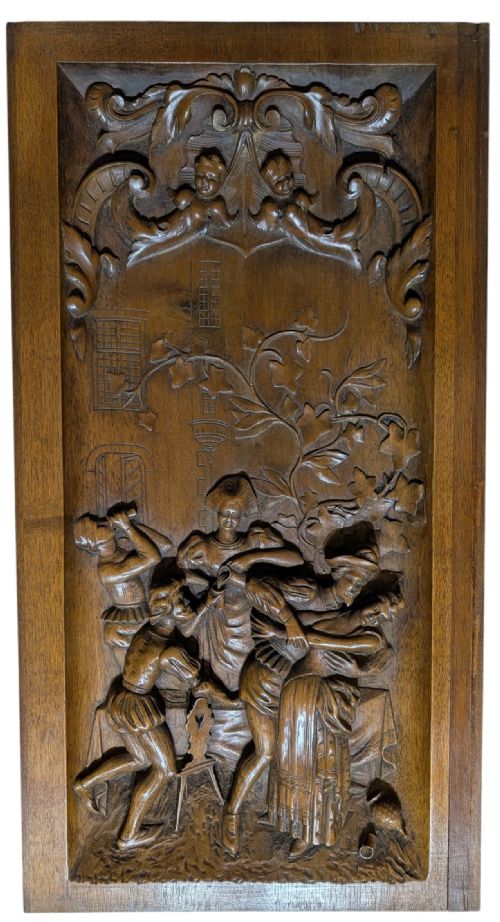

Victorian Oak Carvings
Victorian oak carvings bring heavy, figurative timberwork into modern rooms through panels, furniture, and wall plaques.
Victorian Oak Carvings
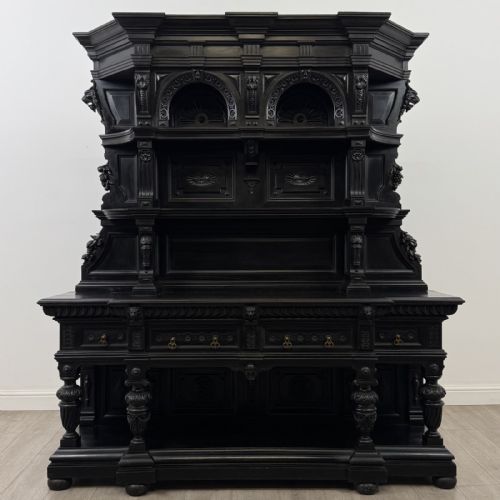
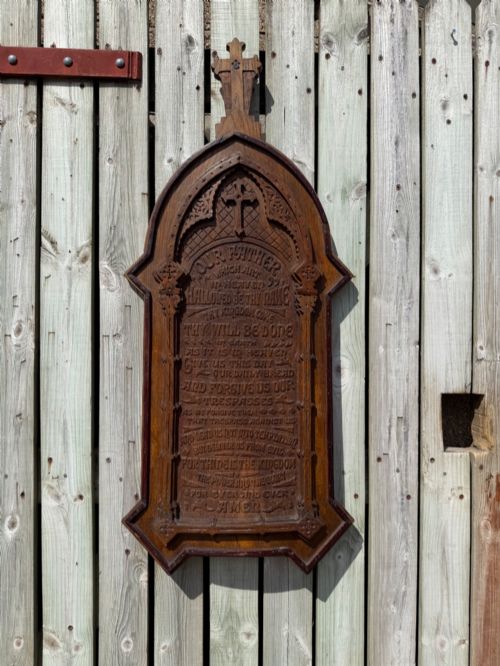
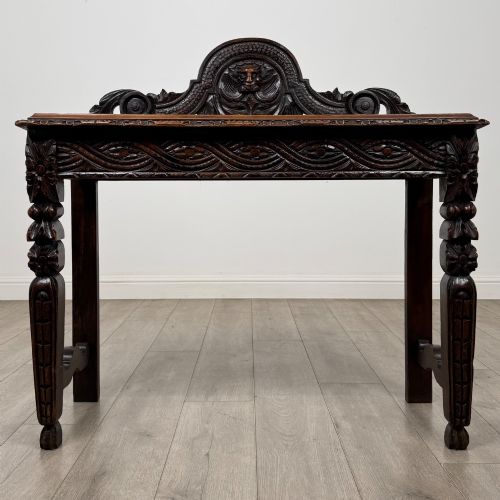
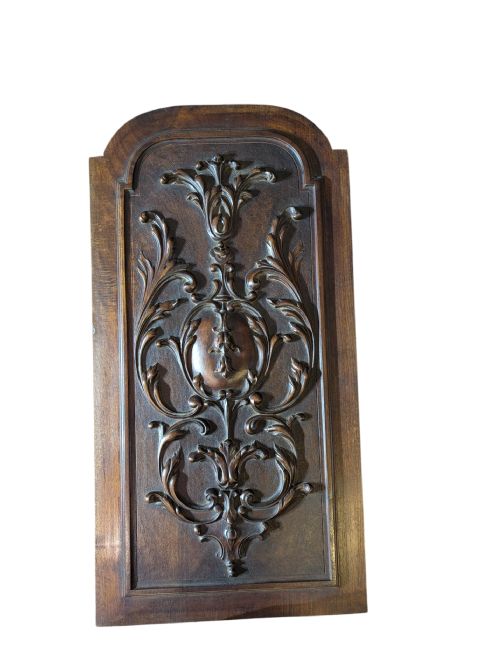
Victorian oak carvings encompass architectural salvage, wall plaques, mirrors, and large furniture pieces decorated with deep relief work. When you search for victorian oak carvings, you meet domestic items such as dressers, bookcases, and hall stands alongside sculptural wall elements.
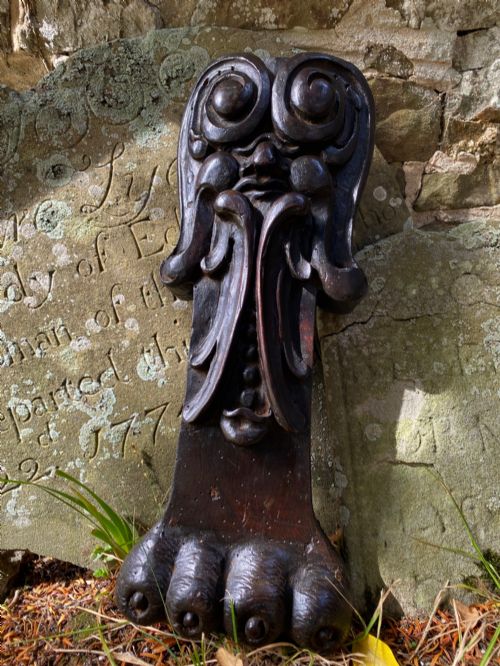
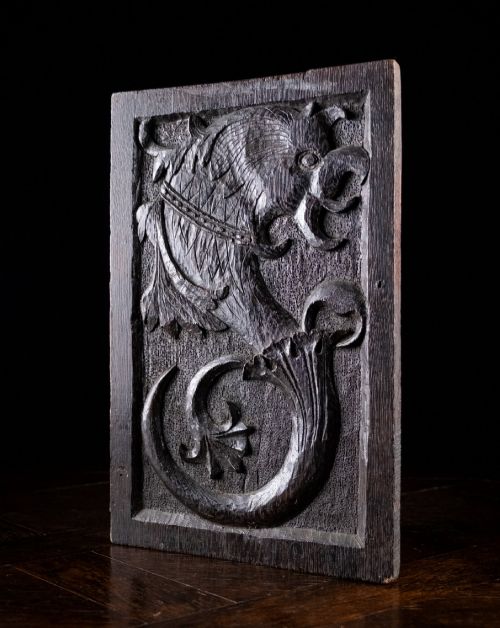
The objects span from the mid-nineteenth century into the early twentieth century, showing influences from Gothic Revival, French styles, and folk traditions. Many pieces integrate figurative subjects like Green Man masks, lions, and saints directly into the solid timber.
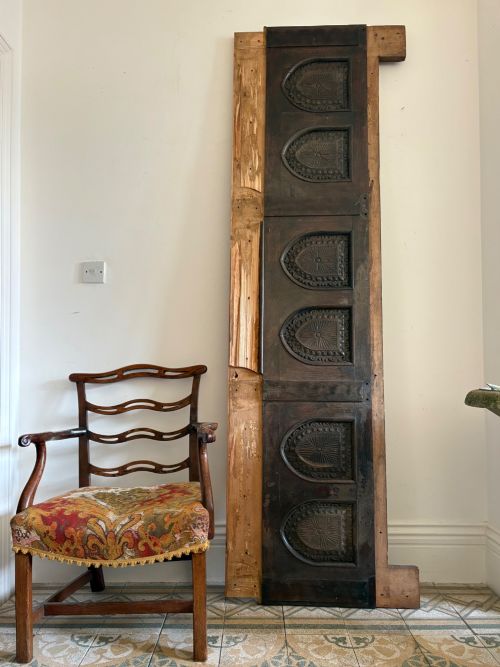
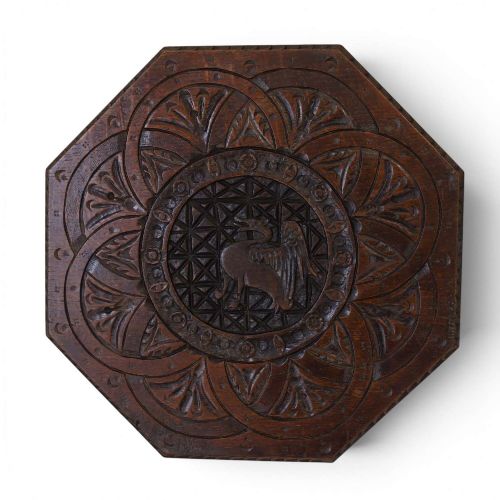
Domestic furniture forms like cupboards, desks, and benches appear frequently alongside standalone wall carvings and panels. These items range from small chip-carved boxes to monumental library bookcases and architectural fragments.
Materials and Construction
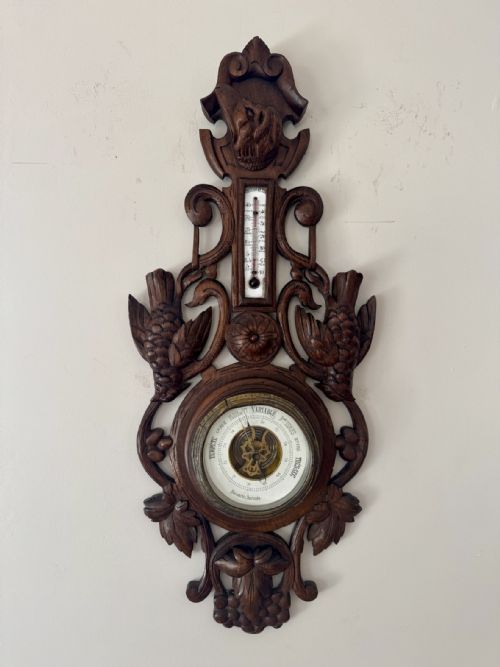
Makers utilised solid oak, tiger oak, and assorted hardwoods, often pairing the primary timber with fruitwood or walnut accents. Metal components like brass and glass appear selectively in barometers, mirrors, and inkstands.
Carpentry techniques combined traditional joinery with intensive hand-carving, producing deep undercut relief, chip carving, and linenfold panels. Surfaces were shaped using chisels and gouges to create detailed figures, heraldic crests, and foliate scrolls.
Victorian Oak Carvings Retail Price Guide 2026
Typical asking prices for victorian oak carvings among the pieces listed under this phrase on Sellingantiques today, from the lower quarter to the upper quarter. They describe what is for sale here now, not the wider market.
Listings feature diverse objects in oak and hardwood, spanning the Victorian period alongside Georgian and early twentieth-century examples.
Assessing Craftsmanship
Quality rests in the depth and anatomical precision of the carving, distinguishing sharp, expressive figures from mechanical or shallow work. Superior pieces display crisp undercutting, confident handling of hair and expression, and well-integrated structural joinery.
The selection of timber grain heavily influences the visual impact, particularly in tiger oak and figured hardwood surfaces. Exhibition pieces demonstrate intricate composition across complex forms such as hall stands and monumental bookcases.
L Blondie
The Victorian Oak Carvings Glossary
- Green Man
- A sculptural face depicted with leaves or vines sprouting from the mouth or face. This motif recurs frequently across nineteenth-century furniture and architectural panels.
- Linenfold
- A style of relief carving imitating folded linen or parchment. It is commonly found on panels within nineteenth-century furniture and architectural woodwork.
- Chip carving
- A method of removing small chips from a wooden surface with a knife or chisel to form geometric patterns. This technique appears on smaller boxes and folk items.
- Gothic Revival
- An architectural and decorative style drawing inspiration from medieval forms. Pieces in this style often feature pointed arches, tracery, and heraldic motifs.
- Black Forest
- A style of detailed wood carving originating from the mountainous region in Germany. These items frequently portray animals, figures, and naturalistic foliage in deep relief.
Victorian Oak Carvings: Frequently Asked Questions
How are Victorian oak carvings cleaned?
Dust surfaces gently with a dry, soft brush to prevent accumulation within deep relief carvings. Avoid modern liquid polishes that build up inside the carved recesses.
Feed the timber periodically with appropriate wax to maintain the moisture and natural lustre of the oak. Keep pieces away from direct heat sources and strong sunlight to prevent timber splitting.
What is a Green Man carving?
A Green Man carving represents a human face surrounded by or sprouting foliage, vines, or branches. This ancient decorative motif symbolises rebirth and spring.
Victorian craftsmen utilised this imagery extensively on oak furniture, benches, and architectural panels. The motif connects nineteenth-century revival styles with earlier medieval stonework and woodcraft.
How do I date an oak carving?
Examine the construction joints, tool marks, and overall style to establish the period of manufacture. Nineteenth-century pieces frequently combine machine-sawn backing with hand-finished carved elements.
Compare the specific decorative vocabulary, such as Gothic Revival tracery or Black Forest naturalism, against documented design books of the era. Patina and timber shrinkage also provide clues to age.
Where were these carvings displayed?
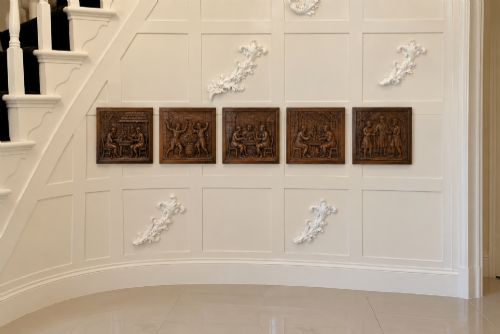
Large carved oak bookcases, desks, and hall stands anchored the principal reception rooms of Victorian homes. Wall plaques and mirrors hung in hallways, studies, and dining rooms to display status and taste.
Architectural elements and panels were often integrated directly into the fabric of domestic interiors. Smaller items like inkstands and boxes rested on library tables and desks.