



Victorian Naval Portrait
A victorian naval portrait captures the resolute gaze of officers and the dramatic sweep of maritime history on canvas and paper.
Victorian Naval Portrait
When you search for a victorian naval portrait, you encounter compelling depictions of officers, midshipmen, and historic vessels set against marine backdrops. These works range from intimate studies of young gentlemen in uniform to grand likenesses of celebrated admirals.
The selections available here span oil paintings on canvas and delicate watercolours on paper, frequently framed in wood with gold leaf detailing. Alongside formal portraits, the category embraces character jugs and Staffordshire pottery figures representing notable naval figures.
Most pieces date from the nineteenth century, reflecting the strong maritime identity of the Victorian period and the Edwardian era. Whether depicting a named commander or an anonymous officer, each piece records the distinct uniforms and disciplined bearing of naval service.
Assessing quality and execution
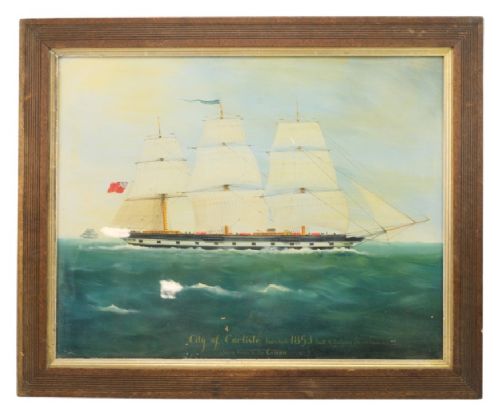
Young midshipmen occasionally shared the canvas with the vast, billowing sails of nineteenth-century clipper ships.
William McAlpine·J. Hardy·Marie-Edouard Adam·WF Mitchell·George Frederick Clarke·Sir William Charles Ross
The Victorian Naval Portrait Glossary
- Watercolour
- A painting method where fine pigments are suspended in a water-based solution, typically applied to paper. This medium allows for transparent washes and delicate tonal gradations.
- Canvas
- A heavy woven fabric stretched across a wooden frame to serve as a sturdy support for oil paintings. It provides a textured surface that holds layered brushstrokes securely.
- Gold leaf
- Extremely thin sheets of beaten gold applied to wooden frames and decorative objects for ornamentation. It imparts a luminous metallic border to the artwork.
- Staffordshire pottery
- Ceramic wares produced in the Staffordshire region of England, encompassing hand-painted portrait figures and decorative jugs. These earthenware pieces often commemorate notable historical commanders.
Victorian Naval Portrait: Frequently Asked Questions
What is a victorian naval portrait?
A victorian naval portrait is a painting, watercolour, or ceramic figure depicting officers, midshipmen, or famous commanders from the nineteenth century. These pieces often feature sitters in naval jackets alongside representations of historic ships.
Created during the Victorian and Edwardian periods, these artworks serve as visual records of Britain's maritime heritage and naval personnel.
How do I identify the period?
You can determine the period by examining the uniform styles, framing materials, and the documented dates associated with the artist or sitter. Nineteenth-century portraits frequently feature specific jacket designs and epaulettes worn during the era.
Signatures, inscriptions on the reverse, and stylistic conventions of painters working between the mid-nineteenth and early twentieth centuries also help confirm the date.
Were these portraits painted from life?
Many formal portraits were painted directly from sittings with the naval officer, while others were posthumous tributes based on earlier likenesses or photographs. Artists often recorded specific historical figures to commemorate their service.
Watercolours and sketches made by artists on shore or aboard vessels provided immediate records of personnel and naval life.
How should I display these pieces?
Paintings and watercolours on paper require placement away from direct sunlight to protect the pigments and paper supports from fading. Appropriate framing with glass helps shield delicate watercolours from atmospheric moisture.
Staffordshire pottery figures and jugs should be placed on stable, flat surfaces where they are safe from accidental knocks.