



Victorian Muff Necklace
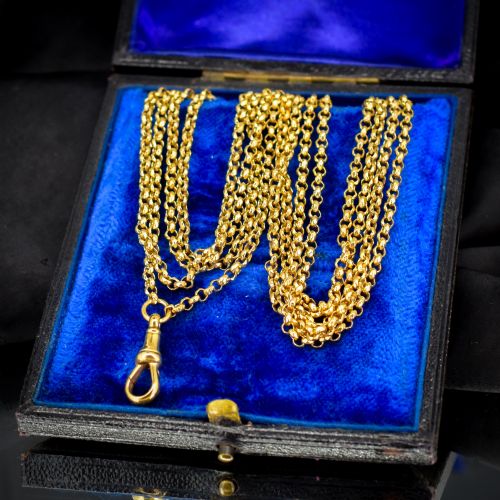
A Victorian muff necklace is a long continuous chain once designed to secure a hand-warming muff, now worn doubled or looped for length.
Victorian Muff Necklace
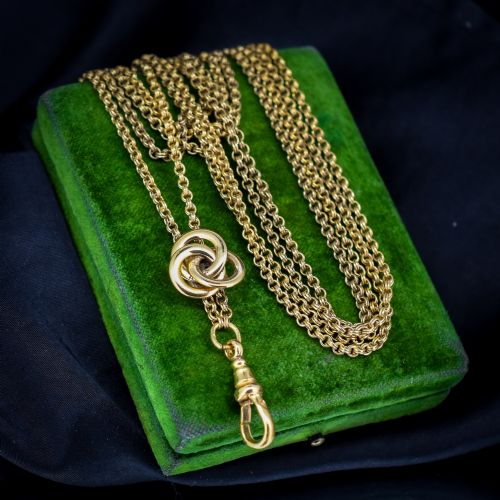
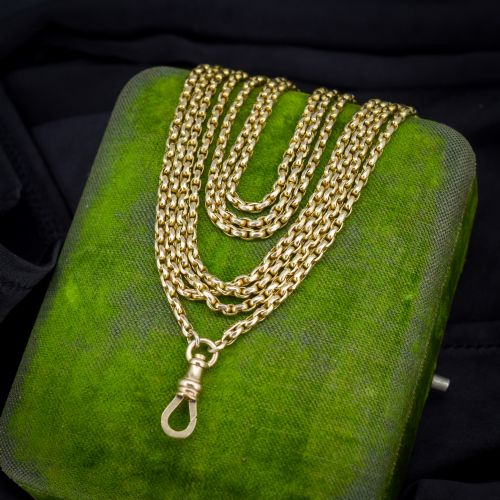
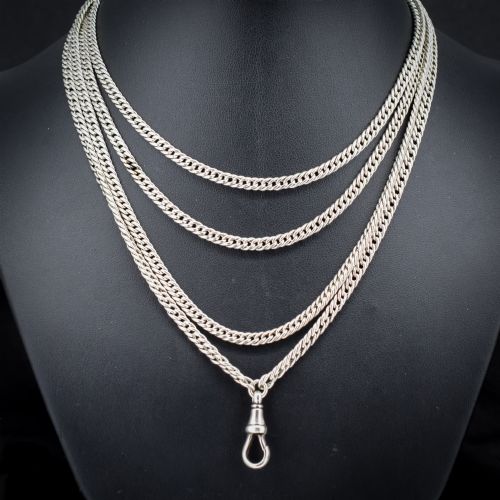
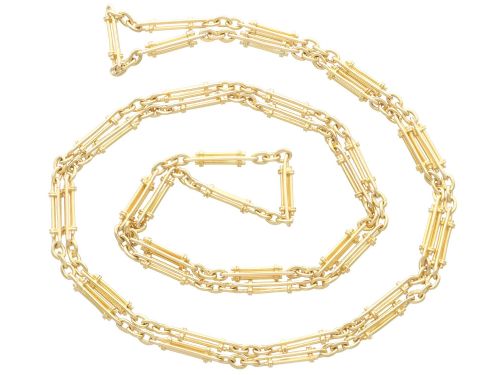
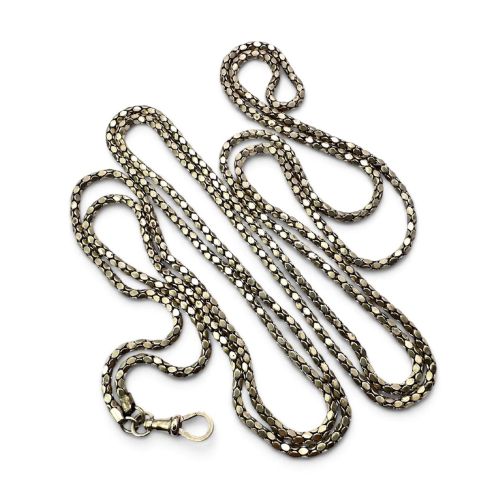
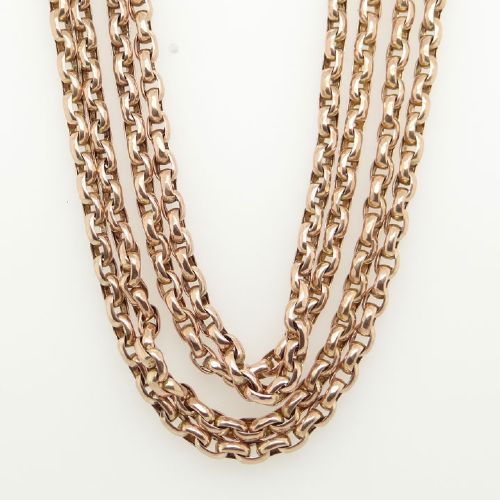
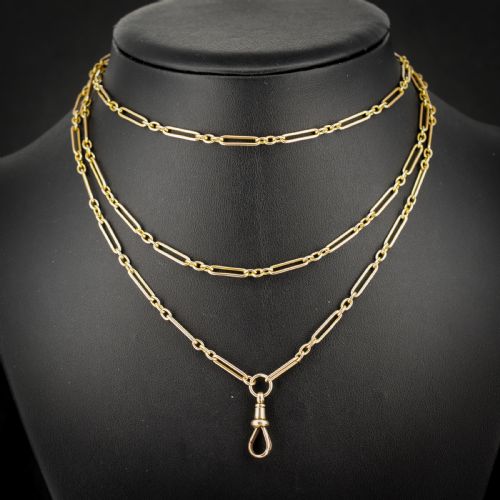
When you search for a Victorian muff necklace, you encounter long guard chains and sautoirs originating from the nineteenth century into the Edwardian era. These pieces measure up to sixty-three inches, featuring substantial links like belcher, paper, trombone, and flat curb designs.
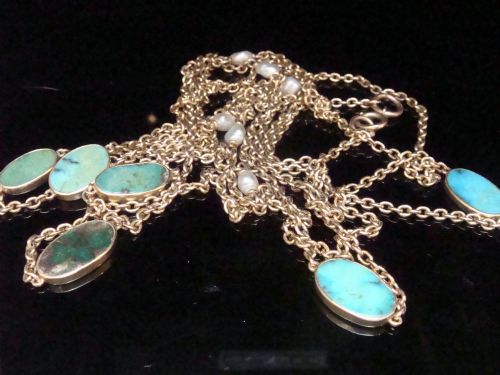
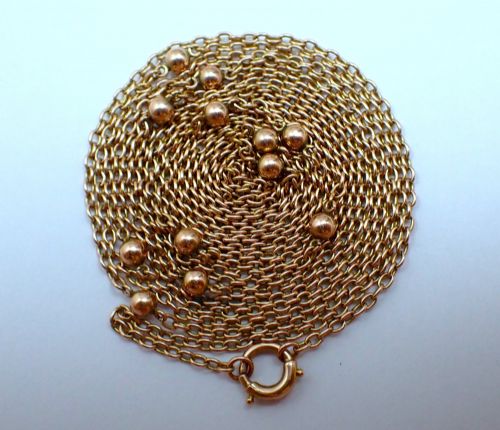
Many examples incorporate practical fasteners such as dog clips or Albert clips, alongside decorative sliding elements like love knots or garnet-set slides. The materials span yellow gold, rose gold, rolled gold, and sterling silver, frequently accented with turquoise and natural pearls.
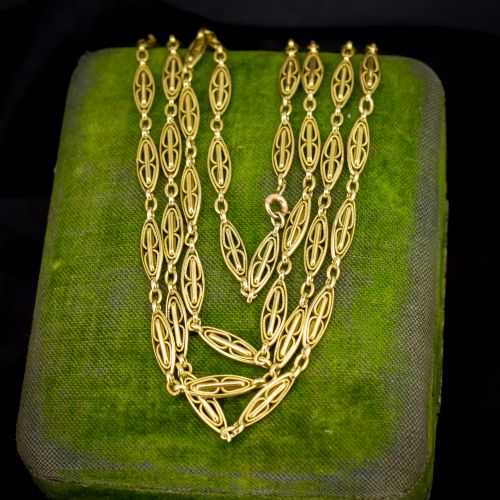
The selection ranges from French Belle Epoque sautoir chains to robust British guard chains. These items bridge utilitarian nineteenth-century accessories and wearable antique jewellery.
Materials and construction
Goldsmiths utilised various grades of gold, including nine-carat, ten-carat, fifteen-carat, and eighteen-carat yellow and rose gold, alongside eighteen-carat rolled gold and sterling silver. Links were hand-assembled or formed into faceted belcher, oval, paper, and trombone patterns.
Ornamental elements incorporate natural pearls and turquoise cabochons, often secured within slide mechanisms or love knot motifs. Functional hardware like dog clips and swivel clasps were integrated directly into the heavier chain structures.
Victorian Muff Necklace Retail Price Guide 2026
Typical asking prices for victorian muff necklace among the pieces listed under this phrase on Sellingantiques today, from the lower quarter to the upper quarter. They describe what is for sale here now, not the wider market.
Distinctions in quality
The distinction between tiers rests upon metal purity, link weight, and the presence of integrated gemstones. Solid fifteen-carat and eighteen-carat gold iterations represent higher standards than rolled gold or lower karat alternatives.
Design complexity also defines grade, where plain belcher links differ from intricate trombone patterns, integrated sliders, and embellishments of natural pearl and turquoise.
The Victorian Muff Necklace Glossary
- Guard chain
- A long necklace traditionally used to secure a pocket watch, lorgnette, or muff. These chains often exceed fifty inches to allow doubling around the neck.
- Dog clip
- A spring-loaded clasp resembling a hound's leash fastener. This mechanism allowed wearers to attach pendants, charms, or secure the chain to garments.
- Sautoir
- A long French necklace often finished with a tassel or pendant. These pieces gained popularity during the late nineteenth century and the Edwardian period.
- Slide
- A movable decorative element positioned on a chain. Slides frequently feature gemstones or engraved motifs and were used to adjust tension.
- Belcher link
- A chain link formed from wire of an equal thickness, typically slightly wider than it is deep. This sturdy construction forms the basis of many nineteenth-century chains.
Victorian Muff Necklace: Frequently Asked Questions
What is a muff necklace?
A muff necklace is a long chain originally worn to secure a muff, which was a cylindrical fur pouch used to keep hands warm during cold weather.
Today, these versatile pieces function as long guard necklaces that can be doubled or tripled around the neck for daily wear.
How do you wear a long guard chain?
These chains are long enough to be worn draped once as a continuous loop or doubled over the neck to sit higher on the chest.
Owners often attach pendants, watches, or lockets to the integrated dog clips.
What metals are used in these chains?
The selection includes various purities of gold, ranging from nine-carat up to eighteen-carat yellow and rose gold, alongside rolled gold and sterling silver.
Some pieces incorporate gemstones such as turquoise, garnet, and natural pearls within slides or links.
How do I date a guard chain?
Dating relies on stylistic markers, link designs, and hallmarks where present, connecting pieces to the Victorian, Edwardian, or Art Deco periods.
Distinctive forms like French Belle Epoque sautoirs or heavy nineteenth-century belcher links provide clear chronological indicators.