

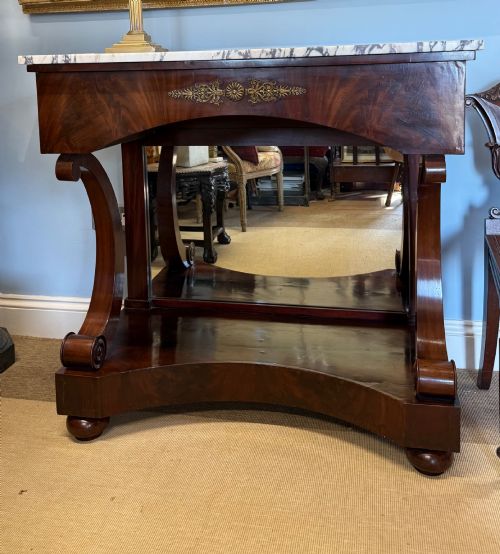


Victorian Mirror with Marble
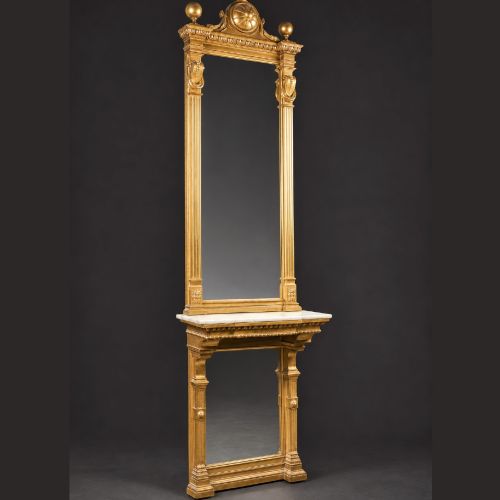
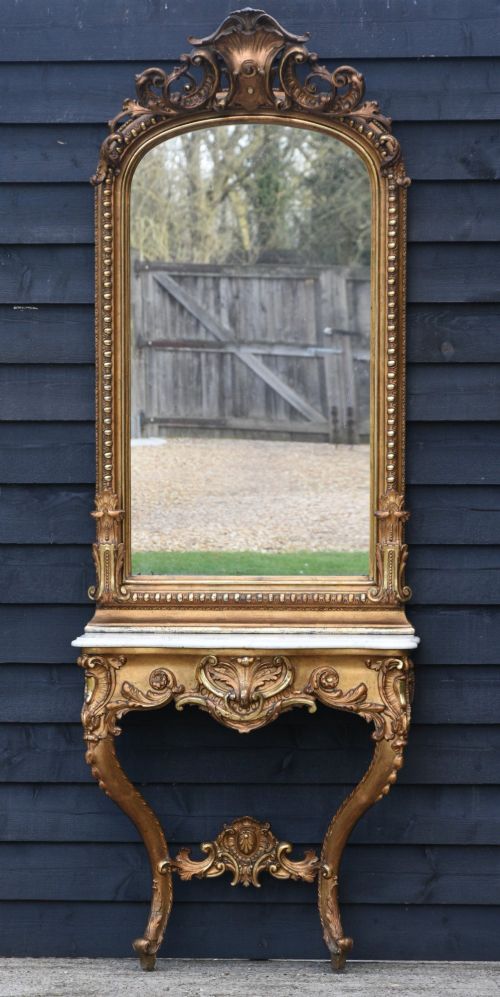
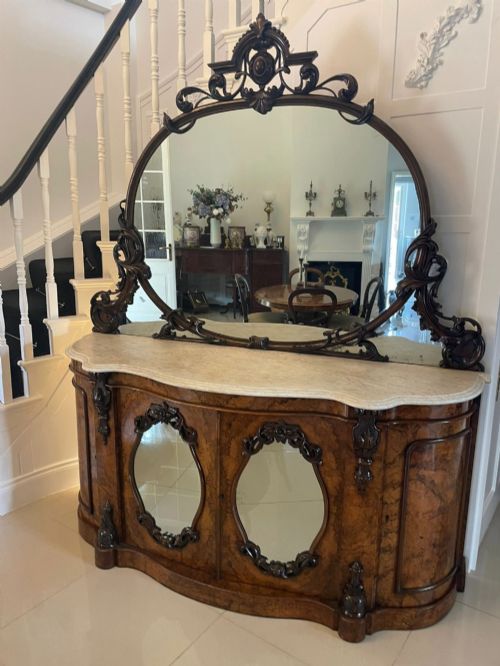
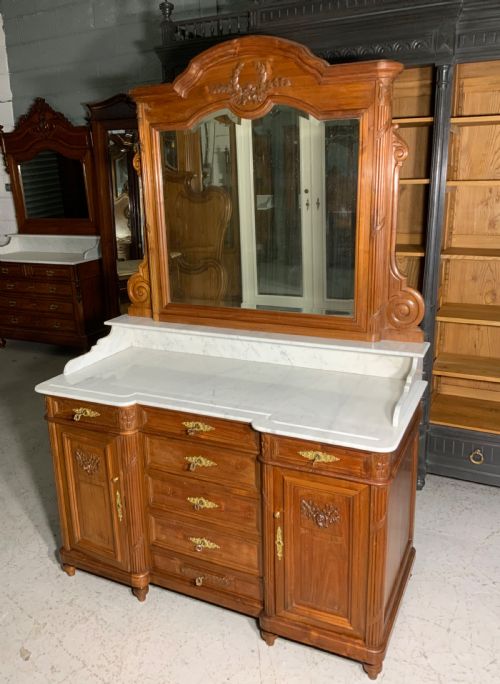
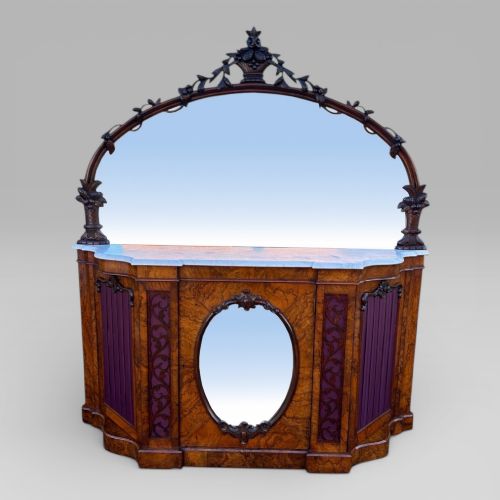
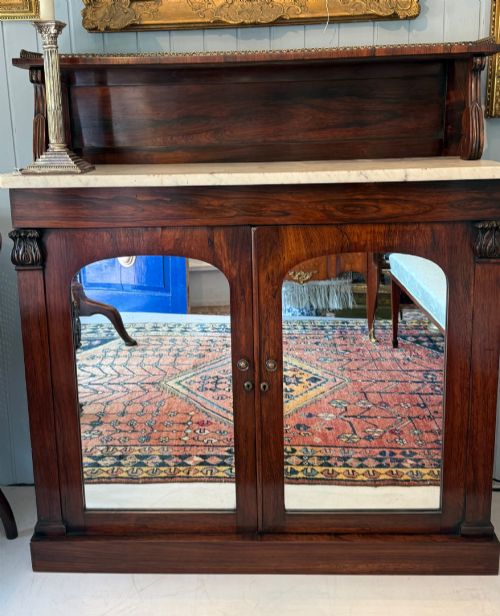
These Victorian mirror with marble pieces combine reflective glass and stone surfaces within nineteenth-century furniture forms like console tables, credenzas, and hall stands.
Victorian Mirror with Marble
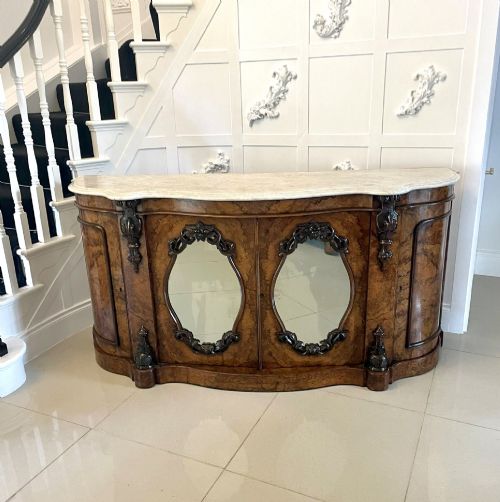
A Victorian mirror with marble encompasses furnishings that incorporate both a polished stone slab and a reflective glass panel, spanning pieces produced across the nineteenth century. The selection ranges from substantial credenzas and sideboards to console tables and tall hall stands designed for domestic interiors.
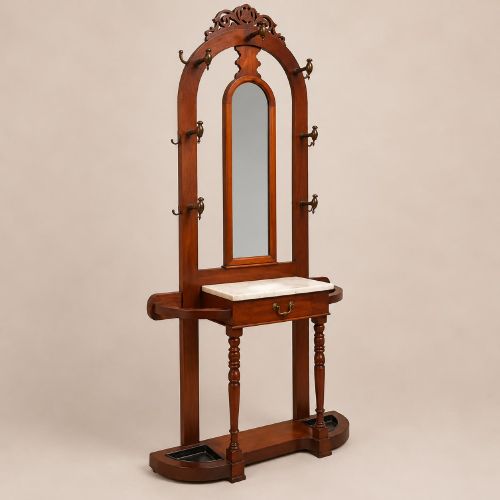
The most common formats on this page are hall stands and credenzas, alongside console tables and dressing chests. These pieces typically originate from the Victorian period, with specific examples referencing the year eighteen fifty or the wider nineteenth century.
Stylistic variation is wide, drawing on Victorian Gothic Revival, Victorian Rococo Revival, Victorian Aesthetic Movement, Empire, and Grand Regency styles. Woods such as mahogany, burr walnut, and ebonised timber form the structural carcasses, often paired with cast iron or brass elements.
Materials and construction methods
Makers constructed the primary frames of these items using hardwoods like mahogany and burr walnut, alongside ebonised timber and oak. Selected pieces integrate cast iron, notably in country house hallstands attributed to Coalbrookdale.
Marble slabs provide durable, polished upper surfaces on console tables, sideboards, and hall stands, while mirror glass is fitted into carved wooden or ebonised back frames. Brass hardware, metal hooks, and velvet accents complete the construction of dressing tables and coat stands.
Victorian Mirror with Marble Retail Price Guide 2026
Typical asking prices for victorian mirror with marble among the pieces listed under this phrase on Sellingantiques today, from the lower quarter to the upper quarter. They describe what is for sale here now, not the wider market.
One exceptional hallstand hails from the Coalbrookdale foundry, bringing heavy industrial cast iron directly into the domestic hallway.
Distinctions in quality and execution
Quality separates through the depth of carved detail on the mirror frames and wooden carcasses, and the selection of figured timbers such as burr walnut. Finer examples display sophisticated joinery and integrated architectural elements.
The grade of the marble top and the clarity of the original mirror glass further divide the standard of manufacture. Pieces finished with extensive inlay, brass fittings, or robust cast iron casting represent the more elaborate end of the range.
Coalbrookdale
The Victorian Mirror with Marble Glossary
- Credenza
- A large sideboard or cabinet, frequently featuring a mirror back and a marble top in nineteenth-century examples. These items served prominent roles in formal entertaining spaces.
- Console table
- A table designed to stand against a wall, commonly supported by brackets or legs and topped with marble. Many period variations include an attached mirror back.
- Hallstand
- A piece of hallway furniture fitted with hooks, umbrella wells, and occasionally a marble shelf or mirror. They organise outerwear and accessories in domestic entryways.
- Burr walnut
- A prized timber veneer showing swirling, knotty grain patterns used on high-grade Victorian cabinetry. It provides a highly decorative surface figure.
- Ebonised
- Wood treated with a dark finish to imitate expensive ebony. This technique was popular in Victorian and Aesthetic Movement furniture.
Victorian Mirror with Marble: Frequently Asked Questions
What is a Victorian mirror with marble?
These are nineteenth-century furnishings that combine a stone top or shelf with a fitted mirror, appearing across forms such as credenzas, console tables, and hall stands. They utilise woods like mahogany and burr walnut alongside decorative metalwork.
Such pieces reflect the diverse design movements of the era, ranging from Gothic and Rococo revivals to Empire and Aesthetic styles.
Where were these pieces used originally?
Hall stands were positioned in entrance halls to manage coats, hats, and umbrellas, often incorporating marble shelves for small items. Credenzas and console tables stood in reception rooms and dining spaces to display decorative objects.
Dressing tables and bedroom suites served private quarters, combining mirror glass and marble surfaces for personal grooming.
How do I identify the style?
Styles are recognised through specific decorative vocabulary, such as the curved ornamentation of Rococo Revival or the structural lines of Gothic Revival pieces. Cabinetry may also display the rich grain of burr walnut or the dark finish characteristic of ebonised and inlaid surfaces.
Empire and Grand Regency examples introduce classical proportions, while Aesthetic Movement items focus on simplified, refined forms.
What materials are typical?
The primary structure relies on hardwoods including mahogany, walnut, and oak, frequently enhanced by burr walnut veneers or ebonisation. Marble provides the heavy, polished upper surface, paired with mirror glass panels.
Auxiliary materials include brass hardware, metal components, velvet details, and structural cast iron found in specialised hall stands.