



Victorian Metal Teapot
A victorian metal teapot or kettle brings warmth and genuine nineteenth-century utility to a hearth or tabletop.
Victorian Metal Teapot
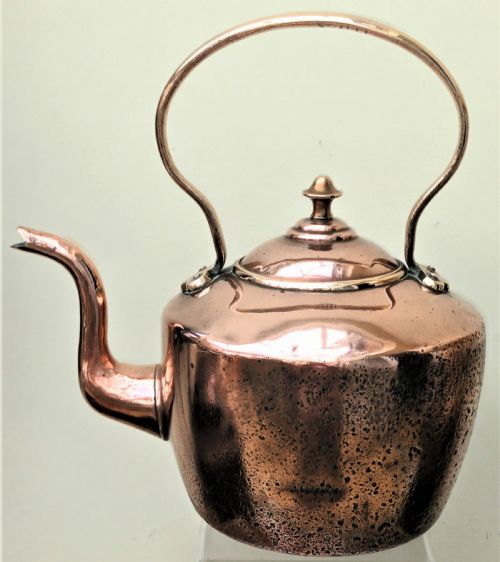
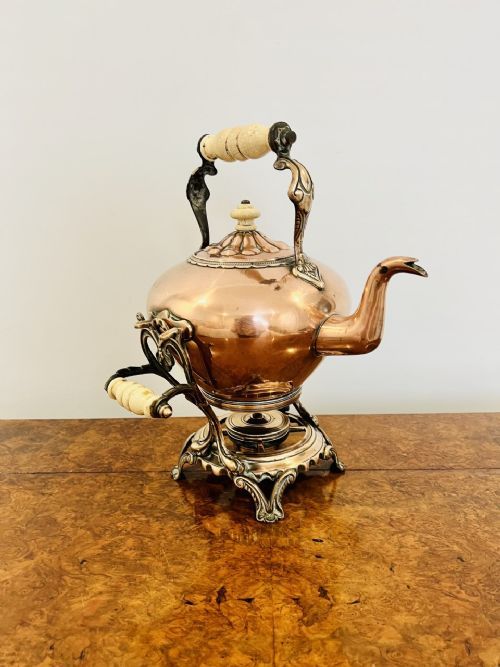
A victorian metal teapot or related vessel encompasses nineteenth-century copper kettles, spirit kettles on stands, brass kettles, tea services, and silver plated coffee pots. These items reflect the domestic metalwork traditions of the Victorian era, spanning the nineteenth century with specific examples dated around eighteen-fifty and eighteen-eighty.
The form ranges from simple round copper kettles and collections of multiple kettles to complex four-piece tea sets and two-tier brass trivets. Buyers frequently encounter copper and brass kettles, often complete with stands or spirit burners, alongside silver-plated serving vessels.
How they were made
Makers utilised durable metals such as copper and brass, frequently combining them with contrasting elements like wood, ebonised wood, bone, and glass for handles, insulators, or knobs. Metal sheets were shaped into rounded bodies, often featuring hand-finished joints and spouts suited to daily boiling and pouring.
Stands and trivets incorporated brass and copper framework to support heavy spirit kettles, while silver-plated coffee pots and four-piece tea services demonstrated refined plating techniques over base metal cores during the nineteenth century.
Materials paired with metal include ebonised wood, bone, and glass, appearing across items dated to eighteen-fifty and eighteen-eighty.
What varies in quality
Distinction in quality lies in the robustness of construction and the integration of auxiliary components like stands, spirit burners, and fitted wooden or bone insulators. Finer examples display balanced proportions, particularly in round kettle bodies and associated trivets.
The presence of identified maker details on brass and copper spirit kettles or silver-plated coffee pots elevates the standing of a piece compared to unmarked utility items from the same period.
William Soutter & Sons·Boardman Glossop & Co
The Victorian Metal Teapot Glossary
- Spirit kettle
- A portable metal kettle mounted on a stand above a small spirit burner for heating water at the table. This form gained popularity during the Victorian period for formal tea service.
- Trivet
- A metal stand or three-legged support used to elevate a hot kettle or teapot above a table or hearth. Nineteenth-century versions often featured brass construction and multiple tiers.
- Silver plate
- A thin layer of silver applied to a base metal core, such as copper or Britannia metal, utilised for tea services and coffee pots to achieve the appearance of solid silver.
- Ebonised wood
- Timber treated to resemble ebony, frequently utilised for handles and knobs on nineteenth-century metal teapots and kettles to provide a heat-resistant grip.
Victorian Metal Teapot: Frequently Asked Questions
What materials are common?
Listings show heavy use of copper and brass for nineteenth-century kettles and stands. Silver plate appears on serving coffee pots.
Additional elements include wood, ebonised wood, bone, and glass used primarily for handles and insulators.
How were spirit kettles used?
Spirit kettles rested on dedicated stands above small burners to keep water hot during tea service. They allowed hosts to maintain the brew without returning to the kitchen.
These setups often included matching brass or copper trivets for tabletop protection.
Can I use an antique kettle?
Many nineteenth-century copper and brass kettles retain solid construction suitable for display or careful functional use. Spirit kettles and tea sets serve as traditional decorative room accents.
Buyers should assess internal conditions and handle stability before attempting to boil water.
What dates are typical?
Pieces span the nineteenth century, with specific items attributed to eighteen-fifty and eighteen-eighty within the Victorian era. General nineteenth-century dating applies to standard copper kettles.
Stylistic consistency links these diverse serving vessels and trivets.