

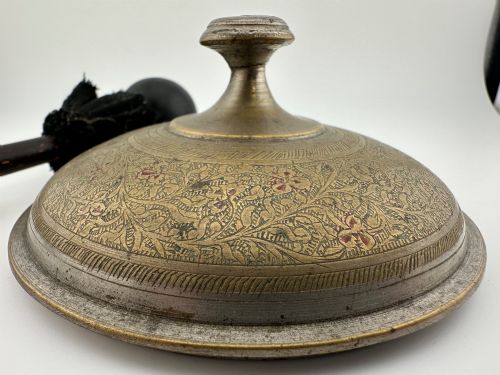


Victorian Metal Gong
These Victorian metal gong pieces bring resonant domestic theatre into a room through brass, bronze and silver plate mounted in oak, horn and iron.
Victorian Metal Gong
A victorian metal gong serves as a striking focal point, combining functional percussion with decorative woodwork or metal framing. The pieces appearing in this selection span dinner gongs, table gongs and wall gongs.
Makers of the period drew upon diverse stylistic influences, producing Anglo-Indian, Aesthetic Movement, Arts and Crafts, Art Nouveau and Chinese Export designs. Oak frames, cow horns, carved black forest woodwork and wrought iron provide the mounting structures for the metal resonators.
Most examples date from the late nineteenth century, encompassing table top formats and larger hanging dinner versions complete with wooden strikers.
Construction and Materials
Resonating elements are cast from brass, bronze or silver plate, utilising metals capable of producing a sustained, clear tone when struck. These metal components require careful tuning and shaping by nineteenth-century founders.
Frames and supports utilise carved oak, ebonised timber, wrought iron, and organic materials such as cow horn. Cord suspension isolates the vibrating metal from its frame to maximise acoustic resonance.
Decorative detailing incorporates hand engraving, cast animal figures including elephants and monkeys, and structural carving characteristic of the Aesthetic Movement and Arts and Crafts periods.
Victorian Metal Gong Retail Price Guide 2026
Typical asking prices for victorian metal gong among the pieces listed under this phrase on Sellingantiques today, from the lower quarter to the upper quarter. They describe what is for sale here now, not the wider market.
Monkeys carved from wood occasionally oversee the proceedings, clutching the hanging frame of a late nineteenth-century dinner gong.
Judging Quality
Quality rests upon the acoustic purity of the metal bell or gong plate and the integrity of its suspension. Heavier gauge bronze and thick silver plate produce richer sound quality than lighter stamped metals.
The sculptural ambition of the frame dictates overall merit, distinguishing simple iron stands from deeply carved Black Forest figures, Anglo-Indian engraved brasswork or complex novelty pieces.
Wm. Gilbert U.S.A.
The Victorian Metal Gong Glossary
- Dinner gong
- A large hanging or table-mounted gong used in nineteenth-century households to announce meals. They are typically suspended from wooden or metal frames.
- Aesthetic movement
- A late nineteenth-century design style emphasising visual beauty over narrative subject matter. Pieces from this movement often feature stylised geometric or floral motifs.
- Silver plate
- A thin layer of silver applied to a base metal core. Victorian examples utilise this technique to combine the lustre of silver with the structural rigidity of brass or copper.
- Striker
- The mallet or hammer used to sound the gong. Original matching strikers add significantly to the integrity of a piece.
- Black Forest
- A geographic region in Germany renowned for intricate wood carving. Carvings often depict animals such as monkeys or forest foliage.
Victorian Metal Gong: Frequently Asked Questions
How do you play a victorian metal gong?
Sound the metal disc gently using the designated wooden striker or mallet. Hitting the centre produces the deepest fundamental tone.
Allow the vibration to decay naturally without dampening the metal with your hand. This preserves the acoustic resonance intended by the maker.
How do I care for silver plated gongs?
Dust the wooden frames regularly with a soft, dry cloth to prevent dirt accumulation. Avoid harsh chemical polishes on silver-plated surfaces.
Gentle cleaning with appropriate metal care products maintains the finish without wearing through the thin plating layer.
What is the difference between table and wall gongs?
Table gongs feature compact bases designed for placement on desks, sideboards or mantels. They offer portability within the room.
Wall gongs utilise mounting brackets or hanging loops secured directly to structural surfaces, removing the need for a tabletop support.
Are original strikers important?
Original wooden strikers matching the period and materials of the frame complete the ensemble. They ensure the correct weight and striking surface for the metal.
Finding a piece retaining its original mallet is desirable for completeness and historical accuracy.