



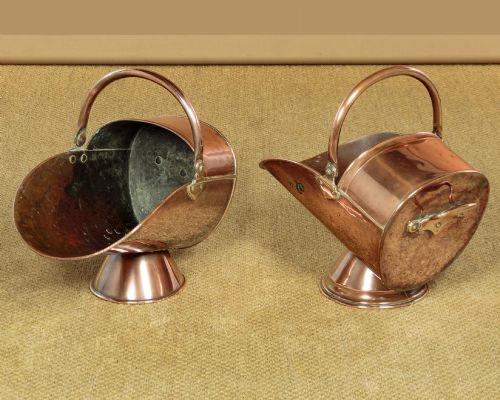


Victorian Metal Coal Bin
A victorian metal coal bin brings robust utility and honest charm to a hearth, holding fuel with quiet presence.
Victorian Metal Coal Bin
A victorian metal coal bin sits near the fireplace to hold fuel, often taking the form of a bucket, box, scuttle, or receiver. These utilitarian items served the hearth in everyday life before central heating changed domestic routines.
Most examples found here date from the nineteenth century into the early twentieth century. They appear in circular or helmet shapes, sometimes featuring lids to conceal the coal within.
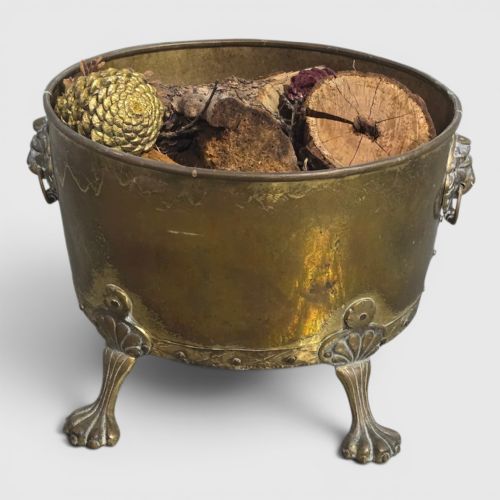
Makers designed these vessels using sturdy metals meant to withstand daily hauling and stoking. They now double as log buckets, planters, or general fireside storage in modern rooms.
Materials and Construction
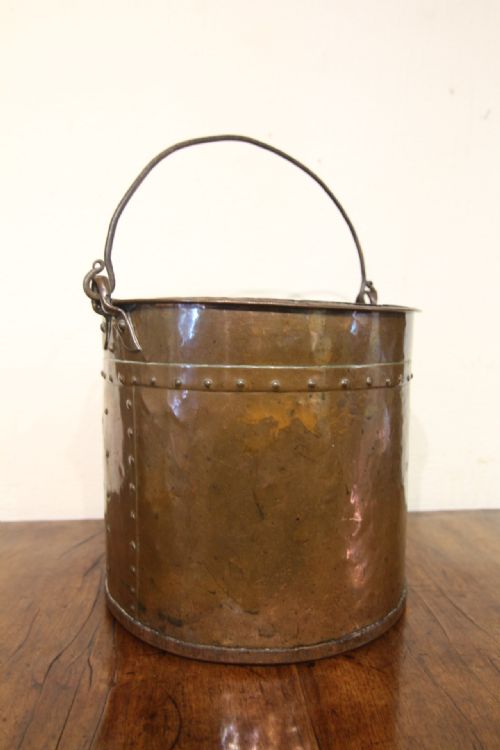
Coppersmiths and braziers hammered sheets of brass and copper into shape, often joining seams with visible rivets for strength. Wrought iron and cast iron provided heavy framing, handles, and durability for rugged use.
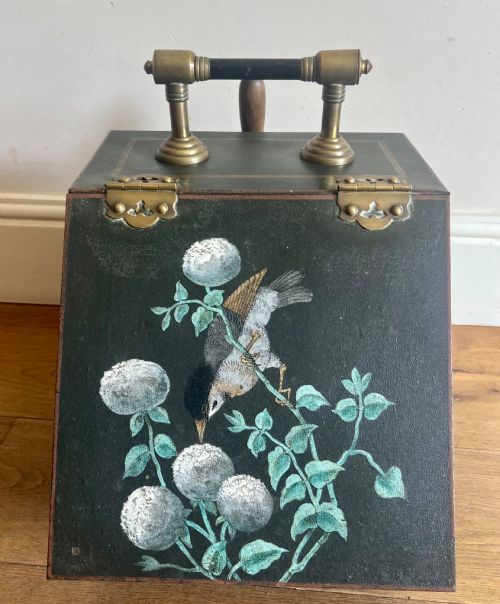
Craftsmen applied decorative techniques such as hand hammering, repoussé tavern scenes, and patination to turn simple fuel containers into appealing domestic objects. Tole ware surfaces received painted decoration, while wooden components added contrast to metal bodies.
Victorian Metal Coal Bin Retail Price Guide 2026
Typical asking prices for victorian metal coal bin among the pieces listed under this phrase on Sellingantiques today, from the lower quarter to the upper quarter. They describe what is for sale here now, not the wider market.
Assessing Quality and Character
Quality rests in the weight of the metal and the integrity of the construction, such as solid riveted joints rather than flimsy modern solder. Thicker gauge copper and brass hold their shape better against dents and daily wear.
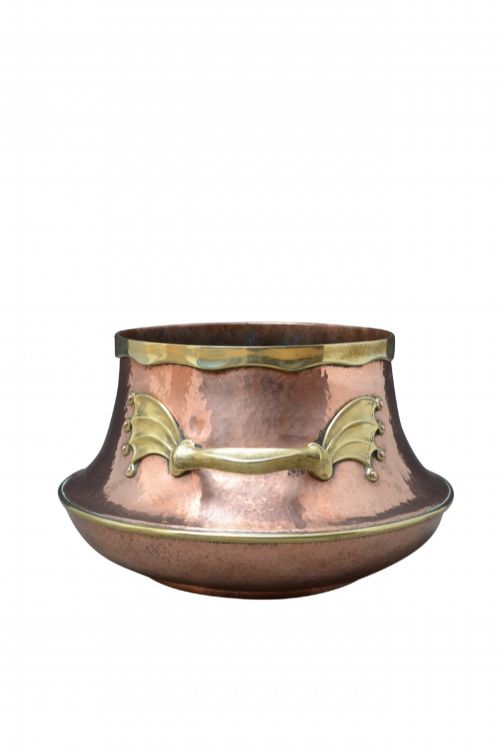
Artisans expended varying degrees of effort on surface decoration, moving from plain utilitarian buckets to finely hammered Arts and Crafts or Art Nouveau pieces with distinct aesthetic detail.
Petrus Ramus
The Victorian Metal Coal Bin Glossary
- Coal scuttle
- A container designed for carrying coal to the fire, typically featuring a sloping body, a hinged lid, and a carrying handle.
- Tole ware
- Enamelled and painted metalware that brings colour and decorative motifs to domestic items.
- Dinanderie
- The traditional craft of beaten brass and copper objects, often associated with decorative vessels and domestic containers.
- Jardiniere
- An ornamental pot or container used to hold plants, which repurposed heavy metal bins find new life as today.
- Arts and Crafts
- A design movement prioritising handcraftsmanship, simple forms, and visible construction over industrial standardisation.
Victorian Metal Coal Bin: Frequently Asked Questions
What is a victorian metal coal bin used for today?
These vessels transition easily from hearth accessories to practical storage containers around the home. Many people use them to hold logs beside an active fireplace or as large planters for indoor house plants.
Their robust metal construction makes them durable enough for everyday containment while adding historic character to a room.
How do I clean an antique copper or brass coal bin?
Maintenance depends entirely on the finish you prefer to keep on the metal. Some owners leave the aged dark patina untouched, as it shows the age and history of the piece.
If you want a brighter look, use a gentle metal polish suitable for brass and copper, taking care around any painted or riveted details.
Are these bins safe to hold actual coal?
The metal bodies of these containers were originally engineered specifically to hold coal, fuel, and ash safely. Most examples include sturdy handles and stable bases designed for carrying heavy loads of fuel.
For modern use, check the interior for any historical wear before loading loose material directly into the base.
How can I tell the difference between periods?
Mid nineteenth century pieces often display heavy riveted construction and simpler utilitarian lines. Later Victorian and Arts and Crafts examples from the turn of the century frequently introduce hammered textures and stylistic motifs like Art Nouveau curves.
The manufacturing techniques and decorative touches generally point towards the prevailing design tastes of their decade of origin.