
Victorian Mantel Timepiece
These Victorian mantel timepieces sit on shelves and desks, bringing mechanical movement and period brass, marble, or mahogany into a room.
Victorian Mantel Timepiece
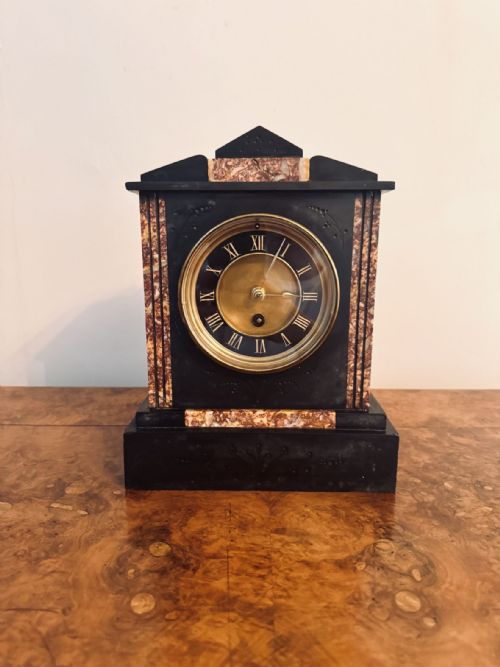
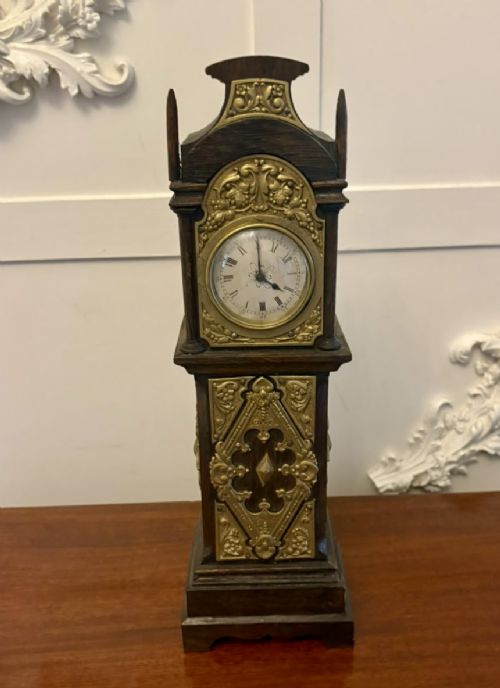
A Victorian mantel timepiece is a domestic clock designed to sit on a shelf, bracket, or mantelpiece to tell the hours. The examples gathered here span the nineteenth century, including pieces from the eighteen-fifties through to nineteen-hundred.
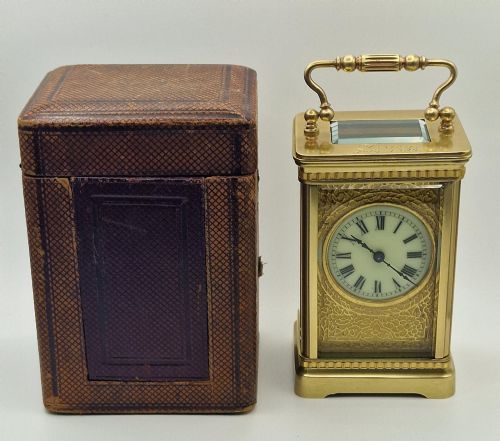
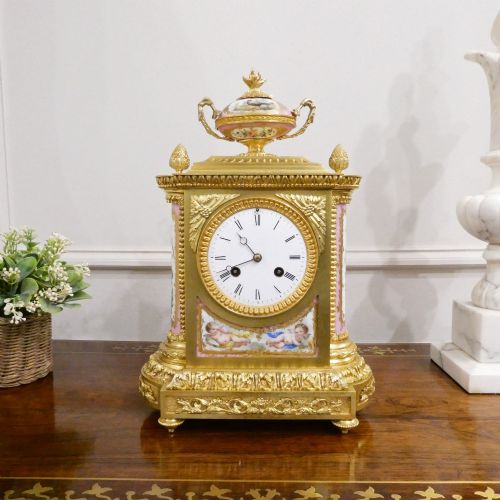
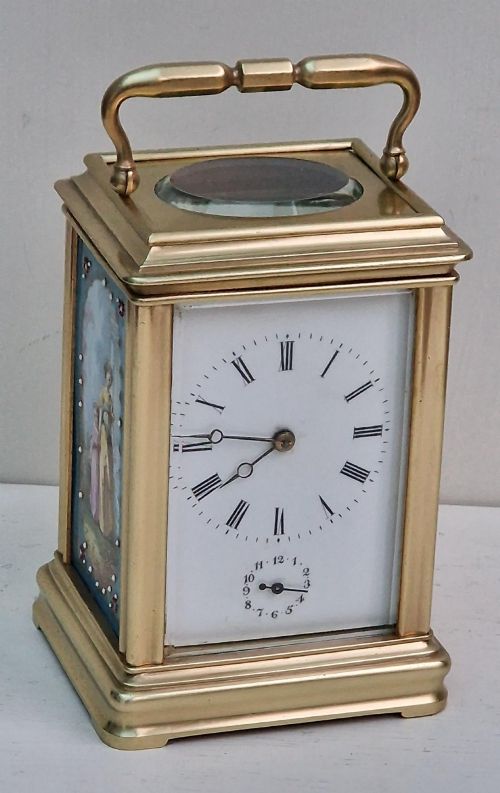
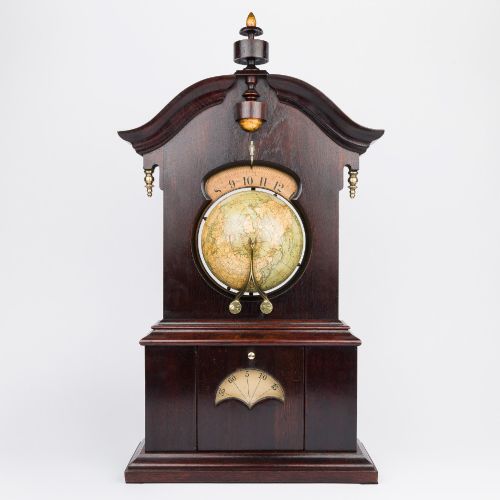
Most items meeting this description take the form of carriage clocks, bracket clocks, or architectural mantel clocks housed in brass, marble, or wood. French workshops and English makers both populate the selection, ranging from miniature brass carriage timepieces to larger marble or mahogany designs.
Materials and Construction
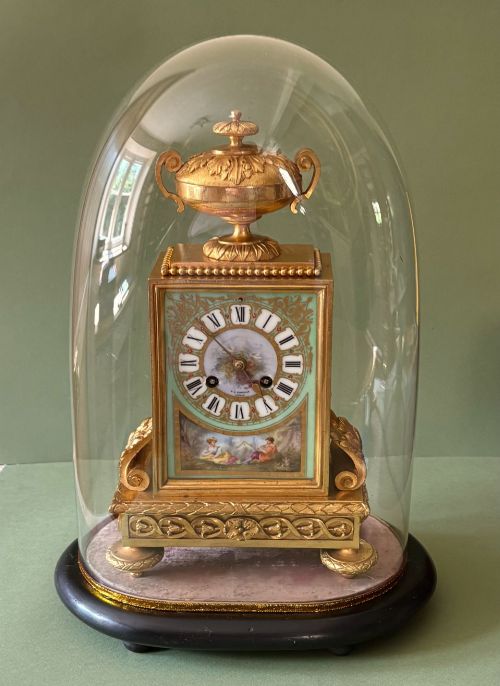
Cases utilise cast brass, gilt brass, ormolu, and heavy marbles alongside timbers such as mahogany, rosewood, and amboyna. Glazed panels and glass houses protect the delicate interior gear trains while allowing the escapement to remain visible.
Enamel dials carry roman or arabic numerals, paired with fine hands driven by mechanical movements. Many pieces incorporate brass gorge cases, porcelain painted panels, and inlay work in lemon wood or tortoiseshell effects.
Listings feature movements spanning the eighteen-fifties to nineteen-hundred, combining English fusee bracket clocks with French carriage timepieces and marble architectural pieces.
Standards of Quality
Quality rests in the crispness of the brass casting, the depth of the case engraving, and the precision of the internal movement. Heavy bevelled glass panels and fully engraved gilt brass cases denote higher workmanship.
The choice of materials dictates the standing of the piece, with solid marbles, fine rosewood cases, and porcelain painted plaques elevating the design above standard brass and wood iterations.
Henri Jacot·Mappin and Web·Richard Winter of Chieveley·Pickford of London·Drocourt Paris·T. Martin and Co·Webster Cornhill London·Philippes Paris·Conyers Ipswich
The Victorian Mantel Timepiece Glossary
- Carriage clock
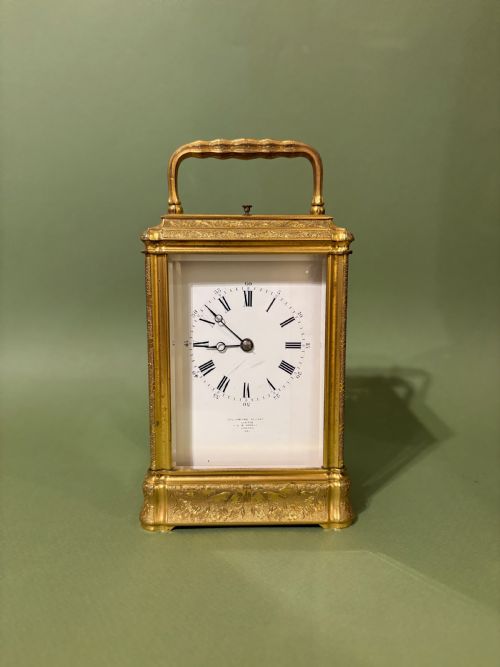
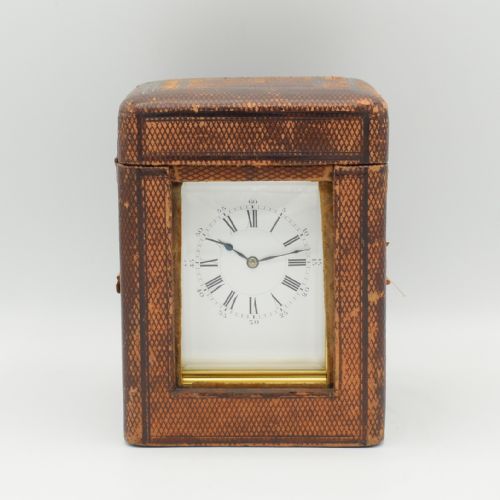
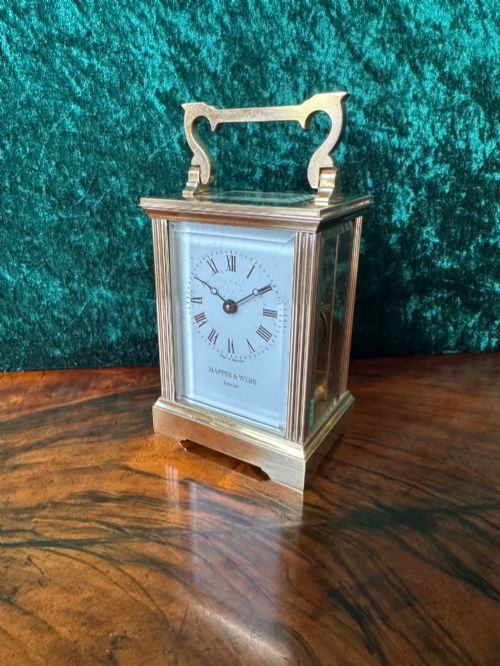
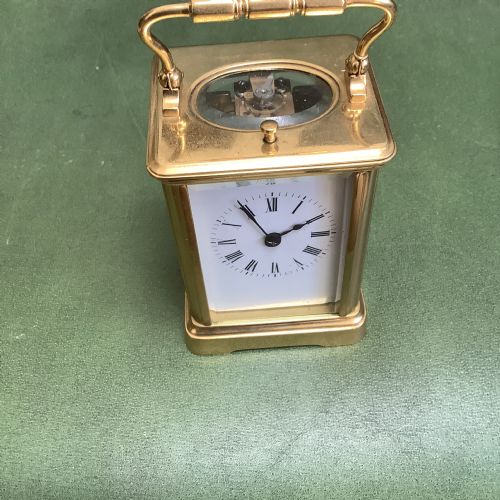
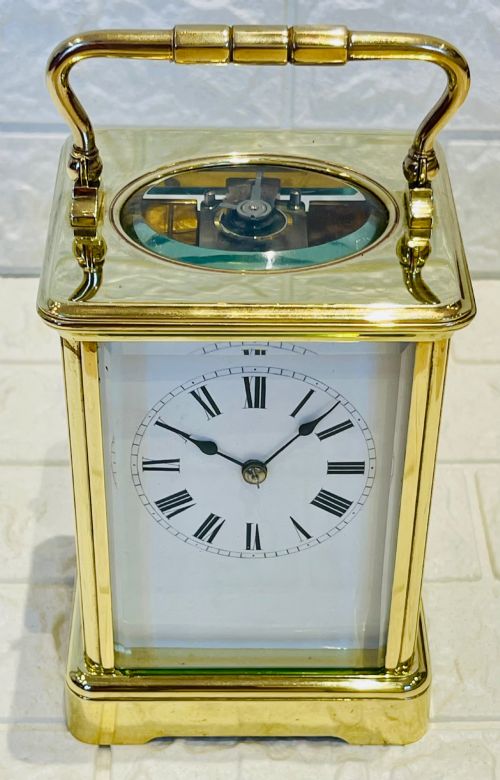
- A portable spring-driven clock originally designed for travelling during the nineteenth century. These feature glass panels in brass frames and a folding handle on top.
- Fusee
- A conical pulley used in mechanical clocks to maintain even power as the mainspring unwinds. This mechanism ensures more accurate timekeeping.
- Portico clock
- An architectural mantel clock styled to resemble a classical temple with columns supporting the top pediment. They frequently utilise mahogany or ormolu mounts.
- Skeleton clock
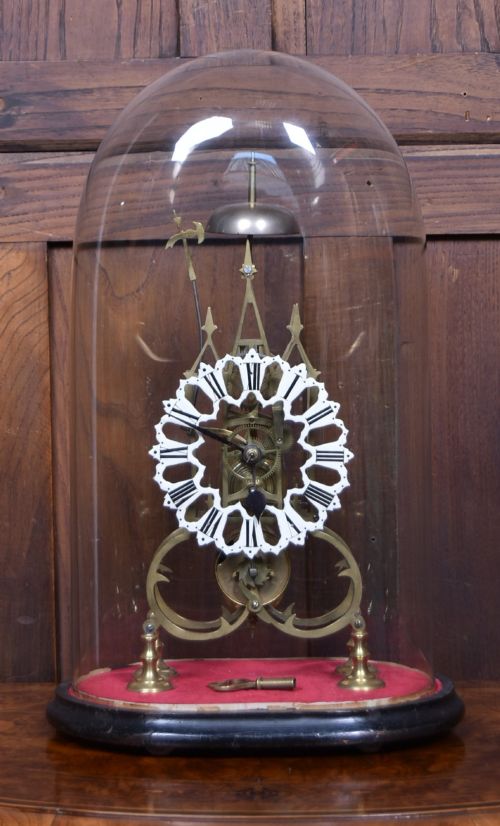
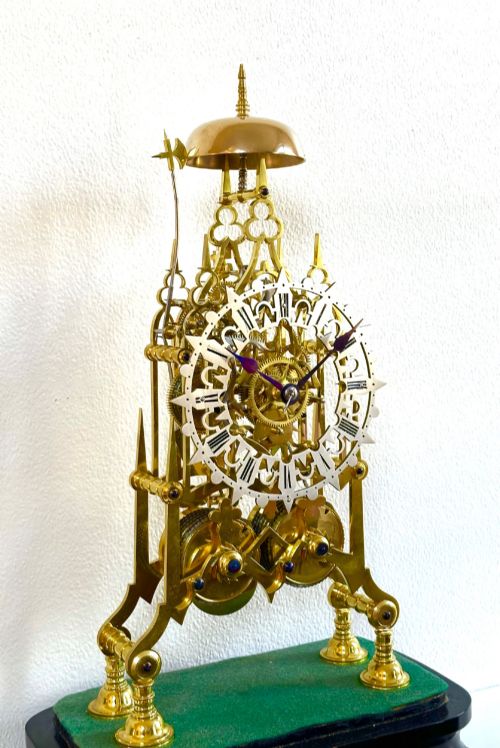
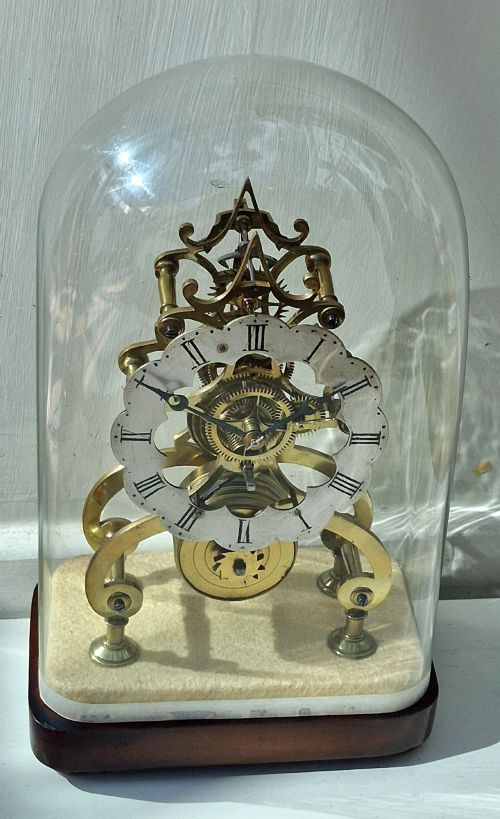
- A timepiece with an exposed movement held between open brass plates so the wheels and gear train are fully visible. They sit under glass domes or on wooden bases.
- Gorge case
- A specific stepped brass housing common on nineteenth-century carriage clocks. The corners feature distinct reed or column moulding.
Victorian Mantel Timepiece: Frequently Asked Questions
How do I wind a carriage clock?
Use the matching key provided with the clock to turn the winding square on the back plate gently. Take care not to overwind the mainspring.
Most eight-day movements require winding once a week to keep accurate time.
Where should I place a marble mantel clock?
Position the clock on a sturdy, level surface such as a wooden mantelpiece or sideboard. Marble adds considerable weight, so the support must be secure.
Keep the clock away from direct sunlight and damp environments to protect the enamel dial and metal finish.
How do I tell an English fusee clock from a French one?
English examples often employ a fusee movement inside timber bracket cases made of mahogany or rosewood. Look for signatures on the dial or backplate from London or provincial makers.
French pieces more frequently utilise platform escapements in brass gorge cases or ornate gilt brass frames.