




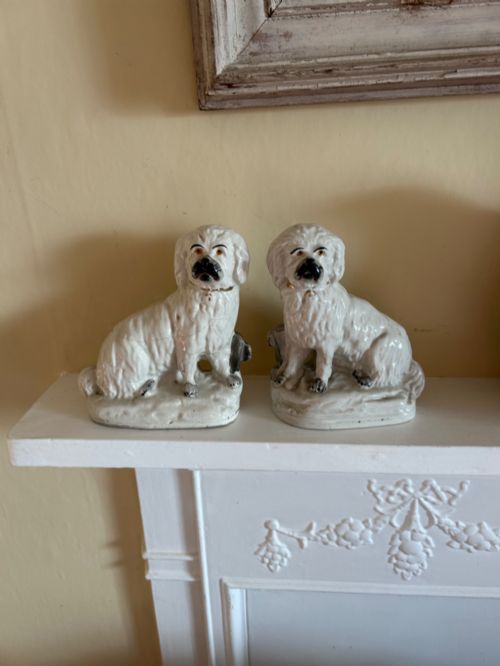
Victorian Mantel Figures
Victorian mantel figures bring character to a room through modelled earthenware animals, portrait pottery and cabinet bronzes.
Victorian Mantel Figures
Victorian mantel figures encompass a varied group of decorative objects designed to sit upon a fireplace shelf or side table during the nineteenth century. The selection ranges widely across materials and origins, reflecting the eclectic tastes of the period.
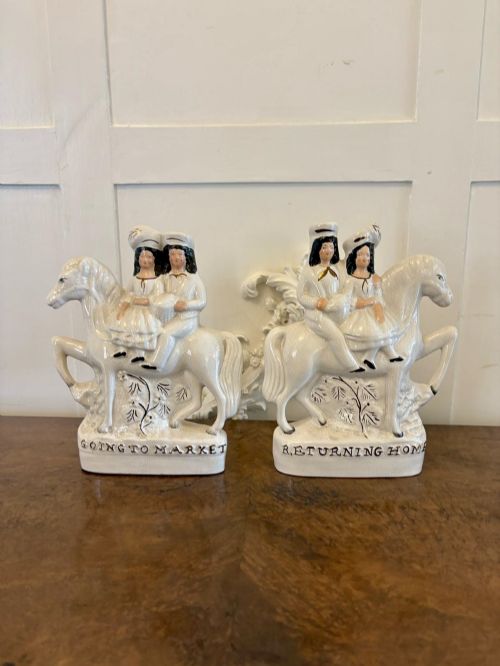
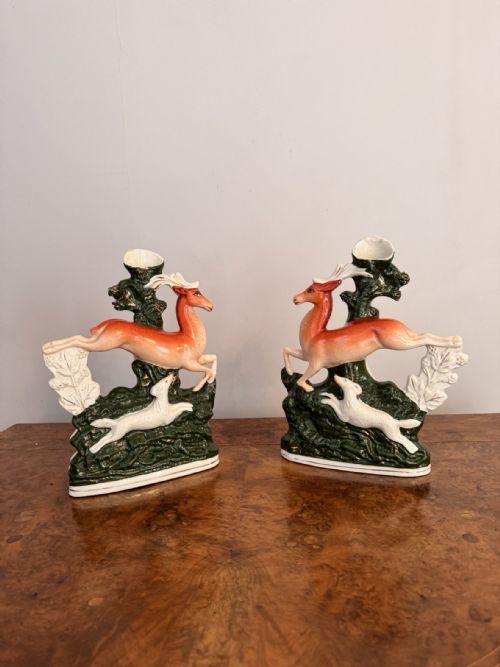
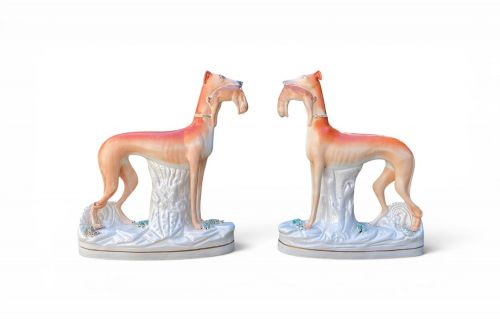
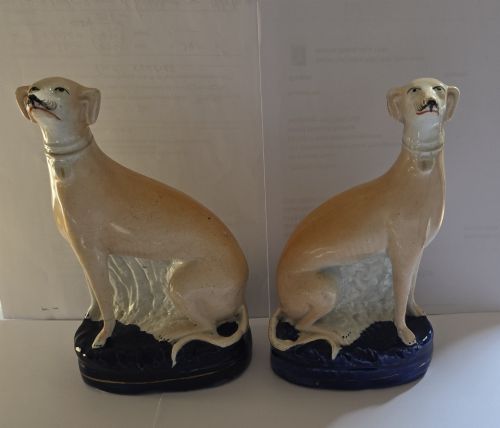
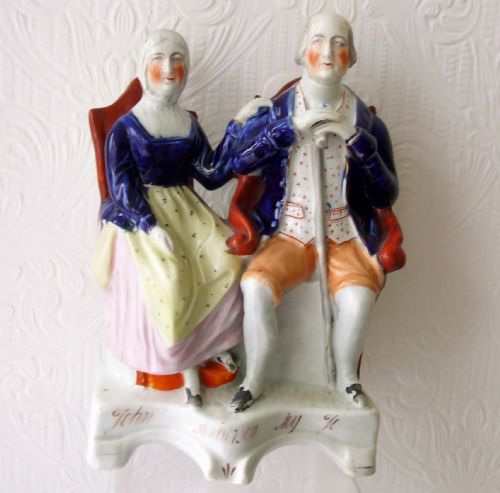
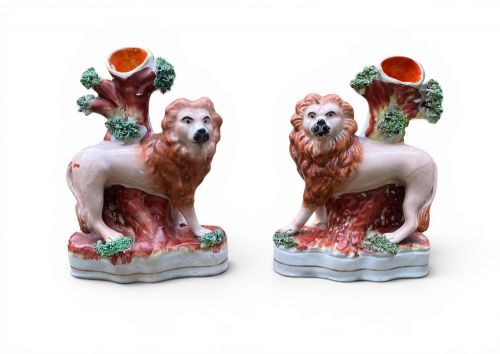
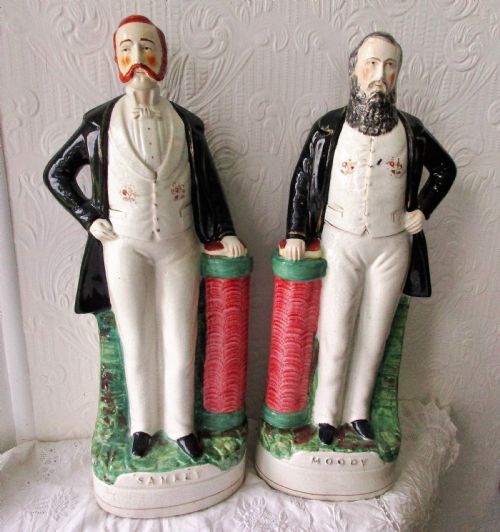
Staffordshire earthenware pottery dominates the selection, appearing frequently as pairs of dogs, spill vases with wildlife subjects, and colourful portrait figures. These domestic pieces were made in large quantities for everyday middle-class homes.
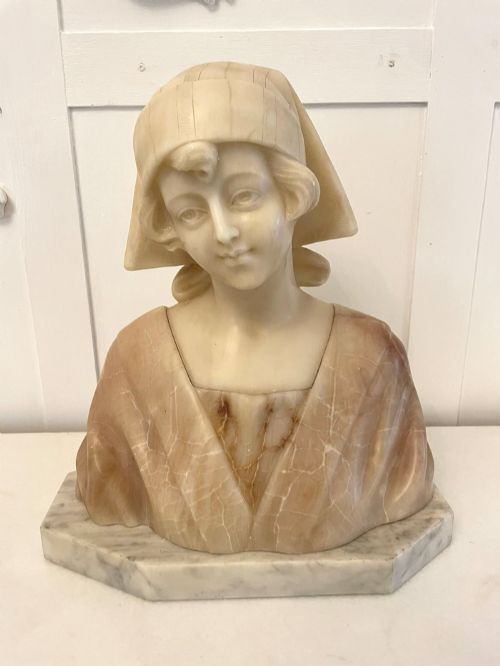
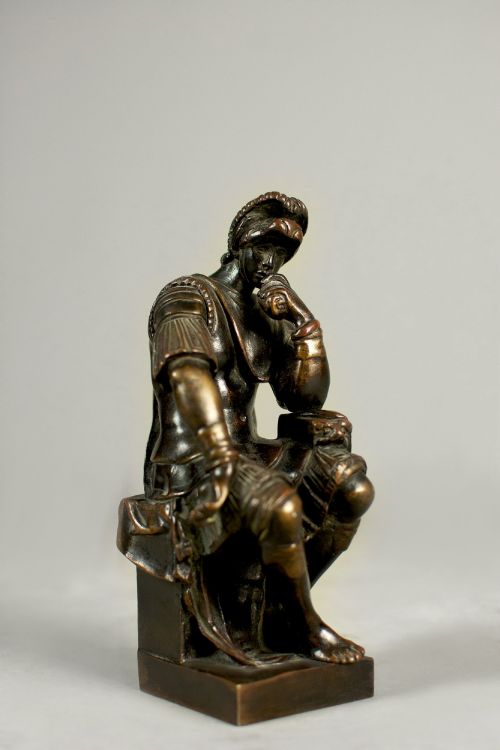
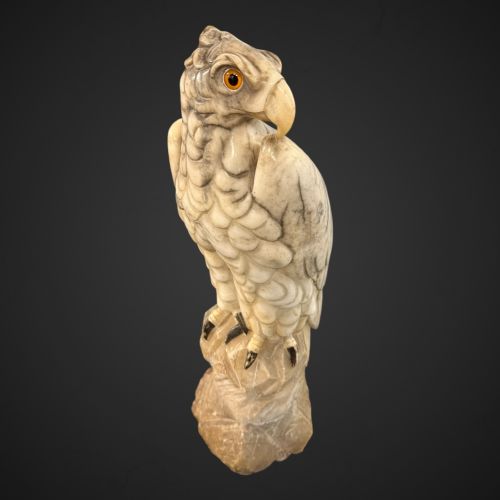
Bronzes, spelter sculptures and marble statues also represent the category, often drawing on classical themes, Grand Tour subjects or Renaissance revivals. Continental porcelain figures from factories such as Sitzendorf and Royal Worcester add a finer, more delicate option to the mix.
Materials and manufacture
Staffordshire figures relied on earthenware clays shaped in moulds, then hand-painted with mineral glazes and metallic oxides before undergoing a low-temperature kiln firing. Copper lustre highlights and lead glazes provided the glossy finishes seen on many of the animals and portrait subjects.
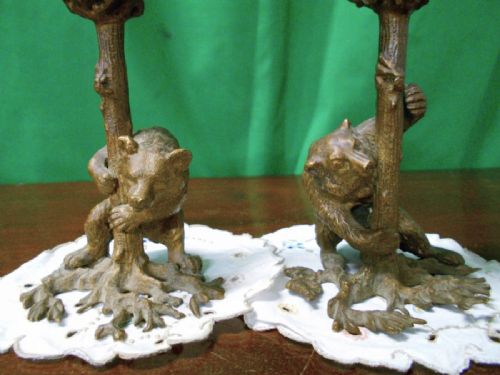
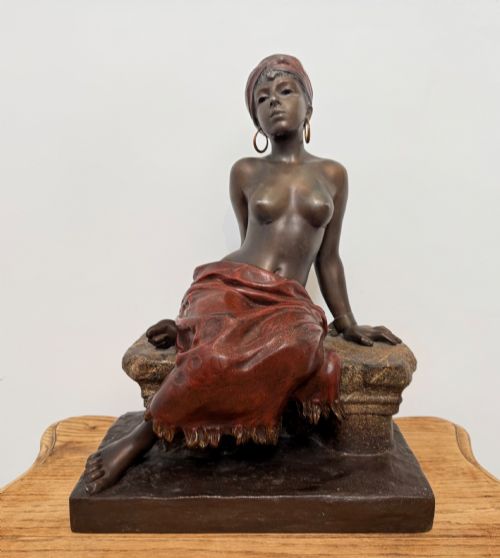
Metal sculptures utilised bronze casting or spelter fabrication, frequently mounted on veined marble bases or integrated into functional brass candlesticks and mantel clocks. Patination processes created deep, dark tones on the bronze surfaces.
Continental porcelain figures required high-fired paste and intricate hand-modelling, building up delicate details like lace collars, woolly coats and floral baskets before applying polychrome enamels and gilding.
Victorian Mantel Figures Retail Price Guide 2026
Typical asking prices for victorian mantel figures among the pieces listed under this phrase on Sellingantiques today, from the lower quarter to the upper quarter. They describe what is for sale here now, not the wider market.
Listings span the nineteenth century, featuring earthenware, porcelain, bronze, marble and spelter across animal, human and architectural forms.
Judging quality
Metal casts separate themselves through the sharpness of the chisel work after casting and the depth of the patination. Inferior spelter objects often show soft detail and pitting beneath a painted finish, while superior bronzes retain clean lines and substantial weight.
Proportion and symmetry define pairs, particularly in mantle ornaments like greyhounds, lions or candelabras. Matching height, posture and facial modelling indicate that two pieces originated from the same pressing rather than being cobbled together from different batches.
Thomas Parr·E Villanis·John Willis Good·Antonin Mercié·Royal Worcester·Sitzendorf
The Victorian Mantel Figures Glossary
- Flat back
- A Staffordshire figure modelled with a finished front and a plain, unglazed flat reverse designed to stand flush against a wall.
- Spill vase
- A hollow ceramic figure incorporating an attached cylindrical tube intended to hold wooden spill sticks for lighting fires or candles.
- Spelter
- An alloy of zinc and lead used as a cheaper substitute for bronze in nineteenth-century sculptural castings.
- Copper lustre
- A metallic pottery glaze containing copper that produces a reflective, coppery sheen upon firing.
- Grand Tour
- Souvenir bronzes and marbles collected by wealthy travellers touring the cultural sites of continental Europe.
- Patina
- The surface sheen and colour acquired by metal, wood or marble through age and handling.
Victorian Mantel Figures: Frequently Asked Questions
What are Staffordshire flat back figures?
Staffordshire flat backs are earthenware chimney ornaments made to be viewed from the front on a mantelpiece. Their unglazed, flat backs allowed potters to save on material and kiln space.
These pieces typically depicted current events, royalty, literary characters or domestic animals. They brought colour and narrative interest to Victorian parlours.
How do I spot a true pair?
Genuine pairs face one another symmetrically, mirroring posture, expression and dimensions. Look closely at the base size and painting style to confirm they share an origin.
Matched pairs often command greater interest from collectors than single survivors. Care should be taken to check that one piece has not been replaced later.
What is the difference between bronze and spelter?
Bronze is a durable alloy of copper and tin that takes a rich, stable patination and retains sharp sculptural detail. Spelter is a softer, zinc-based metal that feels lighter and often shows wear beneath its painted surface.
Spelter figures were produced as affordable alternatives to bronze during the Victorian era. They require careful handling to avoid surface dents and flaking.
How should I clean antique ceramics?
Dust ceramic figures gently with a soft dry brush to remove surface accumulation. Avoid soaking older earthenware or pottery, as moisture can penetrate hairline cracks and damage historical glazes.
Harsh chemical cleaners will strip the delicate enamel painting and copper lustre highlights. Stick to dry methods or a barely damp cloth only when strictly necessary.