

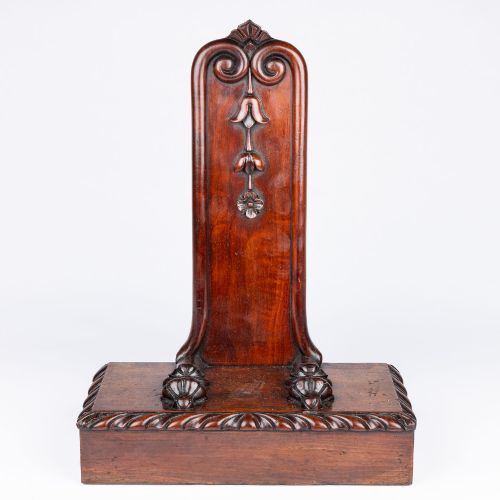
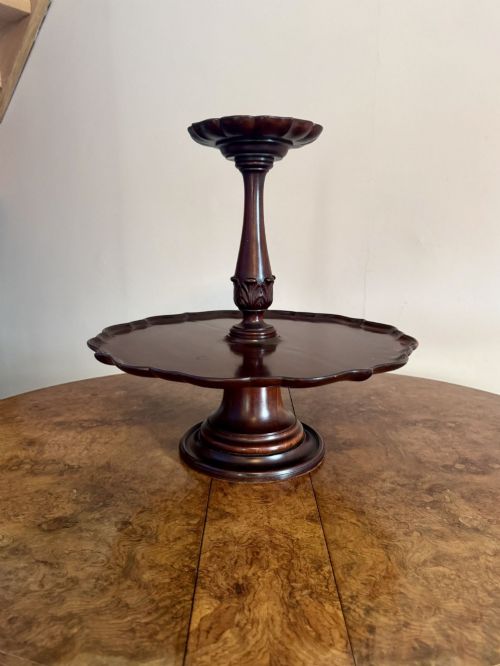
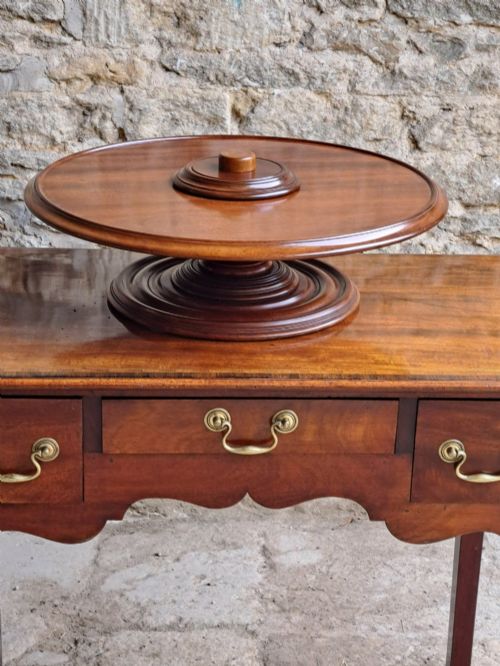
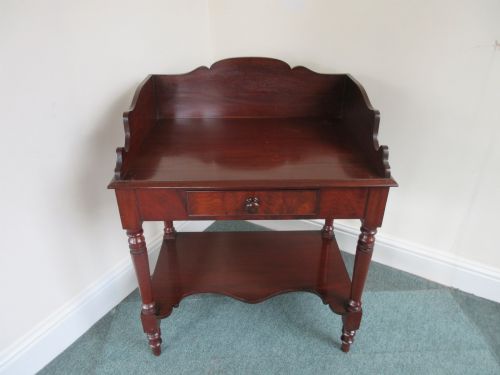



Victorian Mahogany Tray Table
A victorian mahogany tray table brings sturdy timber and portable ingenuity into a modern room.
Victorian Mahogany Tray Table
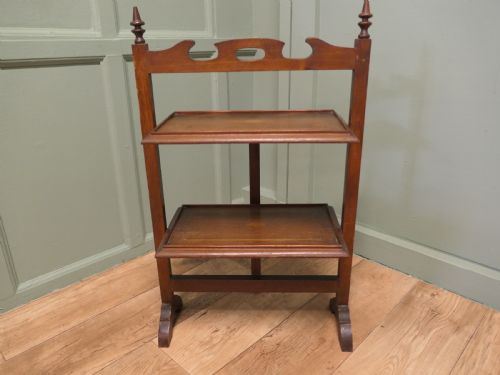
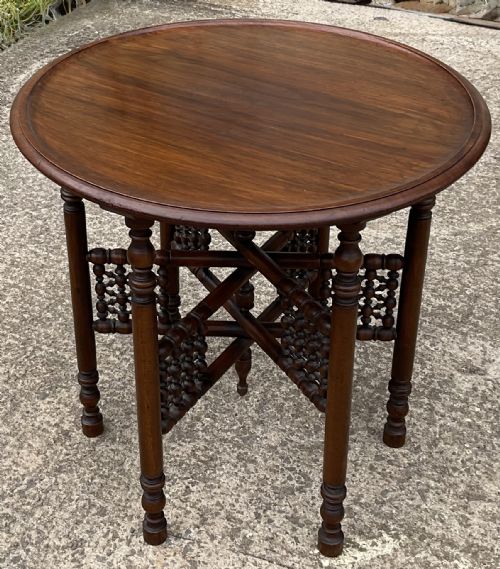
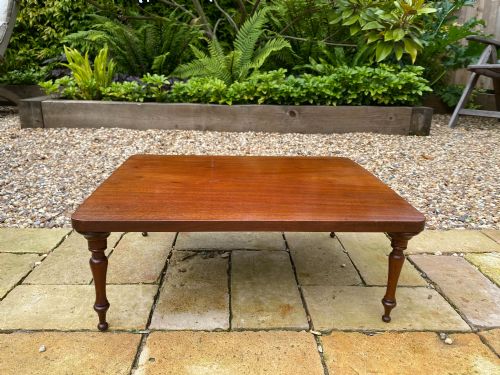
A victorian mahogany tray table combines a removable serving surface with a folding or fixed wooden stand, drawing on nineteenth-century domestic routines. Buyers seek these pieces for their dual nature as functional furniture and portable trays.
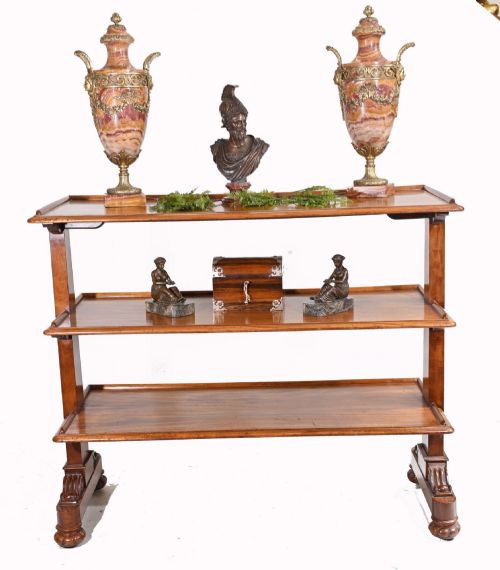
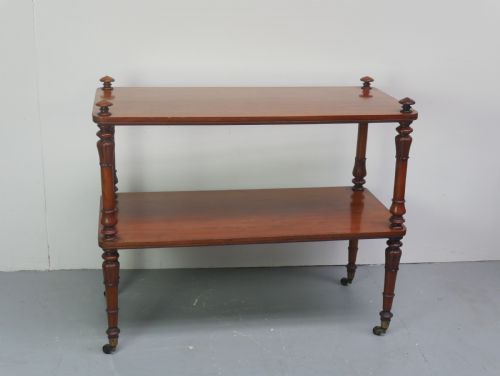
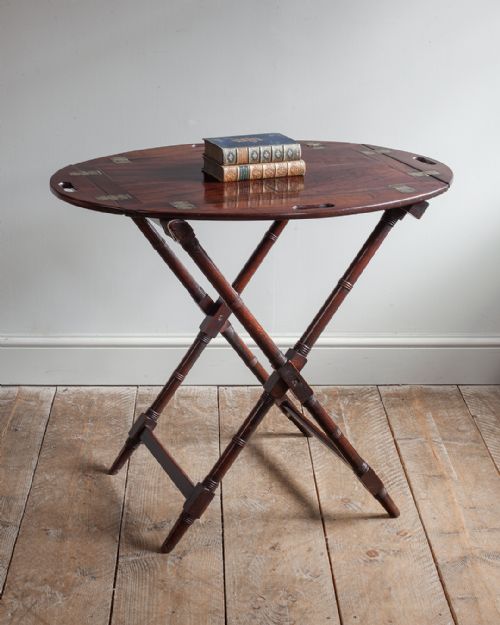
The version most commonly encountered on this page originates from the Victorian period, though related forms span the eighteenth to the early twentieth century under styles such as Georgian, Regency, and Edwardian. Surviving examples encompass folding coaching tables, butlers trays on stands, and multi-tiered dumb waiters.
Origins range from English country workshops to specialised urban cabinet makers, utilising timber forms that suit both formal reception rooms and casual living spaces.
Materials and Technique
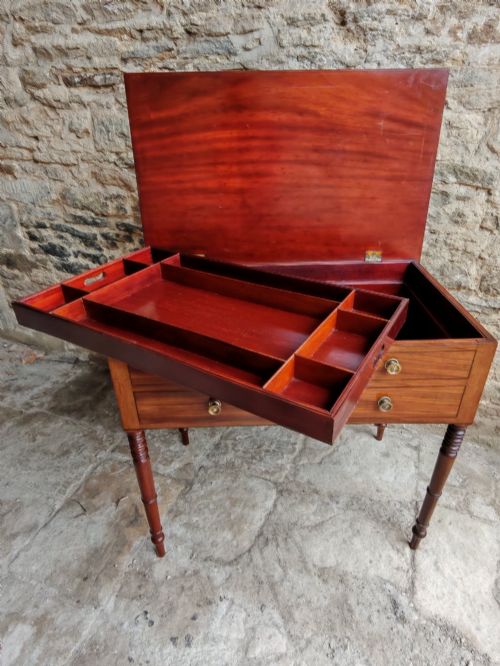
Makers constructed these tables primarily from solid mahogany and mahogany veneers, occasionally incorporating satinwood, burr wood, and oak for contrast and structural strength. Brass hinges, handles, and fastening mechanisms provide both functional movement and decorative accents.
Joinery techniques rely on traditional methods such as dovetailing for tray rims and mortise and tenon joints for folding or stationary stands. Surfaces receive hand-applied polish that highlights the natural grain and deep red-brown colour of the timber.
Victorian Mahogany Tray Table Retail Price Guide 2026
Typical asking prices for victorian mahogany tray table among the pieces listed under this phrase on Sellingantiques today, from the lower quarter to the upper quarter. They describe what is for sale here now, not the wider market.
Halls patent fittings allowed Victorian hosts to lock drinks trays securely in place before guests tested their steadiness.
Assessing the Pieces
Quality rests upon the selection of timber and the precision of the joinery, particularly where folding stands meet their supporting trays. Denser mahogany grain and crisp hand-carved details elevate an example above standard utility pieces.
The integrity of the original hinges and the presence of matching stands determine the historical continuity of the piece. Subtle inlay work and secondary timbers like oak or satinwood indicate higher workshop standards.
Maple & Co
The Victorian Mahogany Tray Table Glossary
- Butlers tray
- A removable wooden tray with hinged or fixed sides, designed to be lifted from its stand for serving food and drinks.
- Dumb waiter
- A multi-tiered revolving or stationary stand utilised for holding dishes and serving utensils during meals without the need for attendants.
- Coaching table
- A portable folding table structure engineered for easy transport and compact storage during travel.
- Etagere
- A set of open shelves or tiers used for displaying small decorative objects and silver.
- Galleried tray
- A serving tray featuring a raised wooden or metal rim around its perimeter to prevent items from sliding off.
Victorian Mahogany Tray Table: Frequently Asked Questions
How do I identify a true period tray table?
Examine the timber beneath the tray and inside the joints for hand-tool marks and natural ageing patterns consistent with nineteenth-century cabinet making.
Original hardware such as brass hinges and screws should match the period of construction without modern replacements.
Were these tables used exclusively for serving food?
While originally designed for afternoon tea and dining service, many examples functioned as bedside tables or general side furniture.
Their portable nature allowed domestic staff to move them between rooms as household needs required.
Can a folding stand support daily use?
Period folding stands utilise robust cross-frame construction designed to bear substantial weight while remaining collapsible.
Checking the stability of the pivot points ensures the stand safely supports whatever items you place upon it.