

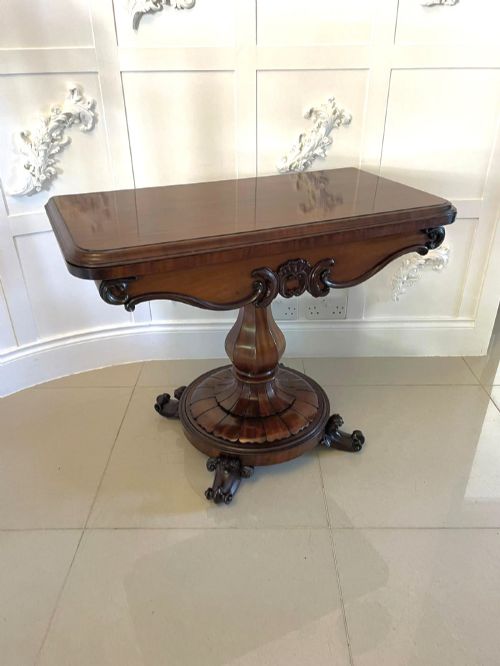
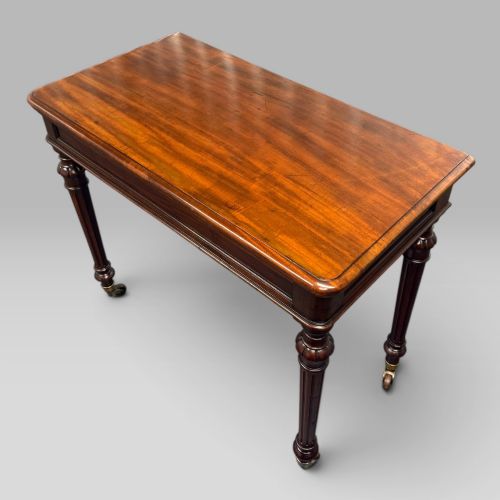
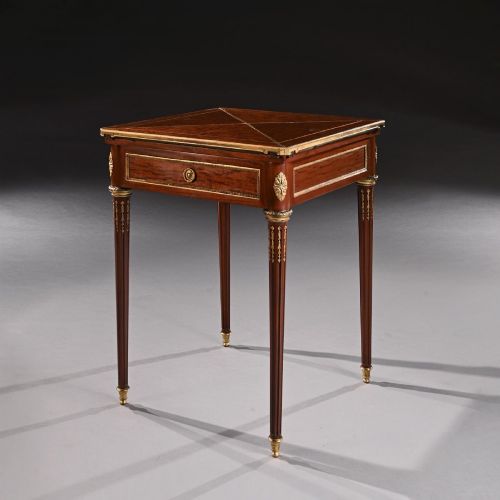
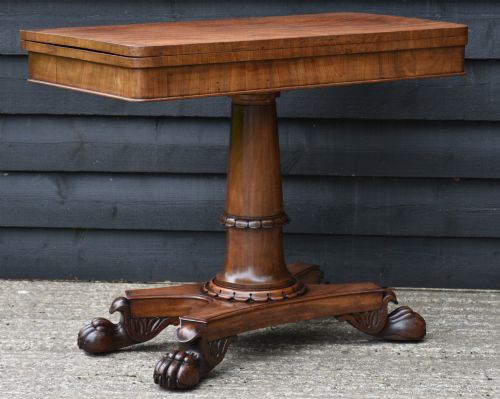
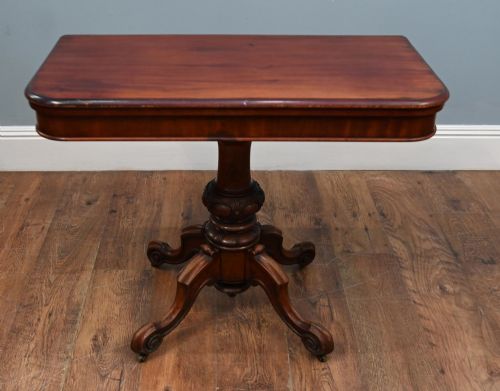
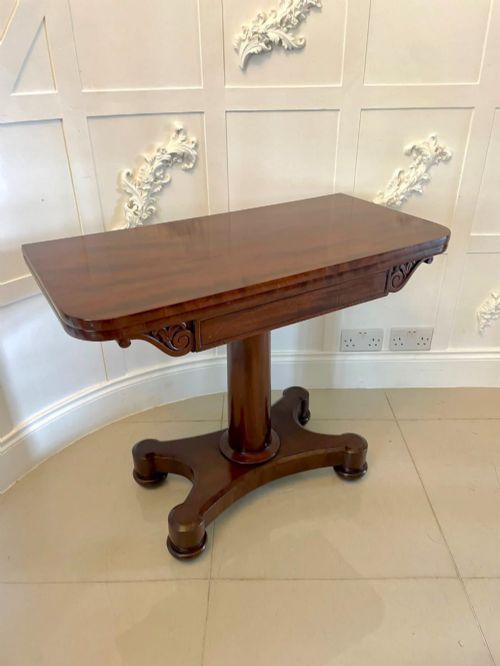
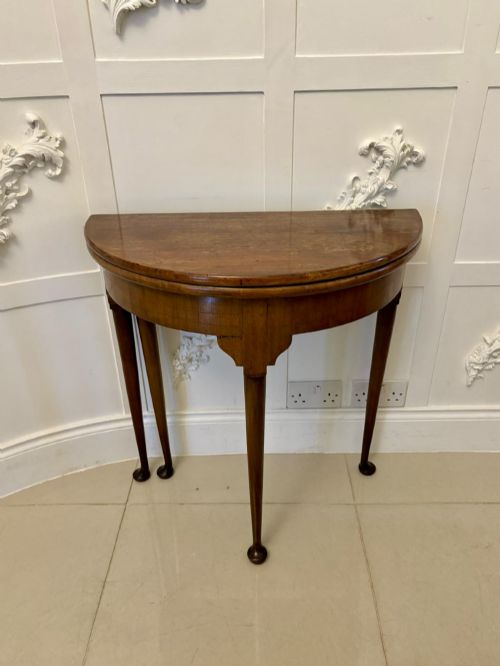
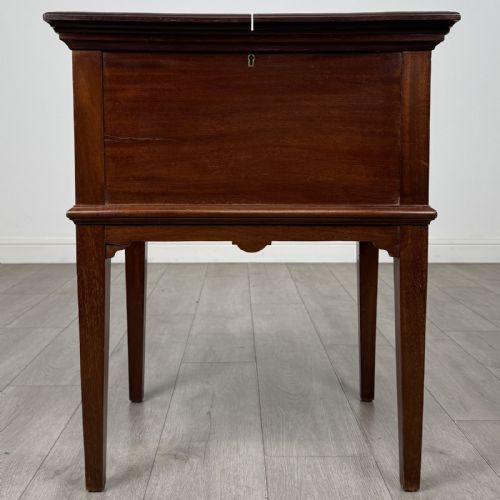
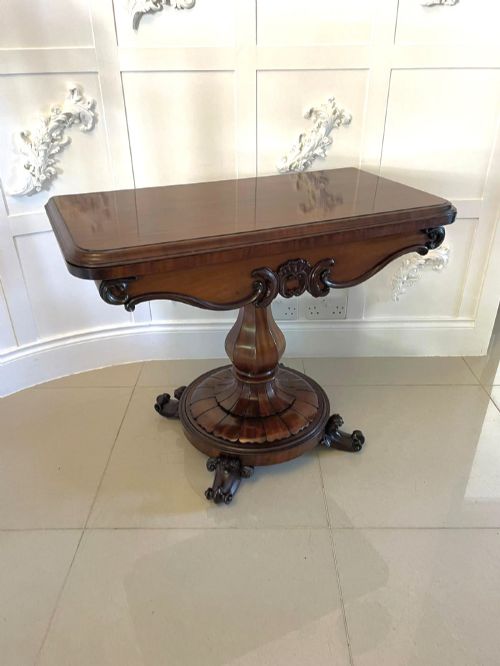
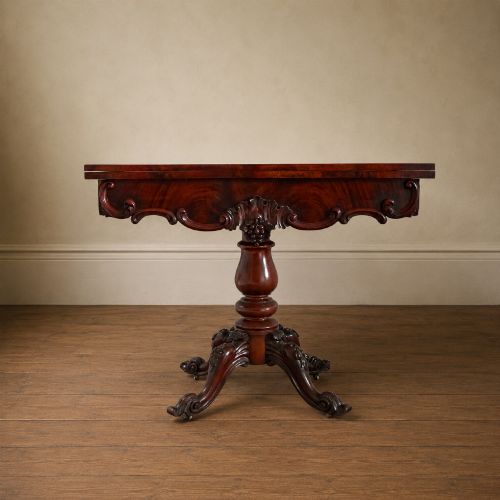
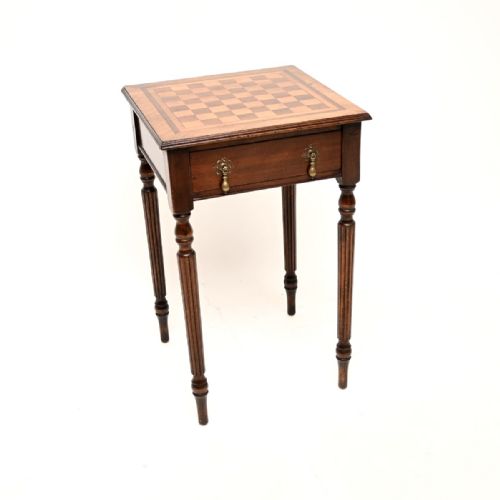

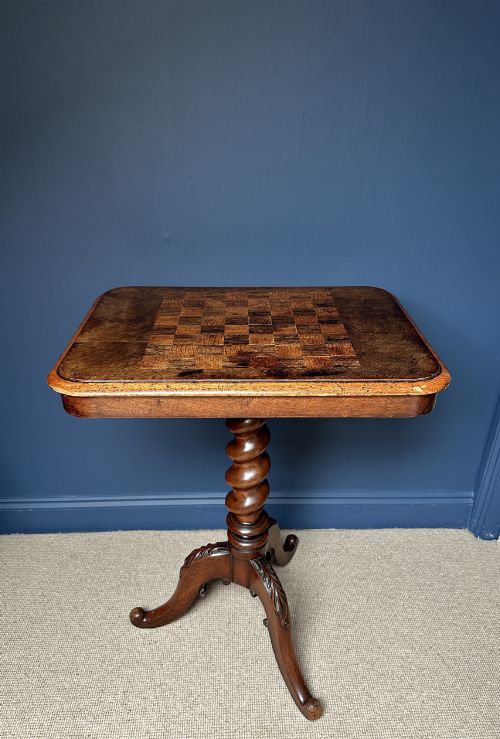
Victorian Mahogany Games Table
A victorian mahogany games table brings together practical nineteenth-century craftsmanship and dedicated leisure.
Victorian Mahogany Games Table
When searching for a victorian mahogany games table, buyers encounter versatile furniture designed for card playing, chess, and domestic entertainment. The most common forms on this page include fold-over card tables, swivel-top gaming surfaces, and sophisticated envelope tables featuring clever internal wells.
Many examples double as tea or console tables during the day, using clever folding mechanisms or rotating tops to conceal gaming surfaces. The selection spans straightforward mid-century designs to elaborate late-period revival styles incorporating specialised boards.
Origins cluster primarily in nineteenth-century British workshops, utilising dense timber and traditional joinery. These pieces reflect a period when parlour games formed a central pillar of domestic social life.
How They Were Made
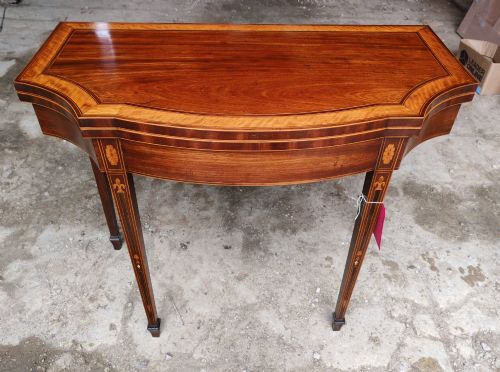
Cabinetmakers relied on solid mahogany and figured mahogany veneers applied to secondary woods, often accentuating the grain with French polish. Internal compartments frequently incorporate secondary timbers like satinwood and walnut for contrast.
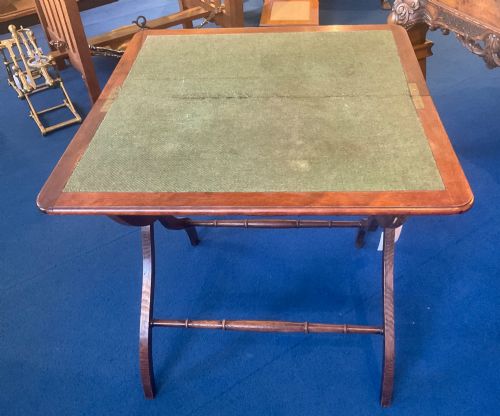
Playing surfaces were traditionally lined with woven wool baize, while specialised chess and draughts boards utilised marquetry and inlaid veneers of contrasting light and dark woods. Mechanical ingenuity defined the construction, utilising brass hinges, swivel pivots, and concealed wooden wells for counters.
Victorian Mahogany Games Table Retail Price Guide 2026
Typical asking prices for victorian mahogany games table among the pieces listed under this phrase on Sellingantiques today, from the lower quarter to the upper quarter. They describe what is for sale here now, not the wider market.
Listings feature various woods including mahogany, burr walnut, satinwood, and rosewood, paired with baize gaming surfaces.
What Varies in Quality
Quality rests upon the selection of timber figures, such as highly flamed or burr mahogany veneers, matched with precise cabinet joinery that keeps folding leaves entirely level when open. Superior examples display crisp carved enrichment, such as Chippendale-style acanthus details or fine marquetry inlay, rather than purely functional joints.
The sophistication of the internal mechanism also dictates grade, separating simple fold-over tops from elaborate envelope tables with synchronized rotating leaves and integrated gaming wells. Maker attribution through stamped signatures or paper labels further elevates the standing of individual pieces.
James Shoolbred And Co·A Blain And Son·Hampton And Sons·Wylie And Lochheed·Edwards And Roberts
The Victorian Mahogany Games Table Glossary
- Baize
- A coarse woolen fabric used to line the playing surfaces of card tables. It provides a soft, tactile texture that prevents cards from sliding during play.
- Envelope table
- A square card table with a clever folding top comprising four triangular flaps that swivel open together. This action reveals a baize-lined interior and corner wells for counters.
- Marquetry
- Decorative veneer work forming pictures or geometric patterns using thin slices of wood. Craftsmen cut contrasting timbers like satinwood and walnut to create intricate chess boards.
- Turnover top
- A dual-purpose table top hinged to fold out and double the surface area. The interior often conceals a lined gaming well or polished playing board beneath.
- Demilune
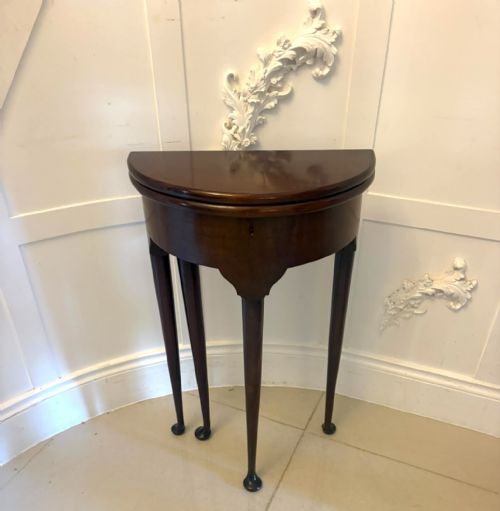
- A half-moon shape characteristic of certain side and card tables designed to stand flat against a wall. This profile became particularly popular during the later nineteenth century.
Victorian Mahogany Games Table: Frequently Asked Questions
What were gaming wells used for?
Small recessed compartments set into the corners of the table surface held bone counters, mother-of-pearl markers, and playing cards.
Keeping these accessories contained prevented pieces from rolling off during active card and board sessions.
Can these tables be used for daily dining?
While fold-over tops provide a generous surface, the internal mechanisms and baize linings are primarily engineered for leisure and writing.
Using them for heavy daily dining risks staining the polished mahogany or wearing the delicate fabric inserts.
How do you distinguish early Victorian from late Victorian pieces?
Early examples from the mid-nineteenth century tend to feature heavier proportions, bold flame mahogany veneers, and sturdy pedestal bases.
Later Victorian pieces often incorporate lighter revival styles, sophisticated envelope mechanisms, and intricate marquetry chess boards.