





Victorian Magazine Shelf
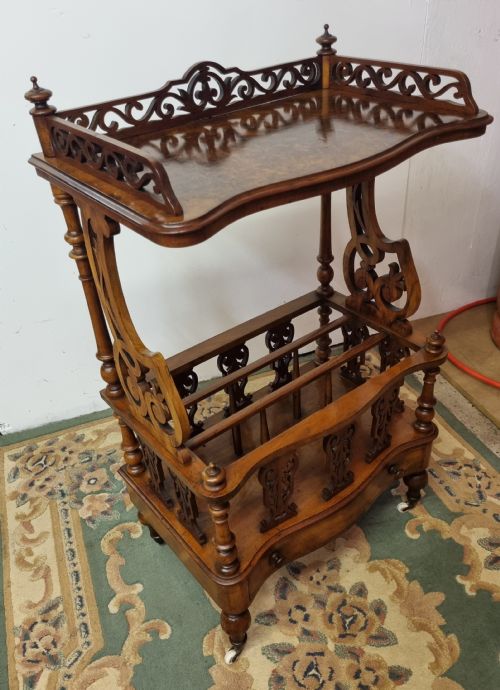
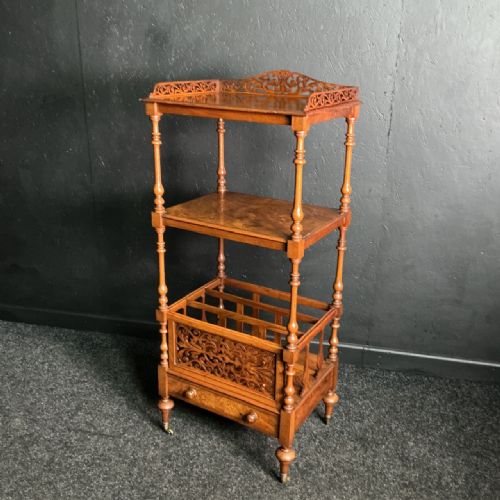
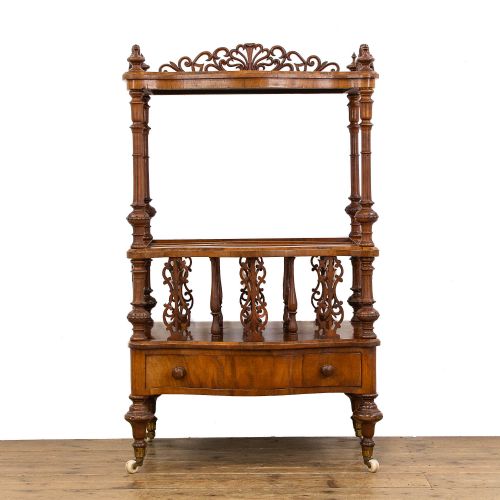
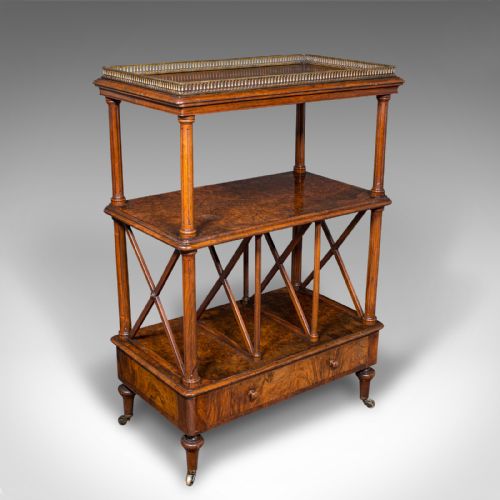
A victorian magazine shelf organises daily reading with the warmth of burr walnut and the elegance of freestanding tiers.
Victorian Magazine Shelf
When buyers search for a victorian magazine shelf, they are typically looking at versatile multi-tiered furniture designed to hold periodicals, books and sheet music. These pieces frequently combine open shelving with structured divisions, functioning as both display stands and practical storage units in sitting rooms.
The versions most commonly met on this page span the Victorian period, with examples reaching back towards Regency influences and forward to early twentieth-century designs. They appear in forms such as canterburys, whatnots, etageres and sectional book troughs, reflecting the domestic habits of nineteenth-century households.
Makers utilised rich timbers to create these multifunctional items, often pairing open display space at the top with partitioned compartments below for organised storage. Such items served as central furniture pieces in period parlours, keeping reading material accessible while displaying ornaments.
How they were made
Cabinetmakers constructed these pieces primarily using dense figured timbers such as burr walnut, rosewood, flame mahogany and standard walnut. These woods were selected for their striking grain patterns, which provided a rich visual texture suitable for prominent parlour display.
Craftsmen incorporated decorative details like ebony inlay and cast brass elements to accent the timber frames. Many canterburys featured integrated drawers and turned supports, demanding precise joinery to ensure stability across multiple tiers.
Victorian Magazine Shelf Retail Price Guide 2026
Typical asking prices for victorian magazine shelf among the pieces listed under this phrase on Sellingantiques today, from the lower quarter to the upper quarter. They describe what is for sale here now, not the wider market.
Current listings demonstrate a strong preference for burr walnut and rosewood across Victorian canterburys and whatnot shelves.
What varies in quality
The upper tier of quality in these pieces is defined by the selection of highly figured veneers, such as burr walnut or flame mahogany, matched carefully across the surfaces. Finer examples display meticulous ebony inlay and solid timber framing rather than simpler secondary woods.
Construction intricacy also separates standard items from exceptional ones, particularly in the shaping of serpentine fronts and the integration of functional drawers with well-fitted dividers. The fluidity of the overall silhouette and the crispness of the turned supports dictate the visual success of the piece.
The Victorian Magazine Shelf Glossary
- Canterbury
- A low, multi-tiered piece of furniture featuring vertical partitions designed specifically for holding sheet music, books and periodicals. It typically includes a small drawer at the base.
- Whatnot
- An open set of shelves used for displaying ornaments, books and decorative objects in a Victorian interior. It often combines with other furniture forms.
- Etagere
- A set of open shelves or tiers used for displaying small possessions, sharing a similar purpose to the whatnot. It provides light, accessible storage.
- Burr Walnut
- A highly valued timber obtained from the wart-like growths on walnut trees, prized for its swirling, intricate grain patterns. It was a favourite for high-end Victorian cabinetwork.
- Serpentine Shape
- A furniture contour characterised by a gentle, wavy line curving outward in the centre and inward at the sides. This technique adds visual movement to cabinet fronts.
Victorian Magazine Shelf: Frequently Asked Questions
How were these stands used originally?
In nineteenth-century drawing rooms, these pieces kept current periodicals, books and music scores neatly stored yet immediately to hand. The upper tiers served as display surfaces for small decorative objects and ornaments.
They functioned as dual-purpose furniture, combining practical storage for daily reading with the decorative display expected in a formal room.
What woods appear most often?
Walnut and burr walnut dominate the pieces listed here, offering rich, swirling grain patterns that defined Victorian cabinetmaking. Rosewood and flame mahogany also appear frequently.
Makers enhanced these decorative timbers with contrasting ebony inlay and polished brass fittings to elevate the visual appeal of the furniture.
How do I tell periods apart?
Regency-influenced pieces often display cleaner architectural lines, whereas mid-Victorian examples lean towards ornate burr walnut veneers and serpentine shapes. Later pieces from the early twentieth century shift toward larger, utilitarian forms like sectional book troughs.
Examining the choice of timber, inlay work and structural silhouette helps identify the manufacturing era of each item.