






Victorian Low Occasional Table
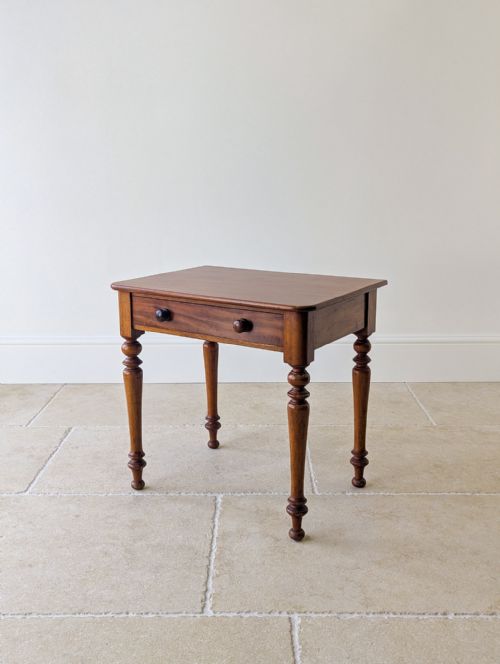
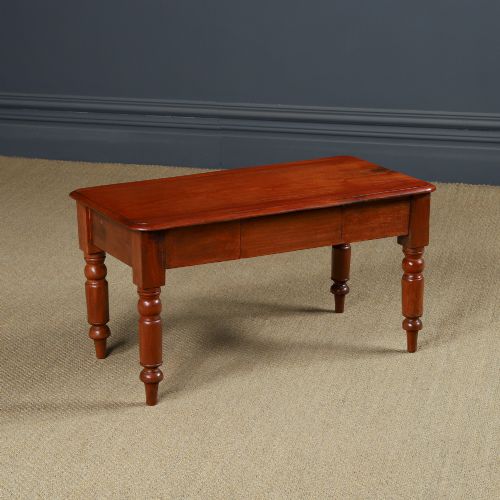
These Victorian low occasional table pieces bring practical surfaces and rich period character to a room, offering low timber platforms shaped for daily use.
Victorian Low Occasional Table
When you search for a victorian low occasional table, you find a variety of low-slung timber and mixed-material surfaces designed for domestic use during the nineteenth century. These forms span side tables, coffee tables, and lamp tables, often adapted or built low for specific social rituals like afternoon tea.
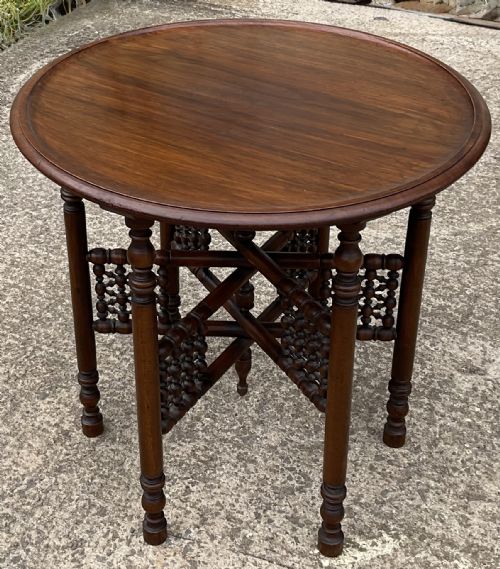
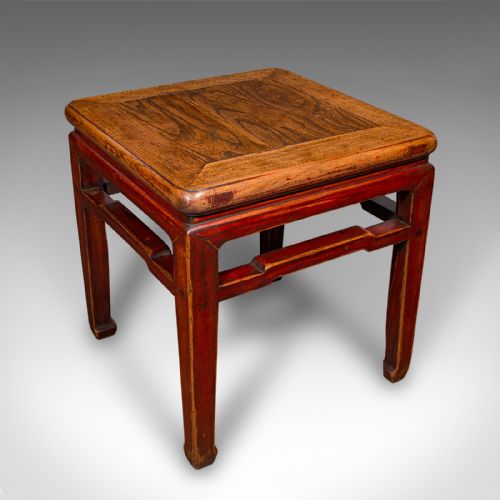
The examples on this page encompass walnut, mahogany, oak, and satinwood pieces, reflecting both English workshops and wider influences. Styles stretch from straightforward Victorian designs to French Chateau, Aesthetic Movement, and Anglo-Indian aesthetics, alongside pieces bearing Japanese Meiji or revived Chippendale and Sheraton details.
Many of these tables show dual utility, functioning historically as wine tables or sewing surfaces before finding a modern role beside low seating. Their heights and proportions vary, yet all retain the compact footprint characteristic of occasional furniture from the period.
What varies in quality
The choice of primary timber and veneer sets the baseline for quality, with highly figured burr walnut and carefully matched satinwood sitting at the upper end of the scale. The crispness of hand-carved bases and the precision of marquetry inlay further separate standard production from finer workshop output.
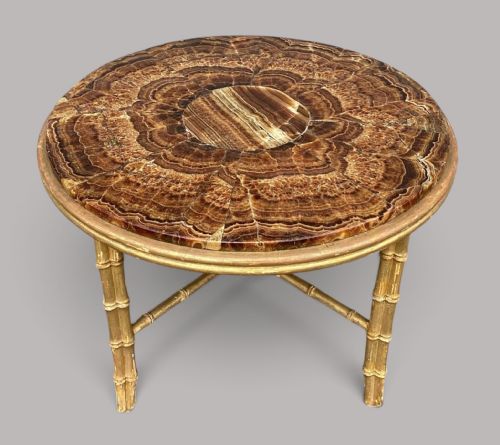
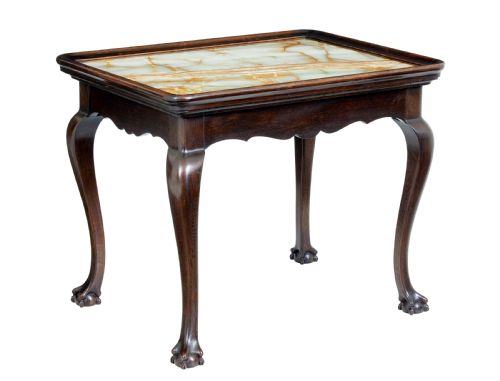
Integration of secondary materials such as inset marble or onyx tops requires careful stone selection and solid edge fitting to maintain structural stability. Maker attribution, visible in documented workshop pieces, introduces another layer of distinction among surviving examples.
Victorian Low Occasional Table Retail Price Guide 2026
Typical asking prices for victorian low occasional table among the pieces listed under this phrase on Sellingantiques today, from the lower quarter to the upper quarter. They describe what is for sale here now, not the wider market.
Current listings feature pieces spanning the nineteenth century, including specific dates from 1860, 1890, and 1930.
Edwards and Roberts
The Victorian Low Occasional Table Glossary
- Marquetry
- The art of applying small pieces of veneer to a structure to form decorative patterns. This technique frequently employs contrasting timbers to render pictorial or geometric designs on table tops.
- Burr walnut
- A prized wood cut from growths on walnut trees that yields swirling, highly decorative grain patterns. It is typically sliced into thin veneers for prominent display surfaces.
- Ebonised wood
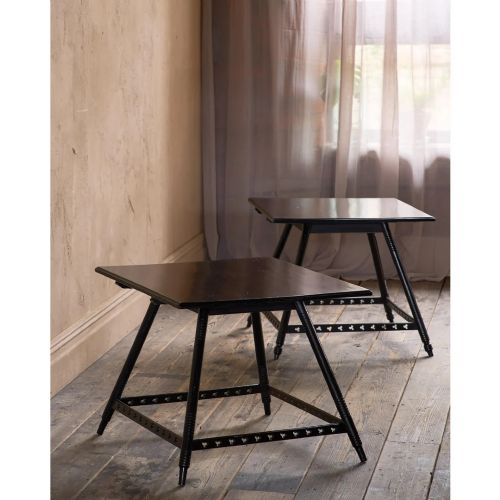
- Timber treated with chemical stains or dark finishes to imitate the appearance of ebony. This treatment was particularly favoured during the nineteenth century for accentuating carved details.
- Sutherland table
- A drop-leaf table featuring a narrow central fixed section and two folding leaves supported by swinging legs. Smaller baby versions serve easily as compact coffee tables.
- Giltwood
- Wood that has been coated with a thin layer of gold leaf or metallic paint. This finish provides a bright decorative accent on frames and table bases.
Victorian Low Occasional Table: Frequently Asked Questions
What is a Victorian low occasional table used for?
These tables provide a convenient surface for holding books, lamps, and afternoon tea within reach of low seating. Their compact proportions allow them to fit easily into smaller sitting rooms.
Historically, they served multiple domestic roles, adapting from wine and sewing tables into versatile centre pieces. Today, they function primarily as low coffee tables in contemporary living spaces.
How do I identify a Victorian occasional table?
Look for dense hardwoods like mahogany, walnut, and oak, often paired with traditional hand-carved bases or turned legs. Details such as marquetry inlay or ebonised finishes point directly to nineteenth-century workshop practices.
Periods can also be indicated by stylistic influences, ranging from Aesthetic Movement details to Chippendale revivals. Examining the timber construction beneath helps confirm the age of the piece.
Are these tables suitable for daily use?
Solid hardwood construction makes these tables sturdy enough for everyday living when handled with reasonable care. Using coasters protects polished timber and marquetry surfaces from liquid marks.
Stone tops like marble and onyx offer durable work surfaces, though heavy impacts should still be avoided. Regular dusting preserves the traditional polish finish over time.
What styles are common in these tables?
The selection includes straightforward Victorian designs alongside French Chateau, Aesthetic Movement, and Anglo-Indian styles. Revival styles drawing on Chippendale and Sheraton aesthetics also appear among nineteenth-century pieces.
Foreign influences extend to Japanese Meiji forms, bringing diverse decorative traditions into domestic furniture. Each style employs distinct carving motifs and wood treatments.