

Victorian Low Book Cabinet
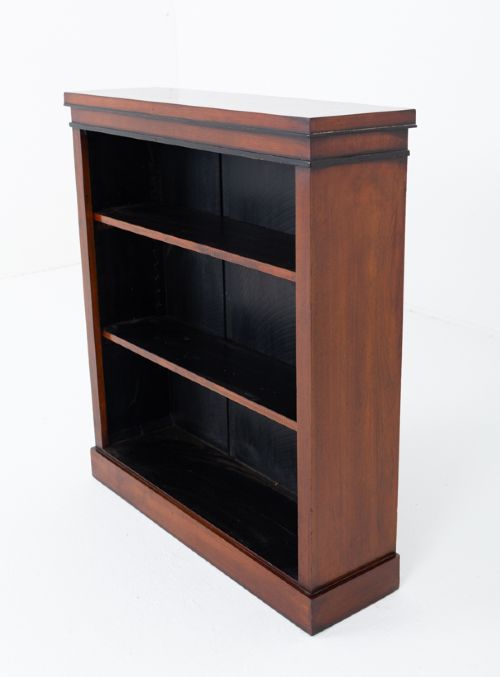
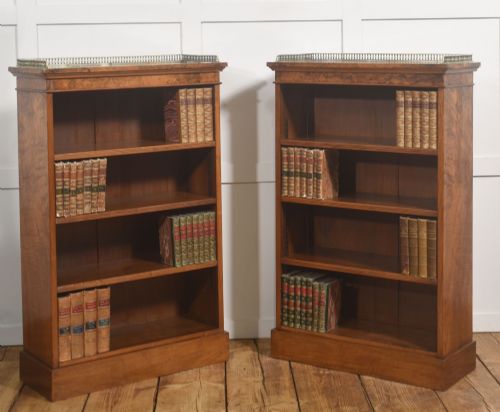
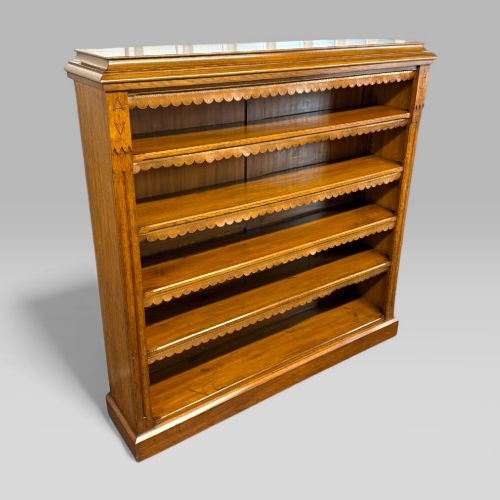
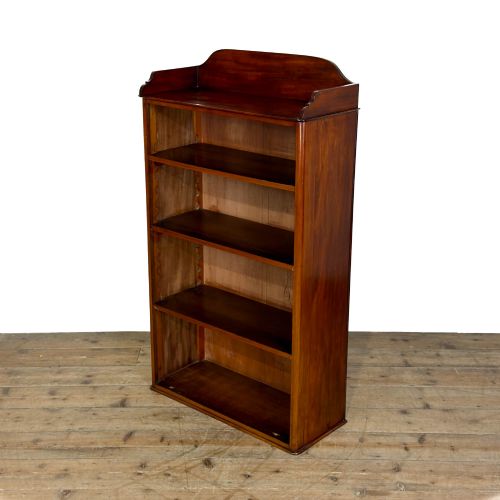
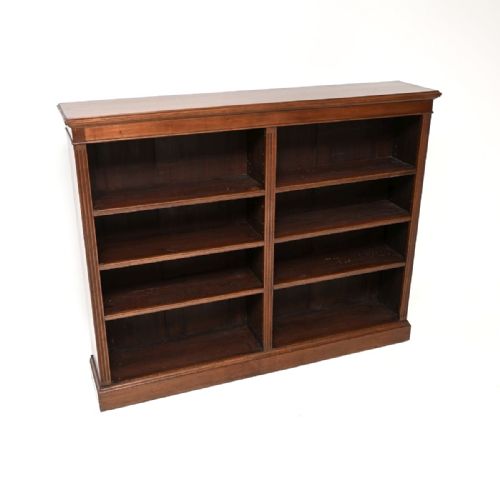
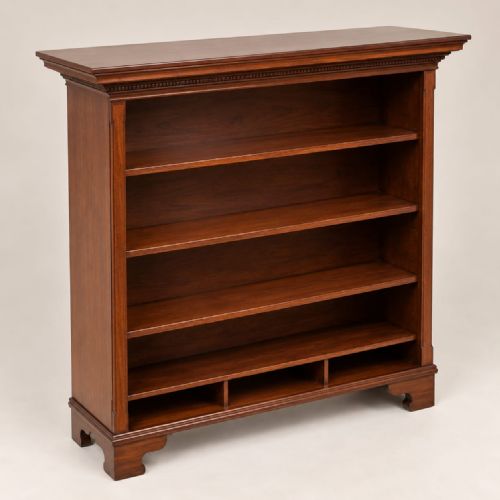
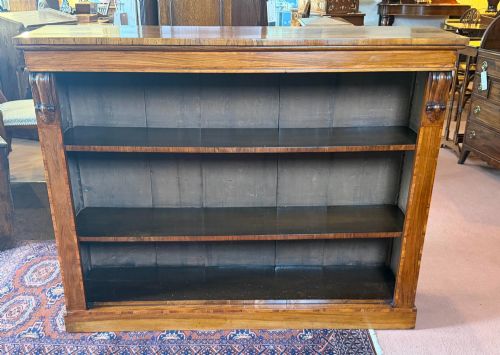
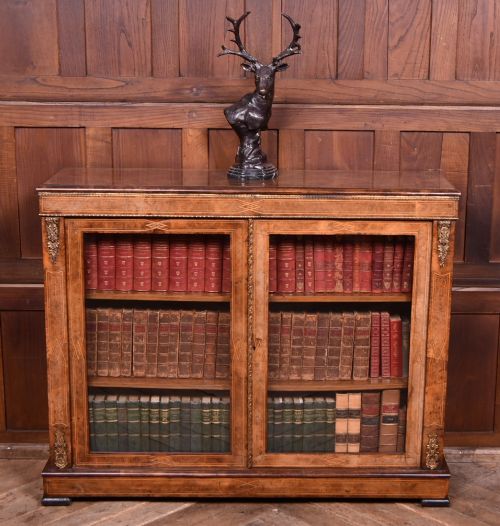
These Victorian low book cabinet examples offer accessible shelving for smaller rooms, combining compact footprints with rich timber grains.
Victorian Low Book Cabinet
A victorian low book cabinet provides practical display and storage space at a height that keeps ceilings feeling open and rooms uncluttered. The selection here leans heavily towards open formats and glazed cabinets dating from the nineteenth century, including specific styles like Gothic Revival and William IV.
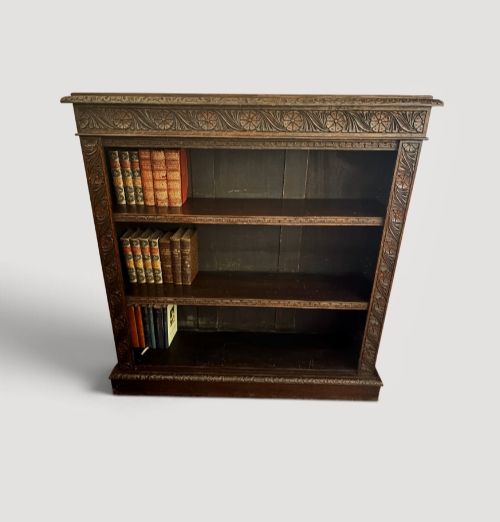
Most pieces encountered in this inventory span mahogany, walnut, and rosewood, often featuring adjustable shelving or glass doors to protect volumes from dust. Buyers will find variations ranging from straightforward utilitarian mahogany pieces to elaborately carved oak and figured walnut specimens.
How They Were Made
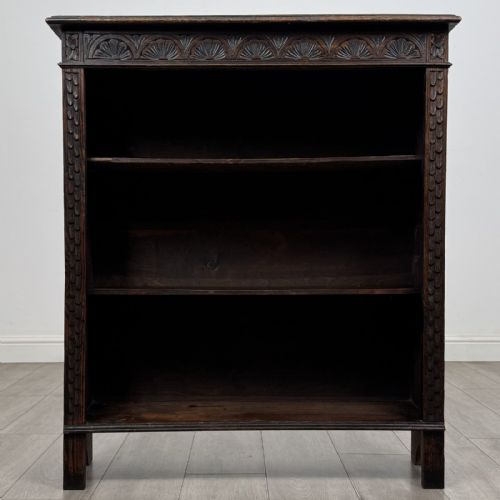
Cabinet makers relied primarily on solid timbers and fine veneers like mahogany, walnut, rosewood, and burr walnut, laid over sturdy secondary woods. Surface enrichment often included brass fittings, glass panels, or castors, whilst specialised workshops incorporated ormolu mounts or intricate carved details such as Green Man motifs.
Construction techniques balanced structural strength with decorative elegance, utilising dovetail joints for drawers and carefully applied veneers to display distinctive wood grain patterns. Many items feature adjustable shelving systems, demonstrating the practical demands placed on nineteenth century library furniture.
Certain Victorian oak cabinets feature carved Green Man motifs keeping a watchful eye over the library shelves.
What Varies in Quality
The distinction between standard examples and superior pieces rests on the choice of timber and the ambition of the carving. Figured walnut, burr veneers, and dense flame mahogany indicate a higher grade of material selection by the cabinet maker.
Execution of decorative elements separates utilitarian items from the finest work. Crisp hand-carving, well-fitted ormolu mounts, and subtle inlay distinguish the exceptional pieces from simpler utilitarian shelving units.
Gillows
The Victorian Low Book Cabinet Glossary
- Open Bookcase
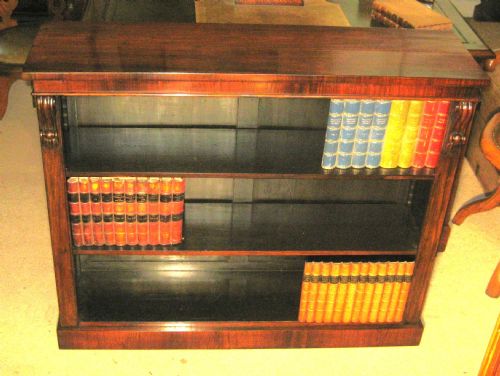
- A shelving unit without doors, designed for easy access to frequently used volumes. These pieces dominated the nineteenth century domestic library.
- Glazed Bookcase
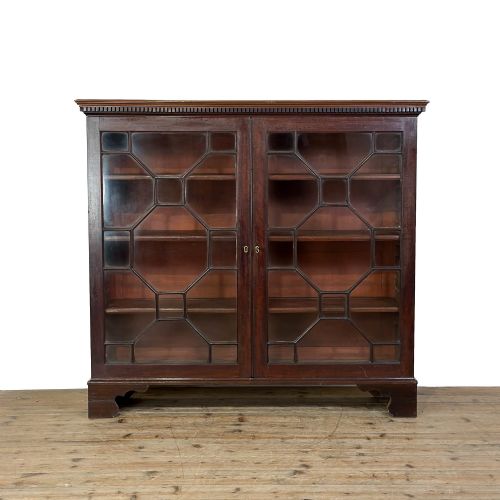
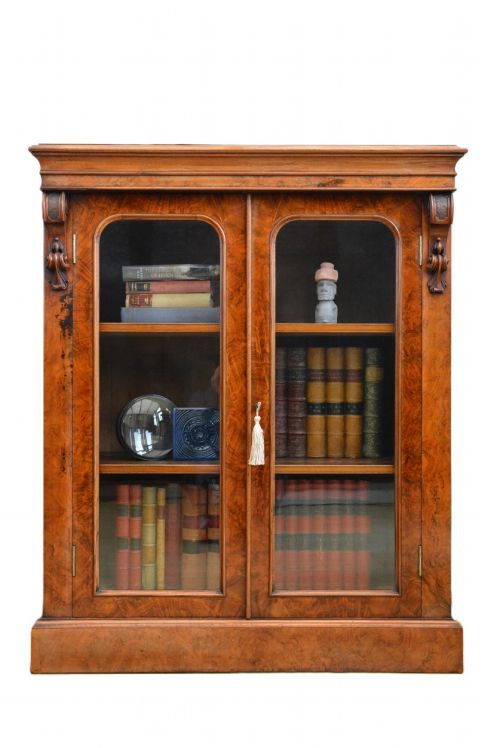
- A cabinet featuring glass panelled doors to protect valuable books from dust and environmental damage. This form often combines display space with enclosed storage.
- Waterfall Bookcase
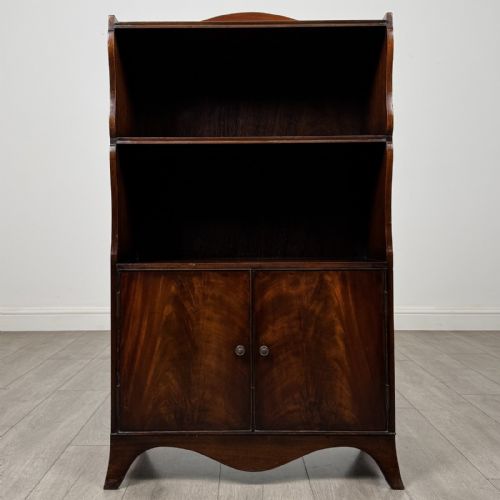
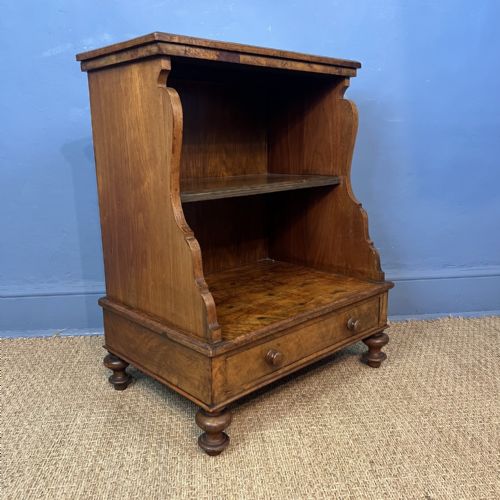
- A stepped set of shelves where each tier is narrower than the one below, creating a cascading silhouette. This style gained popularity during the Regency and Victorian periods.
- Burr Walnut
- A specialised wood cut from the burl growth of a walnut tree, prized for its swirling, highly figured grain patterns. Cabinet makers utilised veneers of this material on prominent surfaces.
- Ormolu
- Gilded bronze mounts applied to furniture for decorative enrichment. These metallic accents appeared on high status nineteenth century cabinets.
Victorian Low Book Cabinet: Frequently Asked Questions
Where should I place a low book cabinet?
These cabinets suit living rooms, studies, or hallways where tall furniture might overwhelm the space. Their reduced height allows the top surface to function as a display area for lamps or decorative objects.
Positioning them away from direct sunlight protects vulnerable timber veneers and book bindings from fading over time.
How do I adjust the shelves?
Many nineteenth century bookcases feature traditional wooden ratchets, brass studs, or movable shelf supports fitted into the interior sides. Adjusting them requires lifting the shelf slightly to release it from the support mechanism.
Take care when shifting older timbers to avoid damaging the interior veneered surfaces or shelf edges.
Can these cabinets hold heavy books?
Solid mahogany and oak versions possess sturdy construction capable of supporting substantial volumes. Adjustable shelf supports distribute weight evenly across the internal framework.
Inspect the shelf thickness and support system before loading larger reference folios onto a single tier.
How do I care for the wood surface?
Maintain the finish by dusting regularly with a soft, dry cloth and applying traditional beeswax sparingly to nourish the timber. Avoid modern silicone sprays that can build up and damage antique polish.
Keep the cabinet in a room with stable humidity to prevent the wood or veneers from splitting.