
Victorian Lounge Couch
A victorian lounge couch brings nineteenth-century drawing-room ease to a modern interior, offering a singular place for reclining.
Victorian Lounge Couch
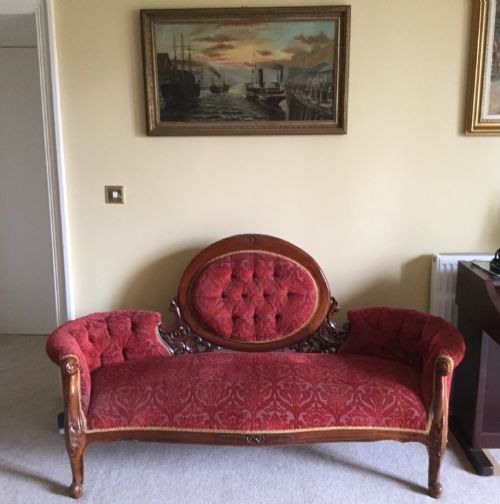
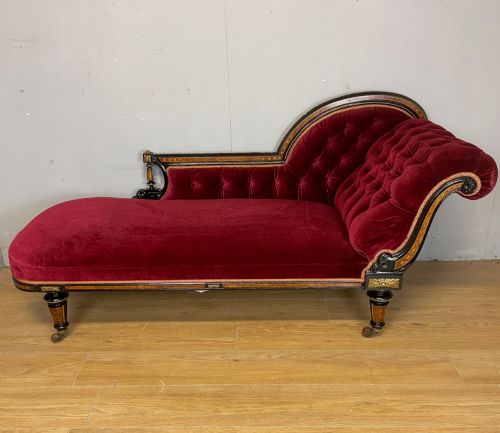
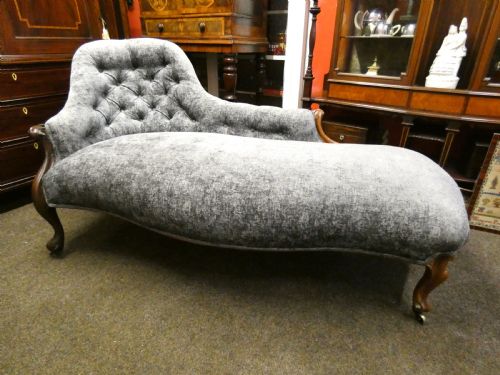
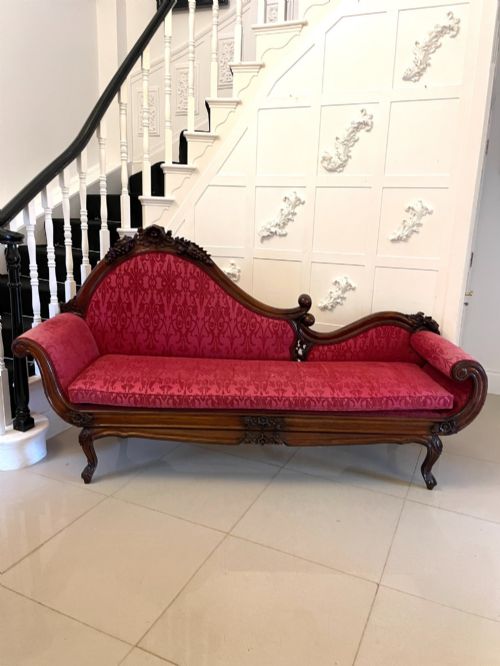
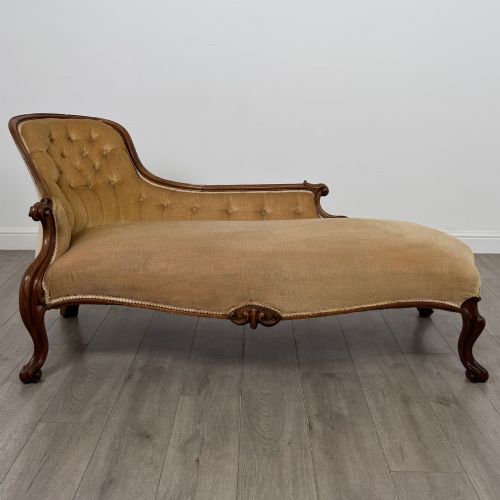
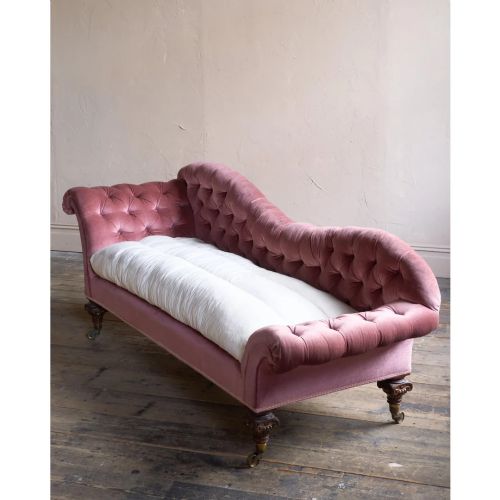
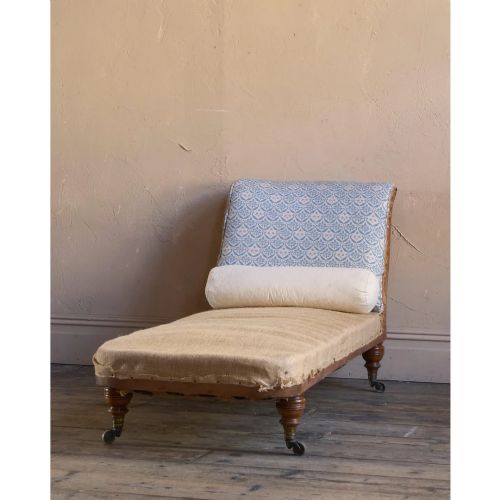
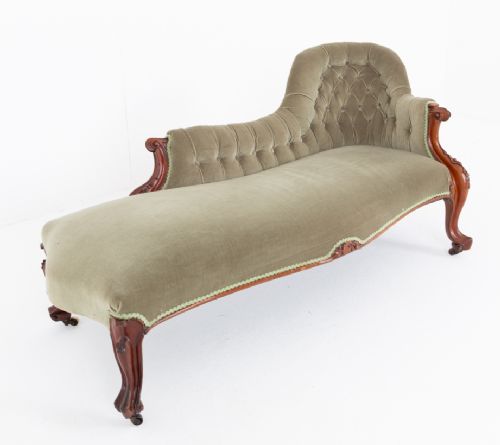
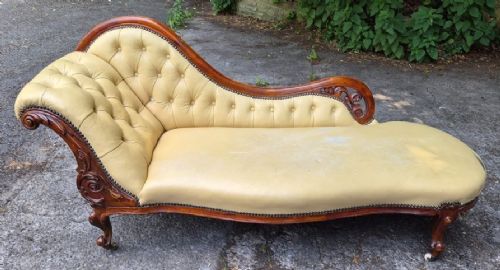
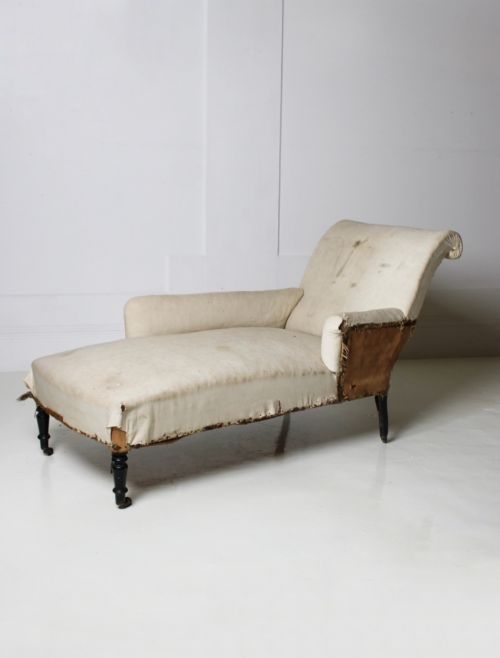
A victorian lounge couch encompasses a variety of long seats designed for reclining, including chaise longues, daybeds, and double-ended sofas. The most common form on this page is the nineteenth-century chaise longue, featuring an asymmetric backrest and a single raised end for resting the head.
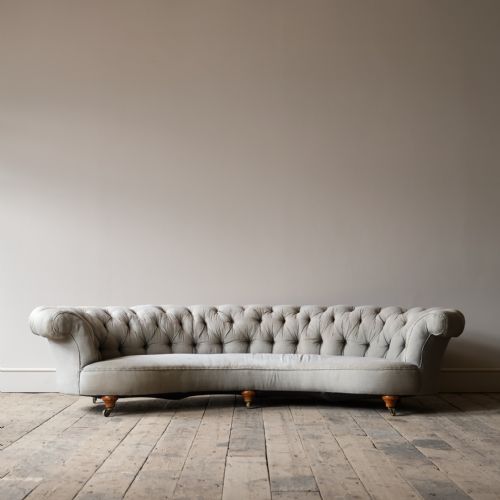
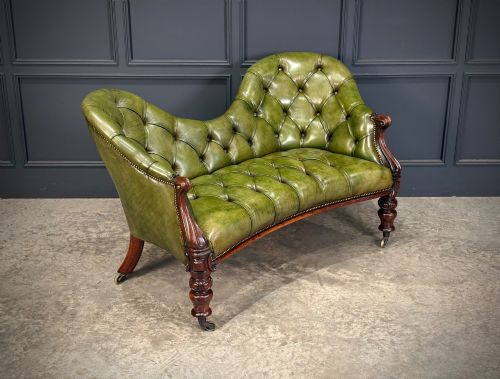
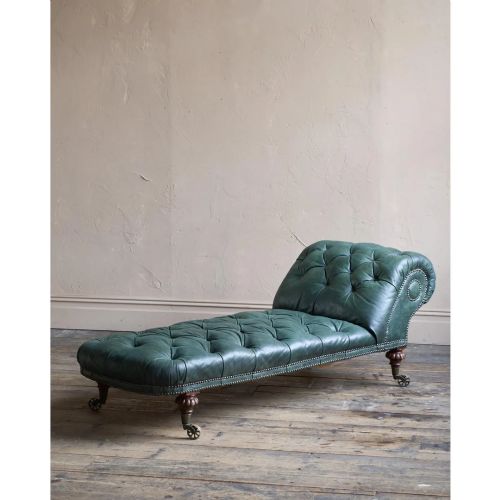
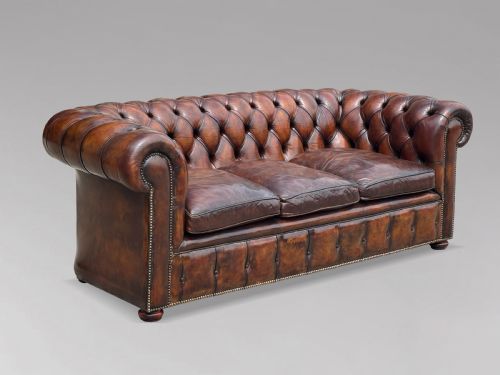
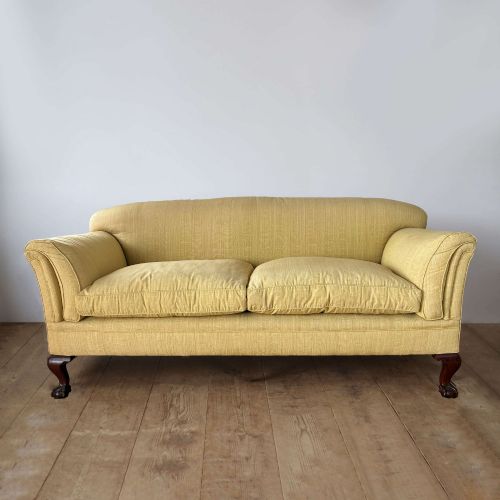
Makers and workshops of the period also produced large scroll-arm sofas, buttoned leather Chesterfields, and kidney-shaped daybeds. These pieces date principally from the Victorian era, alongside related examples from the William IV, Edwardian, and Napoleon III periods.
Origins span formal metropolitan workshops and large country houses, leading to diversity in proportions and decorative carving. Upholstery varies widely, from contemporary brocade and damask replacements to original worn leather.
Materials and construction
Frames are constructed from dense timbers such as mahogany, walnut, rosewood, and ebonised wood, often shaped with carved scroll arms, spoon-backs, or Ionic column legs. Workshops utilised brass castors on turned wooden legs to allow movement across heavy carpets.
Upholstery methods relied on sprung seat bases padded with deep hair or fibre stuffing, covered in fabrics including velvet, leather, and brocade. Decorative details range from ormolu mounts and inlaid walnut panels to traditional deep buttoning.
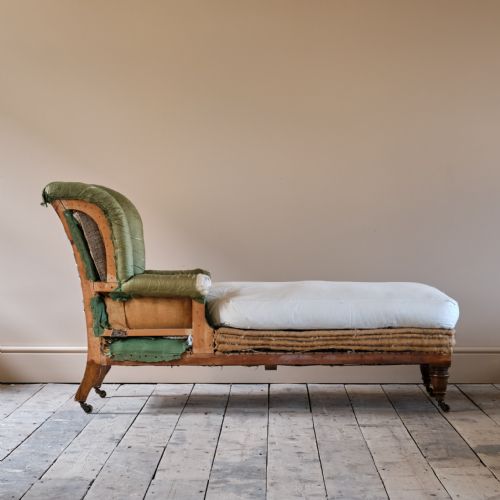
Several pieces include original brass castors designed to protect heavy nineteenth-century parlour carpets from stubborn indentation.
Distinguishing the tier of pieces
Quality rests upon the crispness of the timber framing and the integrity of the structural joinery hidden beneath the upholstery. Finer examples display deeply carved rosewood or mahogany frames with balanced proportions, rather than plain structural timber.
Attribution to notable makers such as Howard and Sons or Holland and Sons separates standard production work from exceptional craftsmanship. The distinction lies in the weight of the frame, the precision of the turning, and the survival of secondary decorative elements like ormolu and inlaid panels.
Howard and Sons·H. Goodall and Sons·Holland and Sons
The Victorian Lounge Couch Glossary
- Chaise Longue
- A long reclining chair with a backrest at one end, designed for resting in a semi-recumbent posture.
- Chesterfield
- A deep-buttoned sofa traditionally upholstered in leather, characterised by arms and back of the same height.
- Daybed
- A piece of furniture serving as both a sofa and a bed, intended for daytime resting and lounging.
- Ormolu
- Gilded bronze ornamentation applied to furniture frames for decorative contrast against dark woods.
- Spoon-Back
- A padded chair or sofa back hollowed out in the shape of a spoon to fit the human spine.
Victorian Lounge Couch: Frequently Asked Questions
How were these couches used?
Nineteenth-century households utilised these long seats primarily in drawing rooms, boudoirs, and libraries for daytime resting without retiring to a bedroom.
They allowed ladies wearing structured garments to recline comfortably in a semi-seated position.
Where should I place one?
A chaise longue fits well perpendicular to a fireplace or floating in the centre of a large drawing room.
Because the backrest is typically asymmetric, positioning requires attention to which direction the sleeper faces.
How do I identify a Victorian piece?
Look for dense timbers like rosewood and walnut, alongside characteristic motifs such as spoon-backs, scroll arms, and deep buttoning.
Proportions tend to be heavier and more ornate than earlier Regency designs.
Are the fabrics original?
Most pieces have undergone re-upholstery at least once during their lifespan to maintain usability.
Surviving leather or fabric is uncommon, though older replacements in brocade, damask, or velvet are frequently found.