




Victorian Library Dining Chairs
Victorian library dining chairs are sturdy seating forms shaped by nineteenth-century utility, built to serve heavy institutional or domestic use with solid timber frames.
Victorian Library Dining Chairs
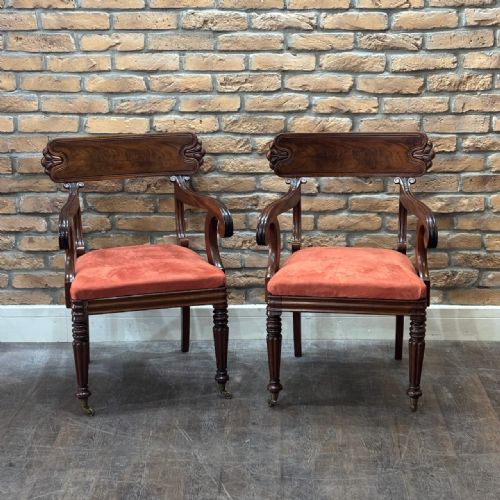
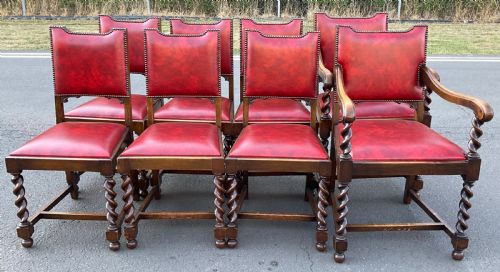
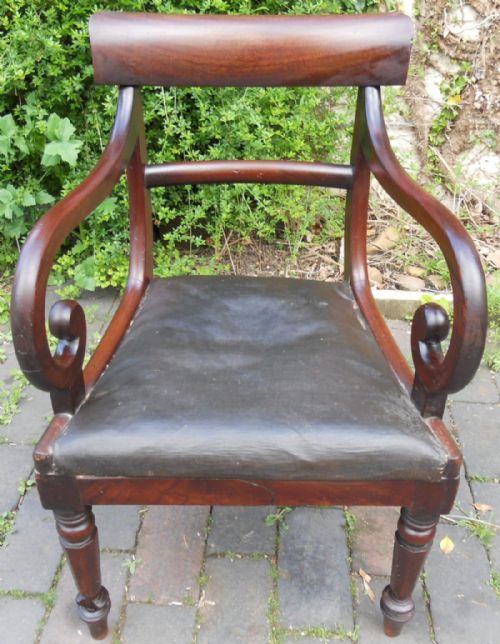
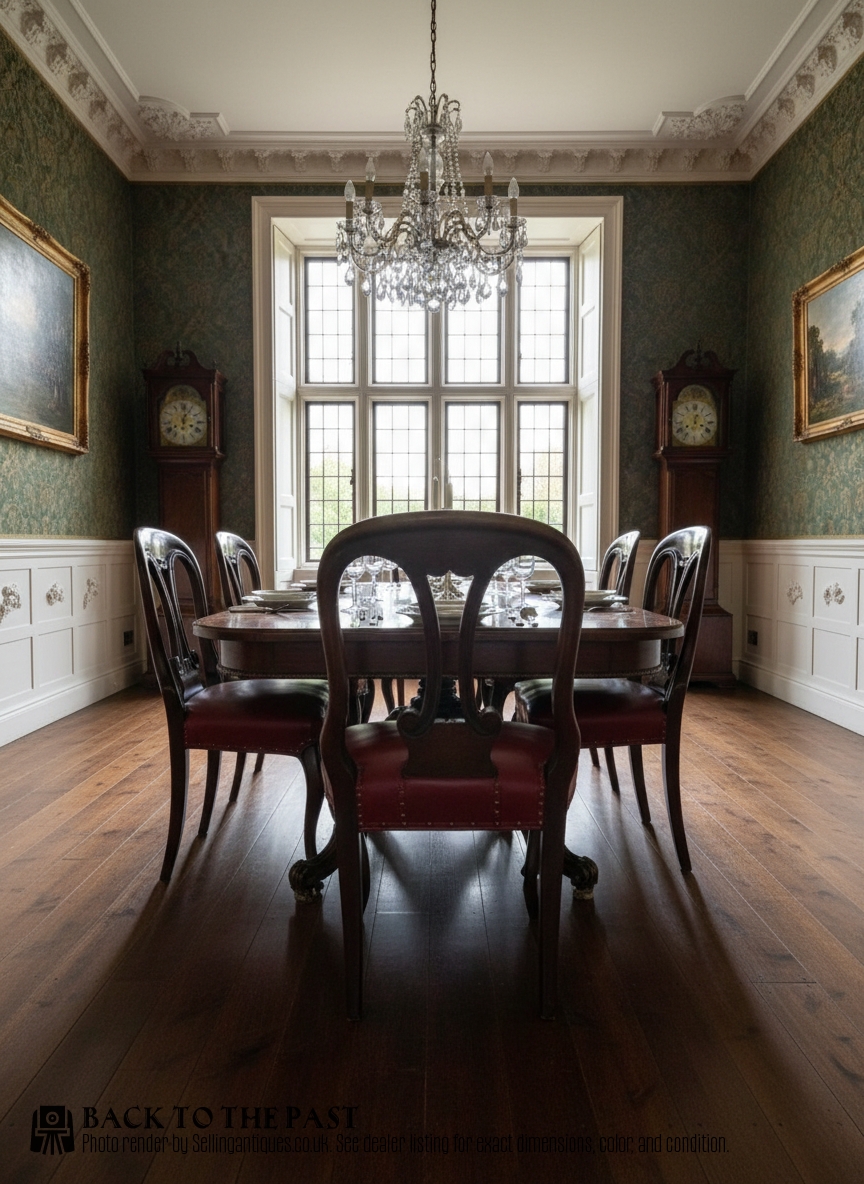
Victorian library dining chairs combine the heavy frame construction of a library seat with the proportions of a dining chair, appearing across this selection primarily as mahogany or oak armchairs. These pieces emerge from the nineteenth century, including specific decades such as eighteen-fifty, eighteen-sixty, eighteen-seventy, eighteen-eighty, alongside later revival iterations into the twentieth century.
The form spans straightforward desk chairs, carvers, and larger suites of chairs originally destined for reading rooms or private dining spaces. Makers and designers of the period adapted Gothic Revival, Regency, and Jacobean Revival motifs to suit these functional timber frames, resulting in carved woodwork and cross-frame supports.
What varies in quality
The standard of carving across the oak and mahogany frames dictates the visual weight and refinement of each suite. Deeply rendered woodwork on the arms and crest rails separates standard workshop production from finely executed examples.
The integrity of the timber joints and the selection of primary materials, such as well-figured mahogany or quarter-sawn oak, determine the overall durability and presence of the chair.
The listings on this site show mahogany and oak as the predominant timbers used for Victorian library dining chairs.
Charles Bevan·Holland & Son
The Victorian Library Dining Chairs Glossary
- Carver chair
- An armchair designed to match a set of smaller dining chairs, traditionally placed at the head of a table or used at a desk. These pieces feature substantial armrests integrated into the main frame.
- Gothic Revival
- A nineteenth-century design style that revives medieval architectural motifs, including pointed arches and heavy tracery carved into oak and mahogany timber. This aesthetic appears frequently on library seating.
- Cross-frame
- A structural support configuration where wooden members intersect beneath the seat or between the legs to increase load-bearing strength. This method appears in twentieth-century oak examples within the listings.
- Aesthetic Period
- A late nineteenth-century movement emphasising visual qualities and reform in design over historical revivalism. Pieces from this era often display cleaner lines alongside traditional timber construction.
Victorian Library Dining Chairs: Frequently Asked Questions
Are these chairs comfortable for daily dining?
Most of these chairs were built with supportive timber backs and firm upholstered pads to sustain long hours of reading or dining. Their upright postures reflect nineteenth-century standards of seating ergonomics.
Adding a matching set to a modern dining table requires checking the seat height and arm clearance against your table apron. Many examples were designed for institutional library use, making them robust enough for regular daily sitting.
How do I care for the leather upholstery?
Original or period-replacement leather benefits from gentle cleaning with a damp cloth and occasional application of appropriate leather dressings to prevent cracking. Avoiding direct sunlight helps preserve the natural tone of the hide.
Checking the brass elements around the upholstery edges ensures that fixings remain secure without damaging the surrounding leather. Regular maintenance keeps the hide supple across frequent use.
Can I mix armchairs with standard dining chairs?
Mixing carver armchairs with standard side chairs reflects historical dining room arrangements where the head seats featured arms. Many listings occur in matched sets or pairs suited to this layout.
Matching timber species, such as mahogany or oak, helps unify a mixed seating arrangement around a single table. Scale and period style also guide how well different pieces sit together.
How do I distinguish revival styles from original pieces?
Revival pieces from the early twentieth century often utilise oak with specific construction methods like cross-frames while retaining earlier Jacobean or Gothic motifs. Examining the timber patination and internal joints helps reveal the manufacturing period.
Original nineteenth-century examples display wear patterns and joinery techniques consistent with earlier Victorian workshop practices. Comparing the hardware and timber density clarifies the age of the piece.