




Victorian Leather Dressing Box
When you search for a victorian leather dressing box, you are looking at portable luxury designed for nineteenth-century travel and daily toilet.
Victorian Leather Dressing Box
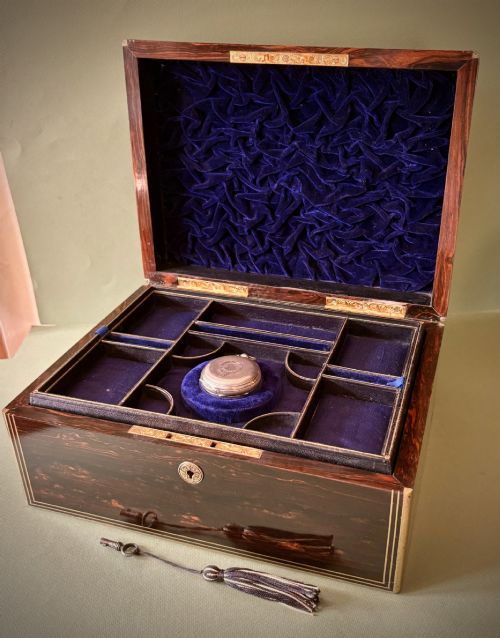
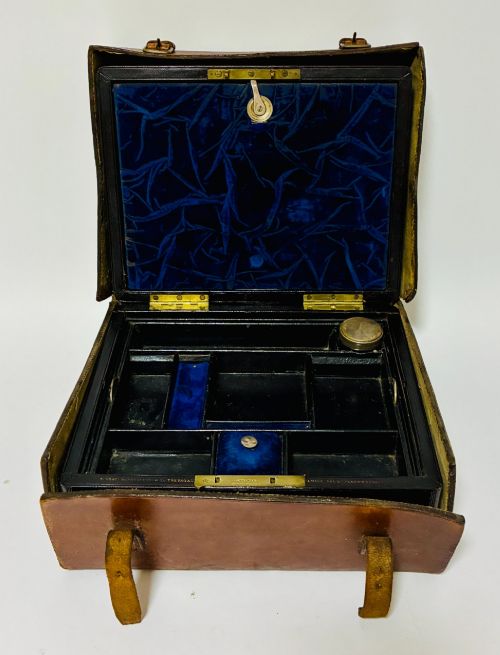
A victorian leather dressing box serves as a portable container for personal grooming items, jewellery, and scent bottles. These pieces appear in forms ranging from fully fitted cases and travel vanity sets to embossed scent bottle caskets.
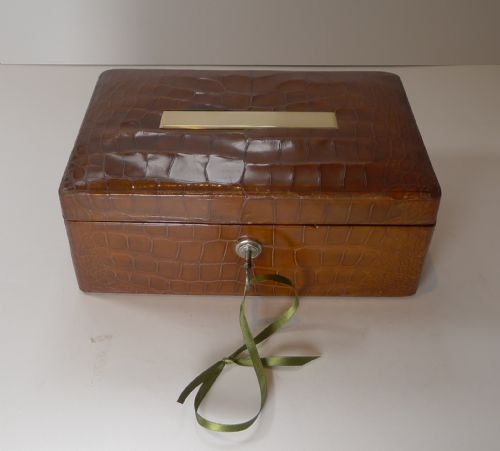
The pieces on this page span the Victorian and Edwardian periods, stretching from the mid-nineteenth century through to the early twentieth century. Alongside standard leather finishes, variants utilising crocodile and alligator skin or flame mahogany feature in the selection.
Beyond traditional dressing boxes, the category encompasses related travel containers such as top hat cases and jewellery boxes. Most examples retain their internal compartments, glass bottles, or original outer protective boxes.
Assessing Quality in Dressing Boxes
Quality reveals itself in the completeness of the internal fittings and the survival of original glass bottles and silver items. Boxes that retain their matching scent bottles, original silk plush linings, and protective outer cases stand at the upper end of the scale.
The grade of the exterior leather and the precision of the brass work further distinguish the tiers. Finer examples display meticulous embossing, robust lock mechanisms, and exotic hide coverings such as crocodile skin rather than standard split leather.
Listings feature periods from the nineteenth century alongside Edwardian pieces, utilising materials including rosewood, brass, glass, and velvet.
F. West
The Victorian Leather Dressing Box Glossary
- Dressing Case
- A fitted box designed to hold grooming implements, brushes, and cosmetic bottles for travel. These cases often include lifting trays and secret compartments.
- Scent Bottle Casket
- A specialised box built specifically to house one or more glass perfume bottles. They frequently feature dome tops and velvet or silk interiors.
- Silver Gilt
- Silver that has been coated with a thin layer of gold on its surface. This technique prevents tarnishing and adds a rich, warm finish to internal vanity items.
- Silk Plush
- A heavy woven fabric with a thick, soft pile used to line the interior trays of fine boxes. It cushions delicate glass and metal accessories.
- Cut Glass
- Glass shaped and patterned by cutting facets into the surface. These heavy bottles sparkle when filled and catch the light inside the box.
Victorian Leather Dressing Box: Frequently Asked Questions
What fits inside a victorian leather dressing box?
These boxes typically hold a combination of glass scent bottles, small jars, grooming tools, and jewellery compartments. Many include lifting trays to maximise storage space for personal effects.
Fitted interiors ensure that every item has its precise place, preventing movement and breakage during nineteenth-century carriage or rail travel.
How do I care for antique leather?
Keep leather boxes away from direct sunlight and excessive heat to prevent the hide from drying out and cracking. Gentle dusting with a dry cloth is usually sufficient for maintenance.
Avoid applying modern polishes or heavy waxes unless specifically formulated for antique leather, as these can alter the original finish and darken embossed details.
Were these boxes meant for travel?
Yes, they were essential luggage for wealthy Victorians moving between townhouses and country estates. Their sturdy construction and secure brass locks protected valuable personal items on the move.
Over time, many transitioned into static dressing table accessories as travel habits changed in the early twentieth century.
How can I tell the period of a box?
Dating relies on material choices, lock types, and the style of the internal glass and silver components. Earlier Victorian examples often feature mahogany and heavier brass work, while later pieces incorporate celluloid or crocodile skin.
Accompanying hallmarks on silver fittings and original paperwork or maker stamps inside the lid also help establish an exact decade.