






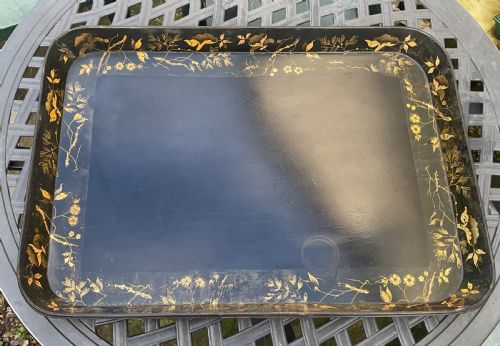


Victorian Lacquer Tray
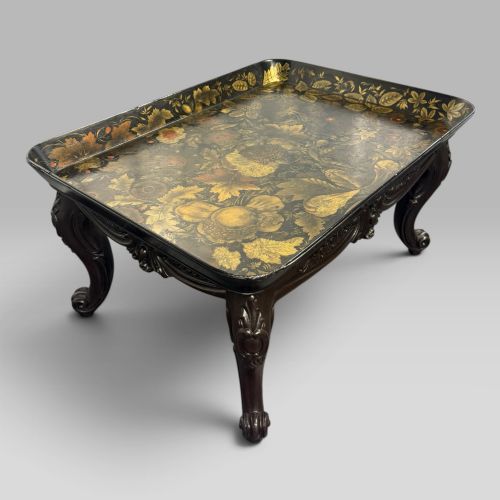
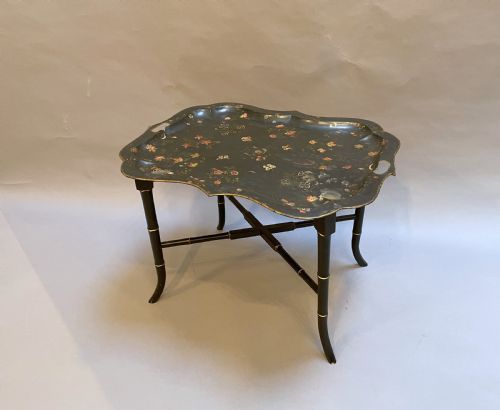
A victorian lacquer tray brings rich painted scenes and glossy black surfaces to a room, serving drinks or sitting on a folding stand as a low table.
Victorian Lacquer Tray
When searching for a victorian lacquer tray, collectors encounter a range of serving items, card baskets, and desk accessories designed to display elaborate decoration. The selection includes flat serving pieces as well as larger rectangular and kidney-shaped examples mounted onto later stands to function as low tables.
Origins vary between English workshops, Anglo-Indian items, and Japanese export goods, though the core of the market centres on domestic papier-mâché and tôleware production. These pieces often feature raised rims, scalloped edges, or gallery rails designed to secure glassware and correspondence.
How they were made
The primary substrate for these items is papier-mâché, formed from layers of paper pulp or sheets pressed and baked into sturdy, rigid boards before receiving multiple coats of dark lacquer. Artisans also utilised tôleware, which involves painted sheet metal, alongside ebonised wood frames and occasional brass galleries.
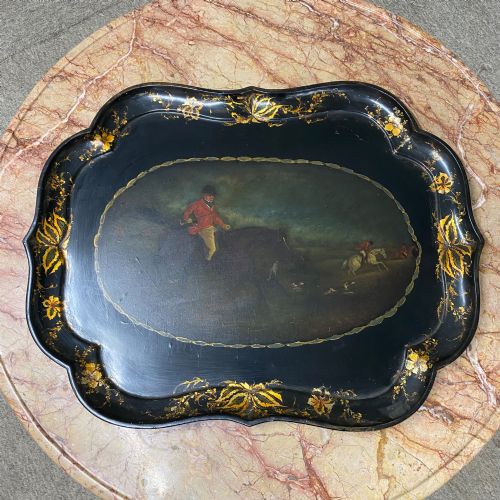
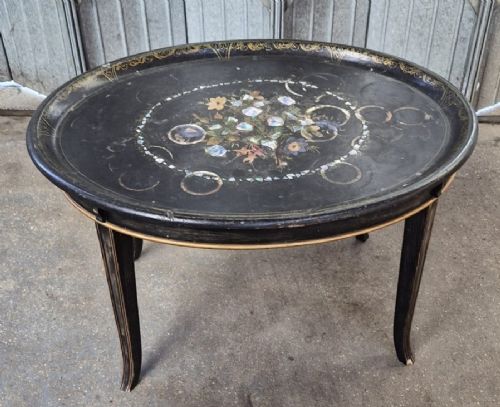
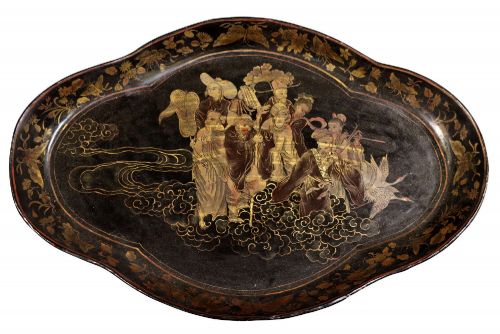
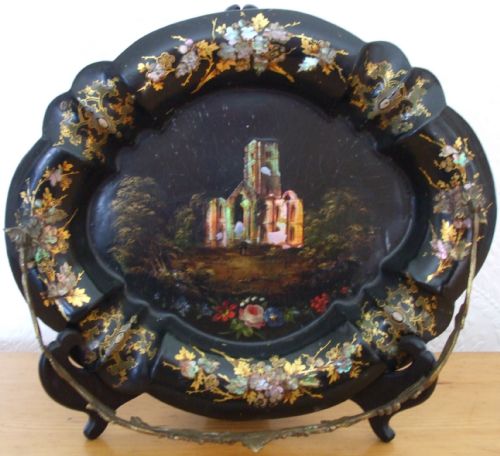
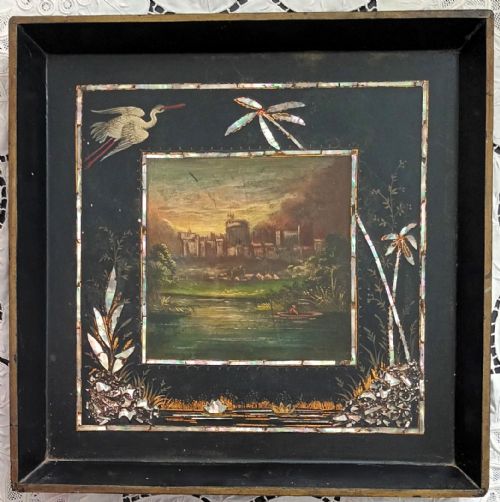
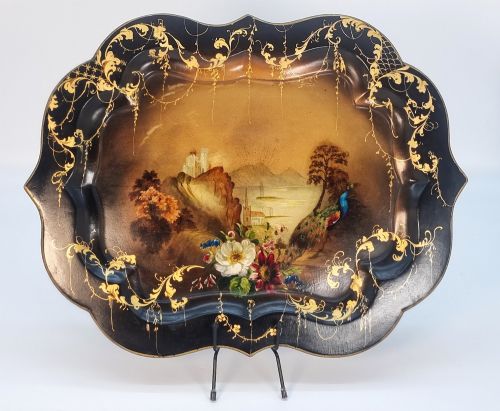
Decoration relied on hand-painted artistry, incorporating gold leaf embellishments, polychrome pigments, and inlaid mother-of-pearl to catch the light. Scenes range from botanical floral arrangements and landscapes to intricate Chinoiserie motifs and hunting episodes.
Victorian Lacquer Tray Retail Price Guide 2026
Typical asking prices for victorian lacquer tray among the pieces listed under this phrase on Sellingantiques today, from the lower quarter to the upper quarter. They describe what is for sale here now, not the wider market.
What varies in quality
The distinction between standard items and superior examples lies in the depth and precision of the hand-painted artistry. Master makers invested greater time in building smooth, multi-layered lacquer grounds and integrating detailed mother-of-pearl inlay rather than relying on simple stencilled patterns.
Proportion and scale dictate the desirability of larger trays, particularly those retaining their original gilding and structural integrity without excessive wear to the painted surface. Pieces that survive with documented signatures or attributable workshop traits command higher regard among collectors.
Jennens and Bettridge
The Victorian Lacquer Tray Glossary
- Papier-mâché
- A composite material made from paper pulp or layered paper mixed with glue, compressed and baked until rigid. It provided a lightweight yet durable base for smooth lacquer finishes.
- Chinoiserie
- European artistic styles reflecting Chinese motifs and decorative landscapes. Artisans rendered these scenes in gold leaf and paint upon dark lacquered surfaces.
- Tôleware
- Painted or enamelled sheet metal items produced for domestic use. These pieces mimic the glossy finish of lacquer on metal trays and boxes.
- Mother-of-pearl
- Iridescent inner shell material sliced thin and inlaid into lacquer surfaces. It catches ambient light to highlight foliage, figures, and architectural details.
- Gallery tray
- A serving tray featuring a raised metal or wooden rim around the perimeter. This edge prevents items from sliding off during transport.
Victorian Lacquer Tray: Frequently Asked Questions
How were victorian lacquer trays used?
These items served primarily for carrying tea services, holding correspondence on desks, or presenting visiting cards in grand hallways. Wealthy households utilised them during formal entertainment before placing them on side tables.
Today, many larger examples rest upon custom wooden stands to function as coffee tables or occasional tables in reception rooms. Smaller trays continue their original purpose for serving drinks or organising desk accessories.
What is papier-mâché?
Papier-mâché is a durable composite formed by pressing layers of paper and paste into heavy boards, which are then baked and sanded smooth. This technique allowed makers to create lightweight trays with curved rims and strong structural integrity.
Craftsmen applied dark lacquer and polished the surface repeatedly to achieve a deep, glossy finish. This prepared ground supported intricate hand-painted designs and inlaid mother-of-pearl.
How do I care for lacquer trays?
Keep these pieces away from direct sunlight and damp environments to protect the painted decoration and prevent the lacquer from cracking. Dust them gently with a dry, soft cloth rather than using liquid polishes or chemical cleaners.
If a tray sits on a stand as a table, use coasters beneath glasses to avoid moisture rings on the antique finish. Treat the surface with the same care applied to fine wooden furniture.
Are these trays waterproof?
While the lacquer finish resists light moisture, these pieces are not fully waterproof and prolonged exposure to liquids can damage the surface. Spills should be wiped away promptly with a soft cloth to protect the underlying material.
Original nineteenth-century pieces require careful handling rather than heavy-duty kitchen use. They function best for serving dry items, bottled drinks, or holding stationery.