





Victorian Kettle Stand
A victorian kettle stand brings warmth to a room, holding heated water for tea through metalwork or inlaid wood.
Victorian Kettle Stand
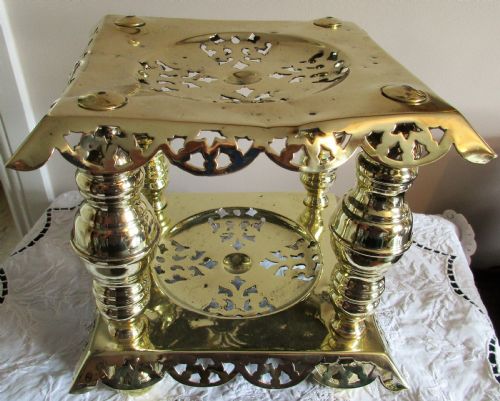
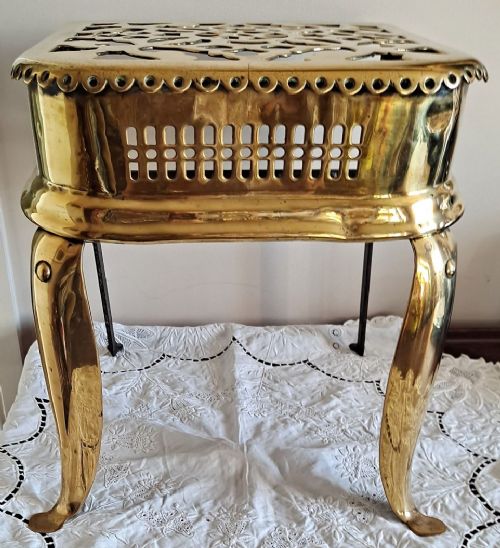
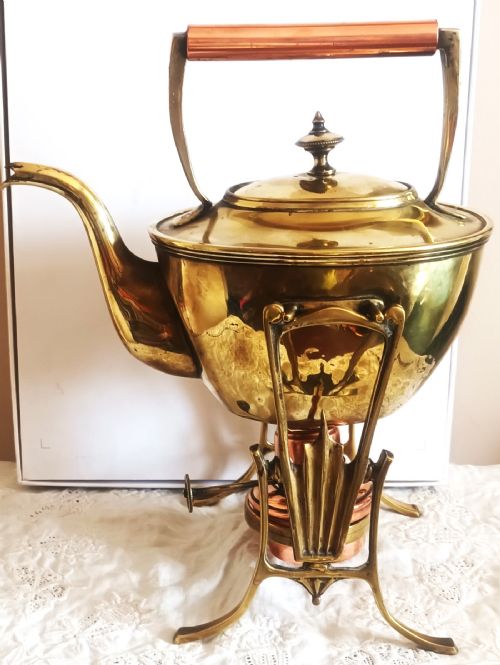
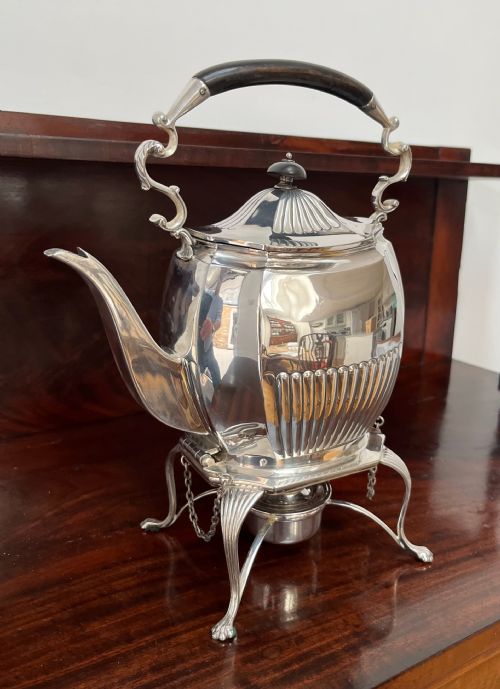
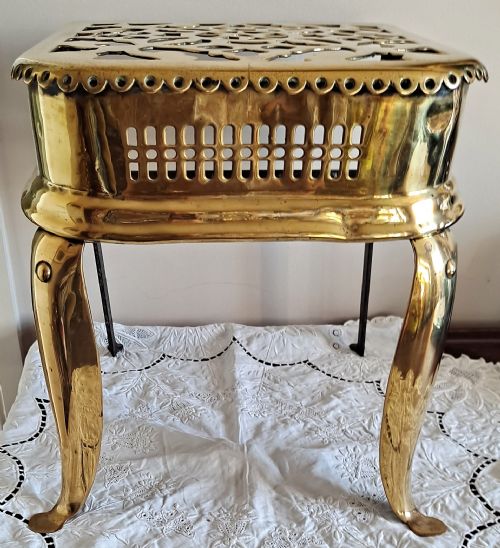
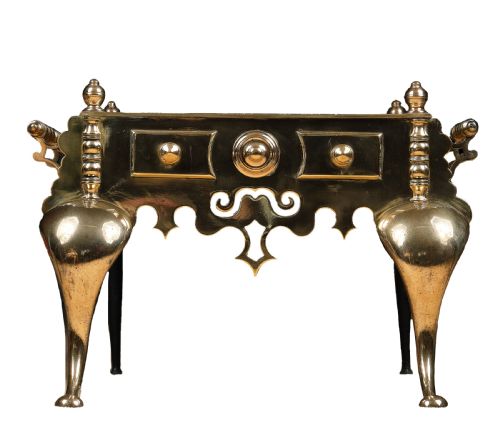
A victorian kettle stand encompasses diverse forms ranging from dedicated brass and copper spirit kettles on matching frames to independent trivets and mahogany tables designed to hold tea vessels near the hearth. You will frequently encounter heavy brass and copper examples from the nineteenth century alongside silver-plated designs and wooden stands influenced by Georgian and Chippendale styles.
The objects serve primarily to keep water warm using an integrated spirit burner or to elevate a heavy kettle safely above the floor or table surface. These pieces reflect domestic tea rituals of the nineteenth and early twentieth centuries, shifting from functional fireside accessories to decorative items placed in reception rooms.
Distinctions in Quality and Execution
The standard of a victorian kettle stand depends on the weight of the metal and the precision of its assembly, where thicker gauge brass and substantial copper display superior durability. Hand-chased detailing and the integrity of joints or hinges separate basic utility items from workshop productions.
In wooden and inlaid examples, the crispness of the carving, the matching of veneer grains, and the refinement of ormolu mounts dictate the execution level. Complete sets retaining their original matching burners and stands hold greater coherence than assembled components.
Victorian Kettle Stand Retail Price Guide 2026
Typical asking prices for victorian kettle stand among the pieces listed under this phrase on Sellingantiques today, from the lower quarter to the upper quarter. They describe what is for sale here now, not the wider market.
Materials recorded across the archive include brass, silver plate, copper, mahogany, steel, bone, iron, and teak.
William Soutter And Sons·Fenton Brothers·Frederik Ellis Tim And Co·Elkington·Mappin Webb And Co
The Victorian Kettle Stand Glossary
- Spirit Kettle
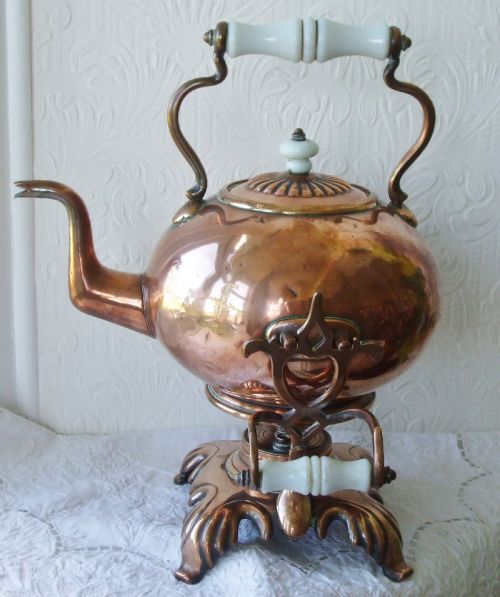
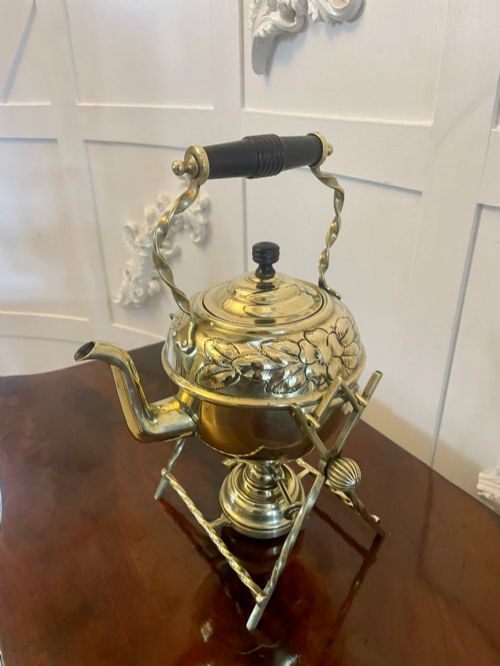
- A tea kettle mounted above a small alcohol burner to maintain water temperature. These assemblies typically lock into a dedicated metal stand.
- Trivet
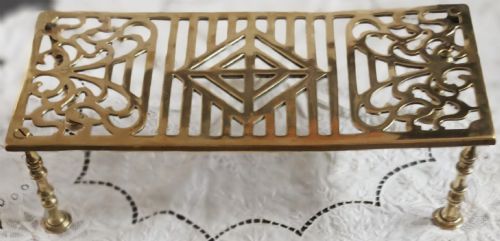
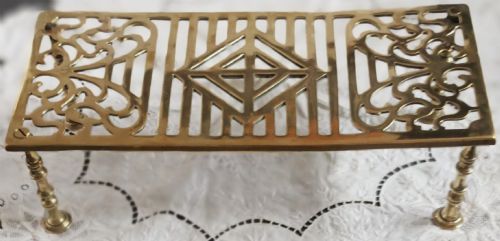
- A three- or four-legged metal stand used to elevate kettles or pots near a fire. They frequently double as independent kettle stands.
- Footman
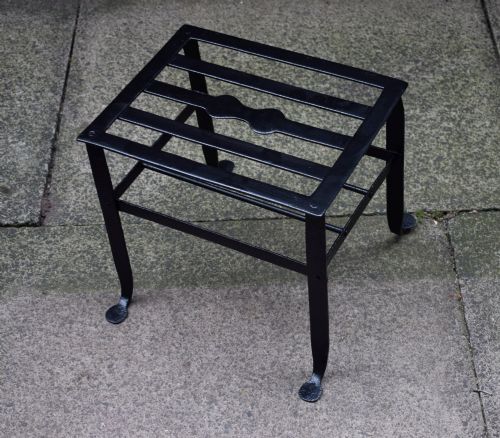
- A large metal hearth stand with a flat top and legs, used for warming plates or holding kettles beside the grate. They are predominantly constructed from brass and steel.
- Treen
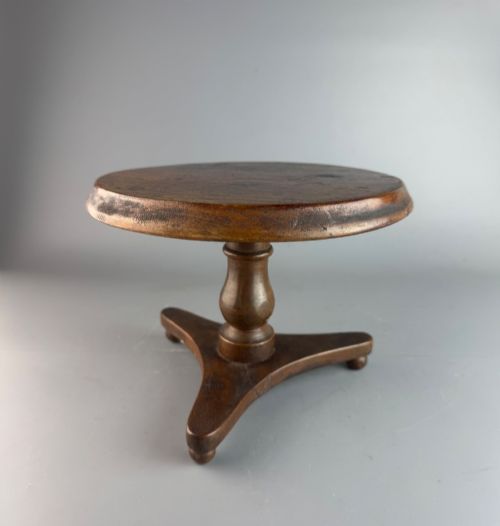
- Small handmade wooden household objects. In this context, items such as candlestands sometimes share similar turned tripod construction.
- Aesthetic Movement
- A late nineteenth-century design style emphasising visual beauty over narrative meaning. Pieces from this movement often display stylised decoration and unorthodox forms.
Victorian Kettle Stand: Frequently Asked Questions
What is a spirit kettle stand used for?
A spirit kettle stand supports a tea vessel over an integrated burner containing methylated spirit or alcohol. This setup kept water hot during long Victorian drawing-room gatherings without requiring a return to the kitchen.
The metal frame securely locks the kettle above the open flame, preventing spills while allowing guests to pour fresh cups at the table. Many stands detach so the trivet portion can function independently near a hearth.
How do I distinguish brass from copper stands?
Brass exhibits a bright golden-yellow metallic hue, whereas copper displays a distinct reddish-pink coloration. Both metals were frequently combined in single pieces, with copper bodies and brass fittings.
Over time, both materials develop patinas that vary depending on exposure to heat and cleaning habits. Unpolished copper tends to darken deeply, while brass acquires a mellow golden-brown tone.
Were these stands only used near fires?
While hearth footmen and heavy trivets sat directly beside open coal fires, spirit kettle stands often stood on dining tables or sideboards. The inclusion of a self-contained burner meant they operated independently of a fireplace.
Mahogany variations were designed specifically as occasional tables for tea service in reception rooms. Their placement depended entirely on whether the kettle relied on a spirit burner or hearth heat.
How can I tell a Victorian stand from an Edwardian one?
Victorian pieces from the mid-to-late nineteenth century often feature heavier cast brass, robust copper construction, and ornate aesthetic or revival styling. They prioritize utilitarian durability alongside decorative presence.
Edwardian examples from around 1900 frequently showcase lighter silver-plated finishes and refined proportions. Makers during this later period adopted cleaner lines while maintaining traditional tea-service forms.