


Victorian Jewellery Piece
A victorian jewellery piece brings the fine scale of full-sized furniture into a small tabletop format, prized for housing trinkets and rings.
Victorian Jewellery Piece
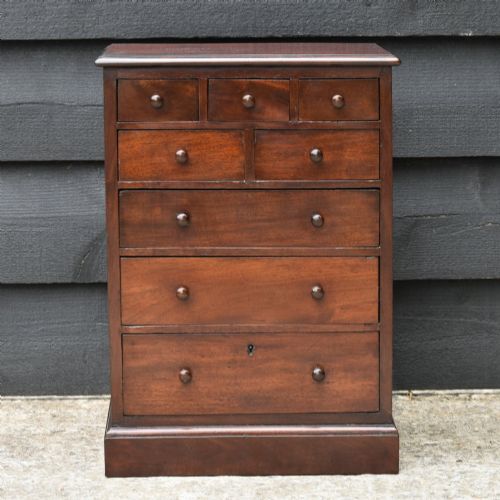
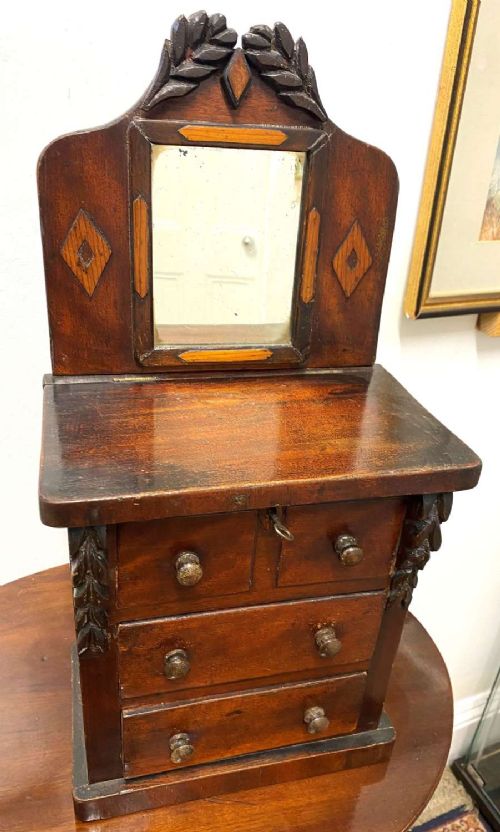
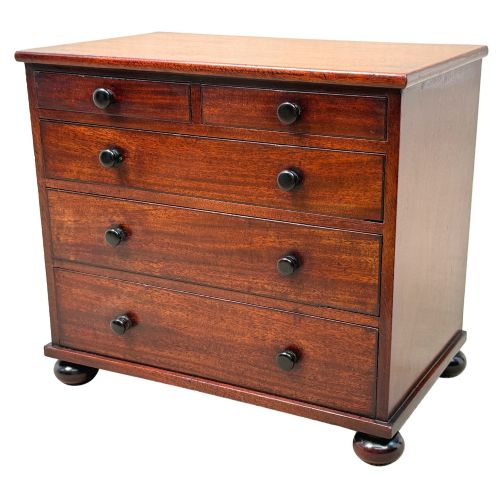
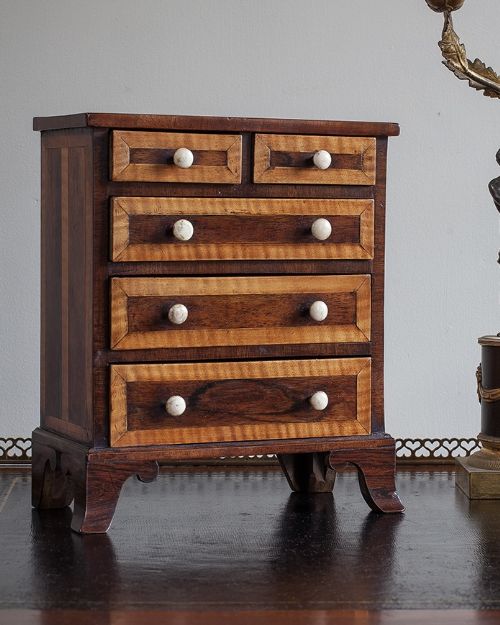
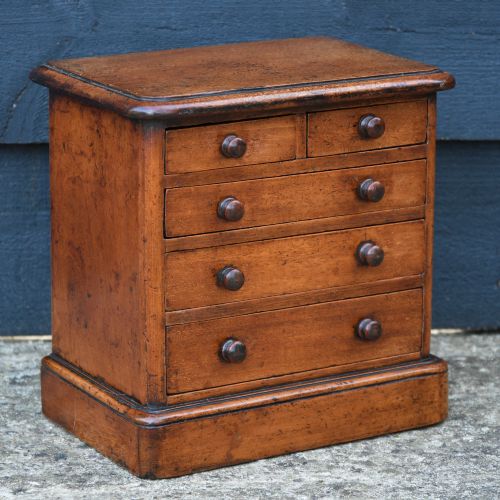
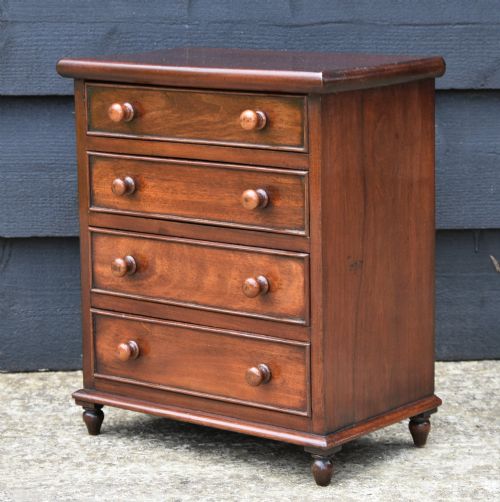
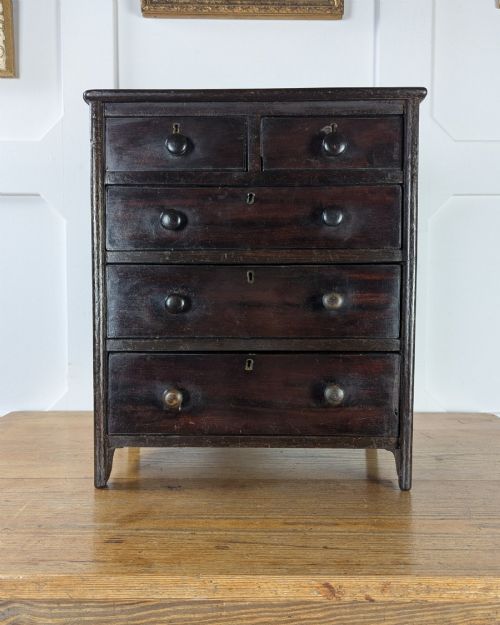
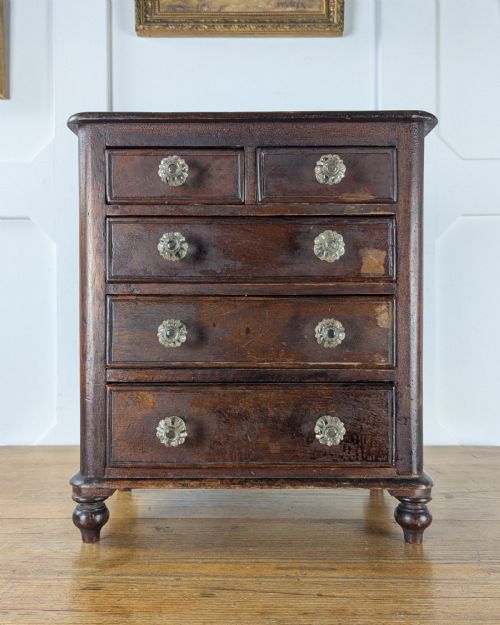
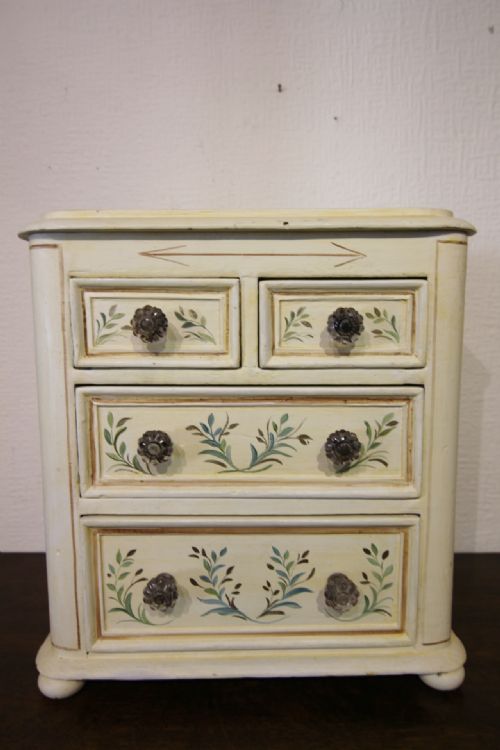
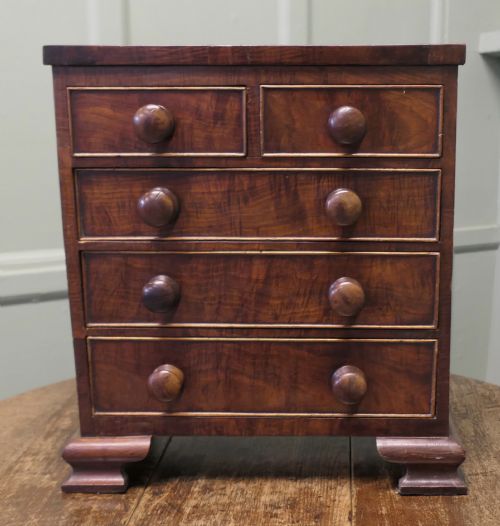
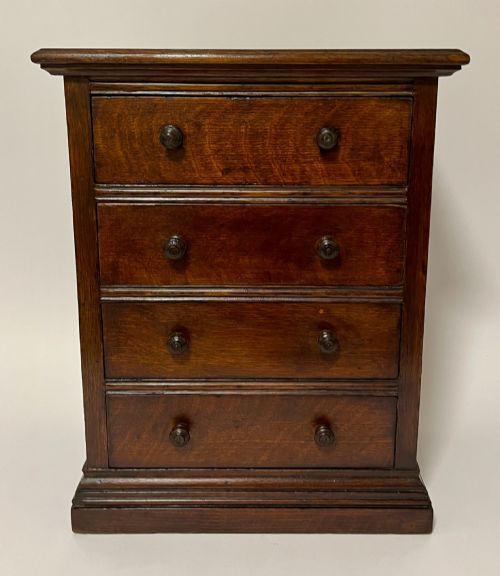
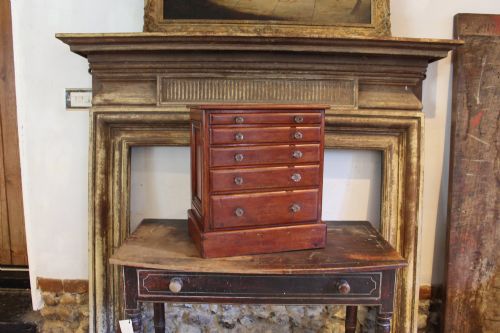
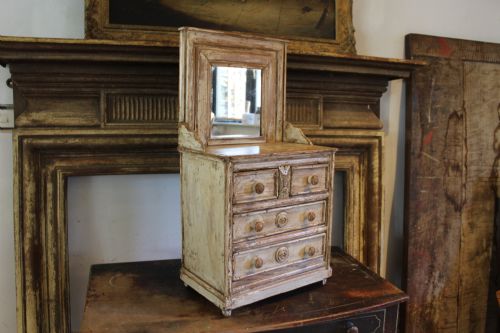
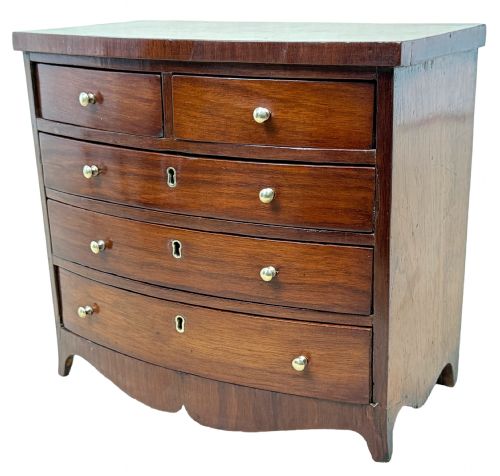
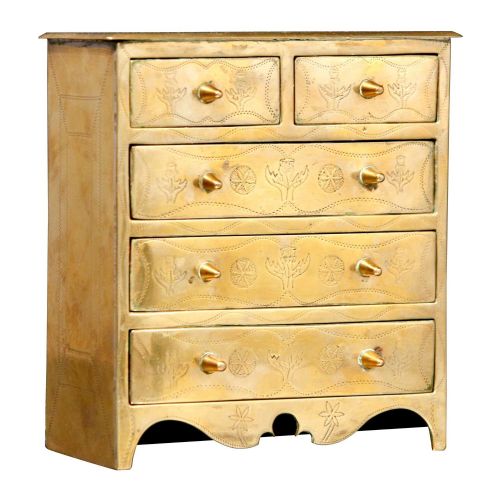
A victorian jewellery piece on this page typically takes the form of a miniature chest of drawers or apprentice piece, scaled down for tabletop use. These small items served various purposes, from holding precious rings and bracelets to acting as display items or cabinetmaker test pieces.
Most examples date from the nineteenth century, built with multiple small drawers, secret compartments, or bowfront designs. Alongside these miniature chests, occasional items such as bracelets with enamelled clasps appear in the selection.
Materials and construction
Cabinetmakers constructed these small chests using timbers such as mahogany, walnut, oak, and pitch pine, often matching the fashionable cabinet woods of the period. Details like turned feet, mother-of-pearl inlay, and brass engraved thistles added decorative refinement to the small scale.
Surfaces received hand finishes that developed patinas over decades, while internal compartments relied on traditional joinery methods scaled down for miniature drawers and secret hiding places.
Victorian Jewellery Piece Retail Price Guide 2026
Typical asking prices for victorian jewellery piece among the pieces listed under this phrase on Sellingantiques today, from the lower quarter to the upper quarter. They describe what is for sale here now, not the wider market.
Judging the range
Quality rests upon the precision of the miniature scale and the selection of figured timbers like burr walnut or amboyna. Finer pieces demonstrate careful attention to drawer linings, tight joints, and proportion, rather than simple utility.
The Victorian Jewellery Piece Glossary
- Apprentice piece
- A small-scale item created by a trainee cabinetmaker to demonstrate skill before entering a trade guild. These pieces mirror full-size furniture construction precisely.
- Bowfront
- A curved cabinet front that swells outward in the centre, frequently seen on miniature chests from the nineteenth century. This shape required advanced woodworking precision.
- Patina
- The surface sheen and deep colour developed by aged wood through handling, waxing, and exposure to light over many years. It indicates authentic age.
- Specimen case
- A small cabinet or chest fitted with multiple shallow drawers for storing natural history samples, medals, or small valuables. They share dimensions with tabletop chests.
- Secret drawer
- A hidden compartment built into the framing behind standard drawers or beneath a top surface, designed for securing small jewellery items.
Victorian Jewellery Piece: Frequently Asked Questions
What is a miniature chest of drawers?
A miniature chest of drawers is a small-scale wooden cabinet built with working drawers, matching the style of larger furniture. They sat upon tables or desks to hold small items.
Cabinetmakers made them either as apprentice pieces to test joinery skills or as decorative furnishings for Victorian parlours and bedrooms.
How were apprentice pieces used?
Apprentice pieces served primarily as proof of competence for woodworkers learning their trade. They demonstrated mastery of dovetails, drawers, and turned feet.
Over time, owners repurposed these small chests to store rings, brooches, and other small personal valuables on dressing tables.
What woods appear in these pieces?
Mahogany forms the majority of these small chests, alongside walnut, burr walnut, oak, and pitch pine. Cabinetmakers selected these dense hardwoods for stability at a reduced scale.
Inlays of mother-of-pearl and secondary timbers added contrast and decorative detail to the facades.
How do I identify a Victorian piece?
Victorian pieces display period construction methods, traditional timber selections, and characteristic hardware like turned wooden feet or brass fixtures. Construction relies on hand-cut joints rather than modern fasteners.
Looking at the drawer linings and timber ageing helps distinguish nineteenth-century examples from later reproductions.