



Victorian Iron Back Chair
These Victorian iron back chairs offer rigid internal strength paired with upholstered comfort, providing a durable seat that survives decades of daily use.
Victorian Iron Back Chair
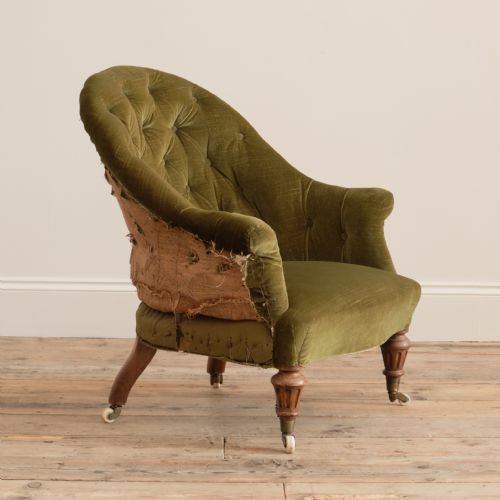
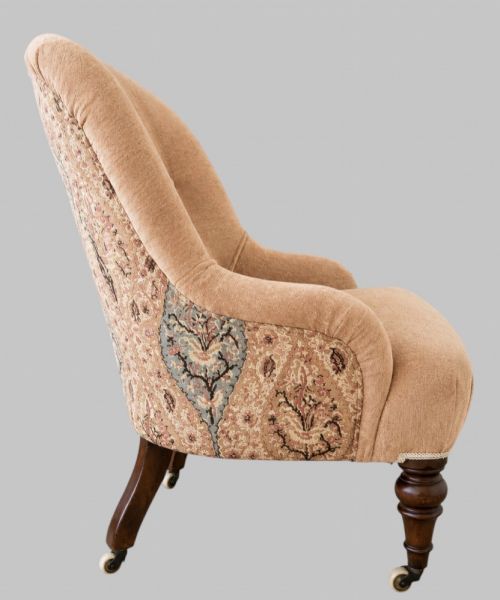
A victorian iron back chair combines a rigid metal internal frame with padded upholstery, creating a sturdy piece designed for enduring parlour or library use. Buyers frequently encounter button back armchairs upholstered in velvet or fabric, often retaining their original sprung seats.
Beyond the standard parlour armchairs, the selection includes occasional chairs, child variants, and nursing chairs tailored for specific domestic roles. These forms date primarily from the nineteenth century, with occasional variants crossing into Regency or early twentieth century production.
Makers utilised iron framing to support deep buttoning and resilient padding without warping over time. This structural choice distinguishes them from purely wooden framed equivalents found during the same eras.
Construction materials and methods
Craftsmen built the core structure using cast iron or wrought iron frames that provided unyielding structural support for the backrest and arms. This metal skeleton was then paired with wooden components and traditional stuffing materials.
Upholstery techniques involved deep buttoning secured through the iron frame, finished with velvet, patterned fabric, or plain cotton coverings. Brass details and painted finishes occasionally accented the exposed framework.
Victorian Iron Back Chair Retail Price Guide 2026
Typical asking prices for victorian iron back chair among the pieces listed under this phrase on Sellingantiques today, from the lower quarter to the upper quarter. They describe what is for sale here now, not the wider market.
Some chairs were built small enough for nurseries yet sturdy enough to outlast several generations of children.
Judging build quality
Superior examples display precise iron casting and robust structural integrity that prevents any twisting in the metal spine. The quality of the original buttoning and the retention of proper spring tension in the seat define the upper tier.
Condition varies between pieces requiring complete re-upholstery and those retaining quality period fabrics like velvet or designer textiles. The refinement of the surrounding woodwork and any maker signatures elevate certain variants above standard production.
Cornelius V Smith·Gillows of Lancaster·Robert Kime
The Victorian Iron Back Chair Glossary
- Button back
- A style of upholstery where indentations are formed by pulling stitches tightly through the padding and securing them with fabric-covered buttons.
- Iron frame
- A structural skeleton made of cast or wrought iron concealed beneath padding or exposed at the rear to provide rigid support.
- Sprung seat
- An interior seat construction utilising coil springs to distribute weight and maintain cushioning resilience over prolonged periods of use.
- Nursing chair
- A low-seated armchair traditionally designed for comfort and ease of tending to infants near a nursery hearth.
- Strapwork
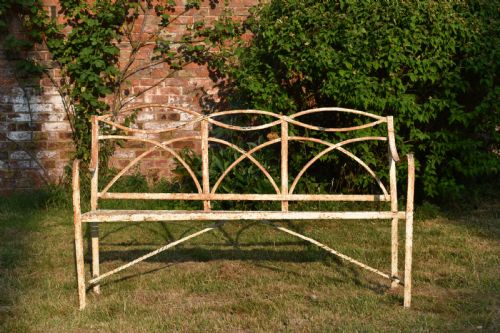
- An ornamental motif resembling interlaced leather bands, frequently seen on metal garden benches and structural frames.
Victorian Iron Back Chair: Frequently Asked Questions
How do I identify a Victorian iron back chair?
Look for a rigid metal internal spine combined with traditional nineteenth century button back upholstery and sprung seat construction.
Examine the weight and rigidity of the frame, as the hidden iron skeleton separates these pieces from standard wooden frames.
Are these chairs comfortable for daily seating?
The deep buttoning and sprung seats were engineered precisely for ergonomic parlour comfort during the nineteenth century.
Modern comfort depends on whether the internal springs and padding remain intact or require professional restoration.
How should I care for the iron frame?
Keep the metal parts dry and dust them gently with a soft cloth to prevent any surface corrosion on exposed iron.
Avoid using harsh chemical polishes that might damage nearby fabric or alter the original painted finish.
Can I re-upholster an iron framed chair?
Many examples survive specifically for re-covering, allowing owners to apply new velvet or patterned fabrics to match their interiors.
Upholstering over an iron frame requires specialist techniques to secure buttons and padding properly to the rigid backing.